
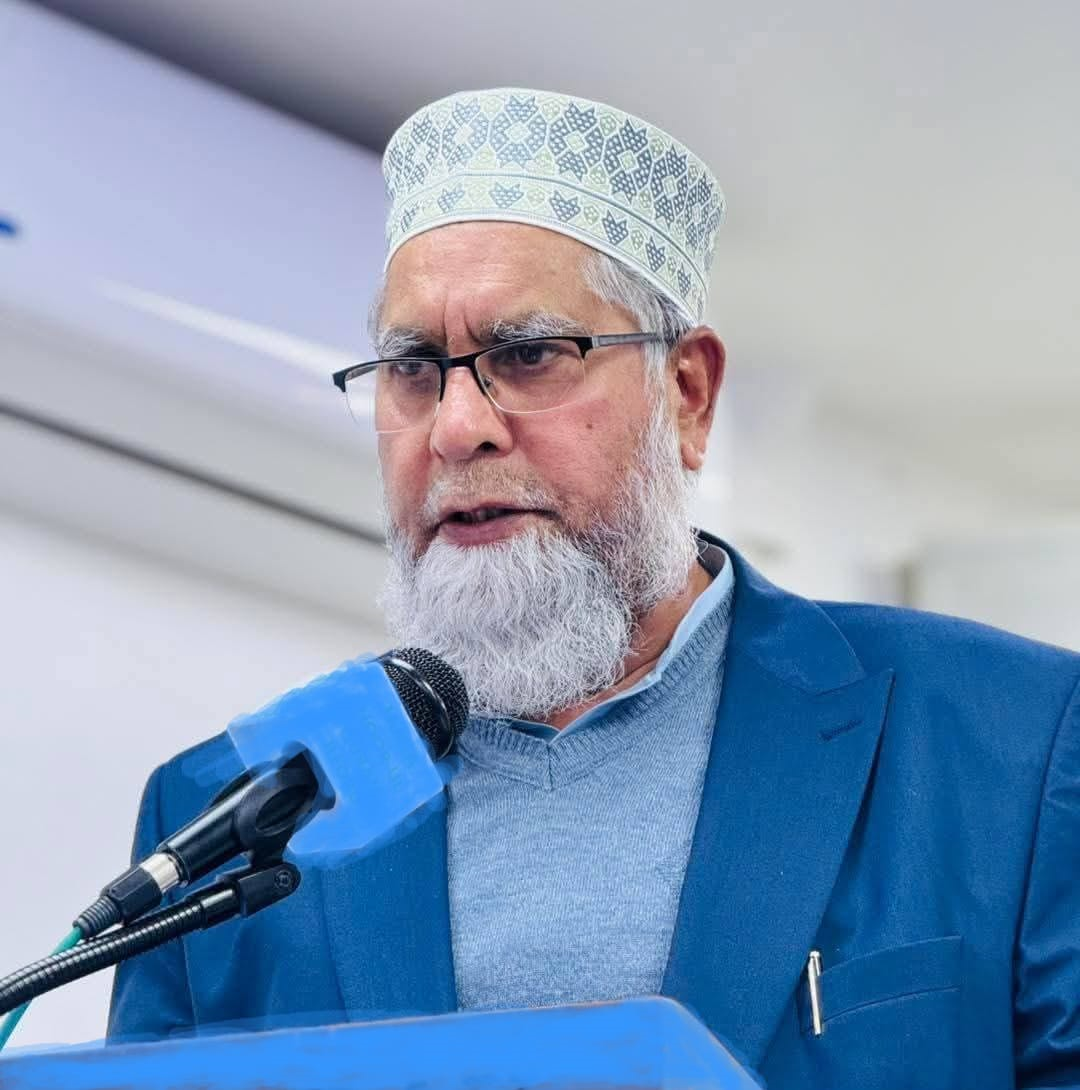
Prof. Masood Akhtar Hazarvi
The Middle East is no longer merely a geographical region; it has become a blazing circle surrounded by gunpowder, fire, and smoke. The heat of this turmoil, rising from Gaza, Lebanon, and Iran, is scorching the hearts and minds of the entire Muslim world. The streets of Gaza are still filled with the ruins of shattered homes, burnt buildings, and the lingering smell of fresh blood. Thousands of families have grown weary of carrying the bodies of their loved ones, yet the bombardment shows no sign of stopping. The wounds of Lebanon had barely begun to heal when American and Israeli strikes on Iran pushed the entire region to the brink of a new and extremely dangerous war. This is a situation where even a single misstep could trigger a wider regional conflict and deepen the clouds of a global energy crisis.
This is not merely a conflict between two states; it is a fire that could engulf the entire Ummah through sectarian, ethnic, and national divisions—especially an Ummah that calls itself a “single community” in words, yet in practice remains divided into small camps shaped by state interests, sectarian preferences, and global pressures. Syria stands as perhaps the most painful example of this division and indifference. What began as political protests in 2011 quickly turned into a devastating civil war and international intervention that completely transformed the country. Hundreds of thousands were killed, and millions were forced to become internally displaced or refugees abroad. Historic cities such as Damascus, Aleppo, Homs, and Hama—once centers of knowledge, culture, and the glory of Islamic civilization—now stand as landscapes of broken minarets, empty libraries, and devastated neighborhoods, shaking our collective conscience.
This is not the first time the Ummah has paid the price of its internal weaknesses and mutual distrust in human blood. The Iran–Iraq war divided the region along sectarian lines to such an extent that brother turned suspicious of brother and neighbor of neighbor. Its effects reached the Indian subcontinent as well, manifesting in sectarian violence and bloodshed in cities such as Karachi, Quetta, Parachinar, and Gilgit. Today the situation is even more fragile because hatred is no longer confined to sermons or closed-room speeches. Through a single social media post, a short video clip, or a fabricated image, millions of minds can be influenced within moments, and falsehood can easily be presented as truth.
The real problem is not only external conspiracies; it is also our internal fragmentation, our suspicion of one another’s intentions, and our habit of treating our own opinions as the final word. Yemen offers a tragic example of this reality, where global and regional powers turned land, sea, and sky into battlefields for their proxy wars. Yet the real burden of bombing, hunger, and disease has been borne by ordinary Yemeni civilians. When sect, party, tribe, or political affiliation replaces justice as the standard, institutions weaken and the very foundations of society begin to crumble. For Pakistan, this entire regional landscape carries extraordinary sensitivity. On one side lies a long land border with Iran along with historical and commercial ties; on the other lies the uncertainty in Afghanistan, domestic political tensions, and an economy already under pressure. If tensions escalate in the Strait of Hormuz, countries like Pakistan—whose economies depend heavily on imported oil—could face serious challenges in energy supply, currency stability, and rising inflation, directly affecting the daily lives of ordinary citizens.
At such a critical crossroads, both as an Ummah and as a nation, several fundamental principles must remain before us. First, injustice must be called injustice—no matter who commits it, even if it is done in the name of “our own.” Second, every piece of news or video circulating on social media should be verified before acceptance, so that we do not become part of false narratives or hate-driven propaganda. Third, national and collective unity must be consciously strengthened, because only a united nation can effectively face global pressures and diplomatic challenges. At the same time, Pakistan—as the only nuclear power in the Muslim world—should attempt to bridge divides within the Ummah through wise diplomacy and a role of reconciliation.
The devastated streets of Gaza, the fragile tents of Palestinian refugee camps, the broken minarets of Syria, and the starving children of Yemen remind us every day that the real cost of war is always paid by ordinary people—those who possess neither weapons nor diplomatic influence nor access to global media. All they desire is that their children sleep without the shadow of bombs, that their homes remain safe, and that they may witness the sunrise with hope rather than fear.
Today is not a time for negligence or fleeting emotions; it is a time for awareness, responsibility, and collective self-accountability. If we make justice our guiding principle, support the oppressed beyond sectarian boundaries, and prioritize unity at both national and communal levels, it is possible that future generations will not witness the horrifying scenes that our generation has seen—from Iraq to Afghanistan, from Syria to Yemen, and from Gaza to Iran. If we steady ourselves today, history may remember that even while surrounded by a blazing circle, we chose to pour water on the fire rather than fuel it.
