By Sajjad Azhar
There are striking parallels between the challenges Pakistan has historically faced from neighbouring Afghanistan and some of the challenges Saudi Arabia faces from Yemen. Both countries have been shaped by tribal structures, competing political forces, sectarian identities and prolonged periods of conflict.
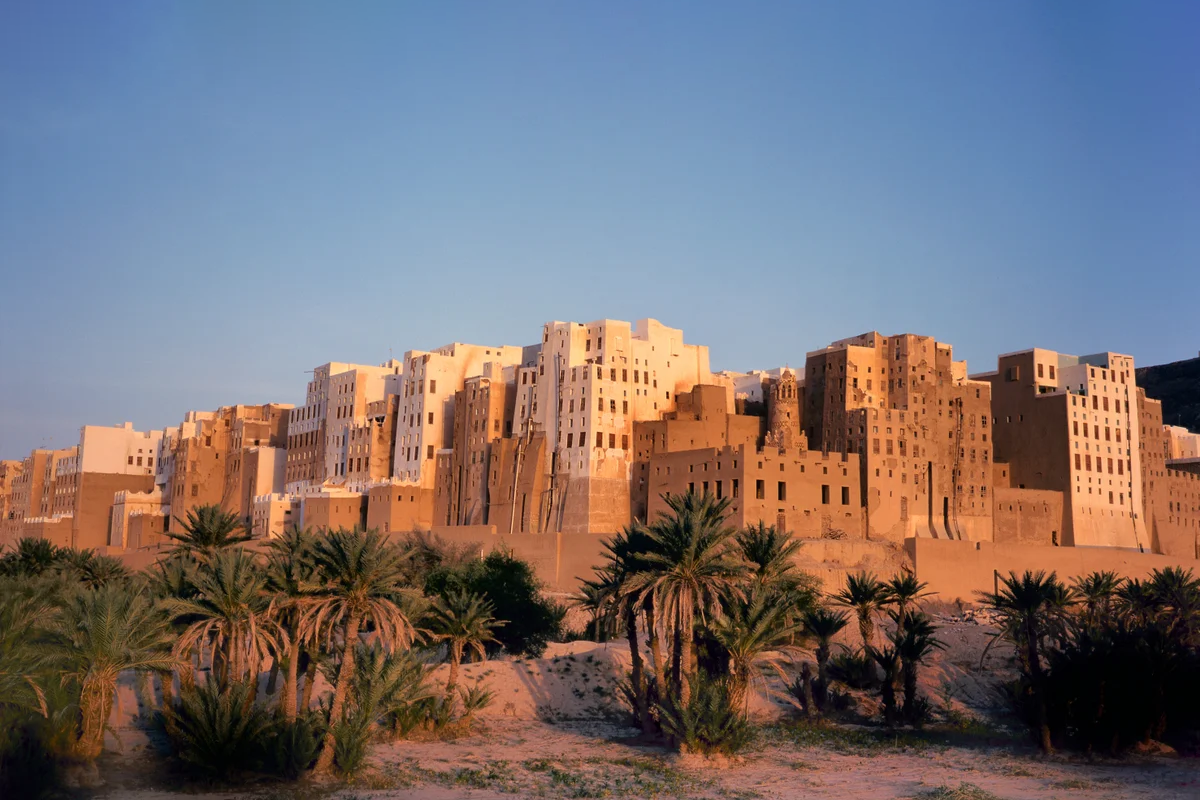
But Yemen possesses something that makes its historical story fundamentally different: one of the oldest and most remarkable civilisations of the Arabian Peninsula.
Long before the modern political divisions of Yemen, before the arrival of Islam and centuries before the rise of the modern Saudi state, the valleys of southern Arabia supported organised kingdoms, monumental temples, urban settlements, long-distance trade and sophisticated irrigation systems.
At the centre of this extraordinary story stands Saba — the biblical and Qur’anic Sheba — and the ancient city of Ma’rib.
Today, Yemen is widely associated with war, political fragmentation and humanitarian crisis. Yet its archaeological landscape tells the story of a society that once transformed an arid environment into one of the largest artificially created oasis landscapes of the ancient world.
UNESCO describes the archaeological landmarks of the ancient Kingdom of Saba around Ma’rib as evidence of a highly organised and centralised society, with monumental architecture, written inscriptions, temples and sophisticated hydraulic engineering. The site was placed on the World Heritage List in 2023 under an emergency procedure and also on the List of World Heritage in Danger because of the threats created by the continuing conflict.
A land of ancient kingdoms
Ancient Yemen was not a single political entity. Over different periods, several South Arabian kingdoms emerged, competed and disappeared.
Among the most important were Saba, Ma’in, Qataban, Hadramawt, Awsan and Himyar.
The Metropolitan Museum of Art places the Kingdom of Saba broadly from around the 10th century BCE into the early centuries CE, while Ma’in, Qataban, Hadramawt and Himyar emerged as important regional powers at different times. Their prosperity was closely connected to the production and distribution of highly prized aromatic resins, particularly frankincense and myrrh.
These fragrances were not merely luxury products.
In the ancient Mediterranean and Near Eastern worlds, frankincense and myrrh were highly valued for religious rituals, medicine, burial practices and personal use. South Arabian merchants became major participants in the long-distance trade that connected the southern Arabian Peninsula with the Mediterranean world and East Africa.
UNESCO describes the Sabaean kingdom as an important power along the ancient Incense Route, with its wealth closely connected to control of this trade.
This commercial network helped turn Ma’rib into much more than a desert settlement. It became a political, economic and cultural centre.

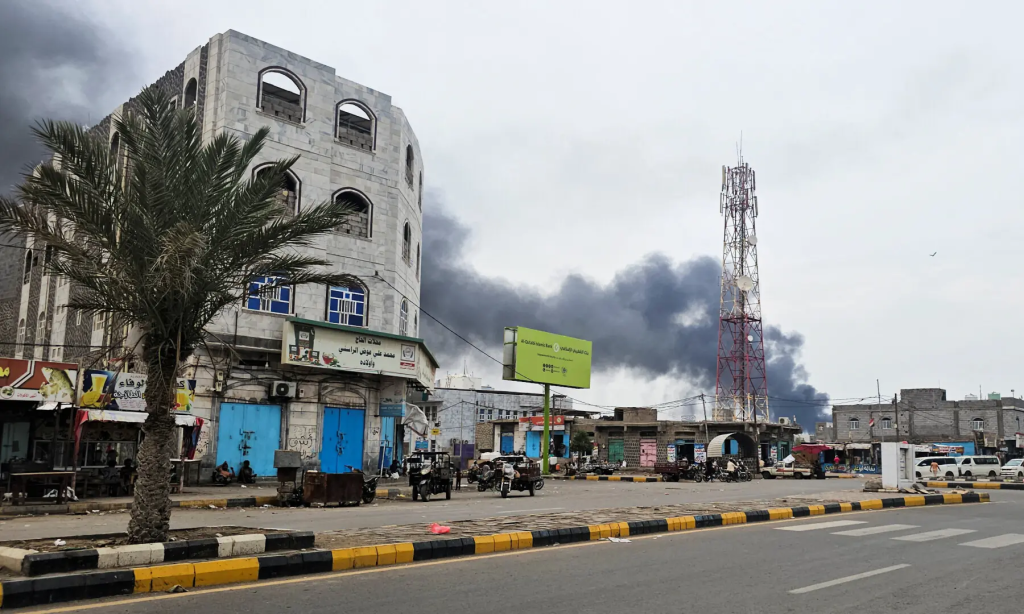


Houthi supporters rally to celebrate advances by Houthi forces along the Red Sea coastline, in Sanaa, Yemen, September 18, 2026. Picture taken with a mobile phone. REUTERS/Adel Al Khader

The Queen of Sheba: history, scripture and tradition
The most famous figure associated with ancient Yemen is undoubtedly the Queen of Sheba.
The story appears in different forms in Jewish, Christian, Ethiopian and Islamic traditions. The Qur’anic account in Surah Al-Naml is particularly distinctive because it presents the Queen as a powerful ruler who consults her advisers before taking a major political decision.
The Qur’an does not give her a personal name. She is simply described as the woman who rules over Sheba.
According to the Qur’anic narrative, Prophet Solomon discovers through the hoopoe bird that there is a kingdom in Sheba ruled by a woman who possesses a magnificent throne. The hoopoe also reports that the people of the kingdom worship the sun rather than God.
Solomon sends a letter inviting the Queen to submit to God and come before him.
What is particularly interesting from a political and historical perspective is what happens next.
The Queen does not immediately choose war.
Instead, she consults her advisers. The Qur’anic narrative records her discussion with them before she decides how to respond to Solomon.
She ultimately sends gifts to Solomon, apparently testing the situation diplomatically. When Solomon refuses the gifts, she travels to meet him.
The story then reaches its most extraordinary point. Before her arrival, her throne is brought into Solomon’s court. When she sees it, she recognises the extraordinary nature of what has happened and ultimately declares her submission to God.
The Qur’anic account is a religious narrative and should not be treated as an archaeological record. At the same time, the existence of the Sabaean kingdom itself is independently attested through archaeology and inscriptions.
What archaeology cannot currently establish is whether a specific historical woman can be identified with the Qur’anic or biblical Queen of Sheba.
That distinction is important.
Sheba was a historical kingdom. The identification of a particular archaeological queen as the Queen of Sheba remains unproven.
Ma’rib: the heart of ancient Saba
If one wants to understand ancient Yemen, there is perhaps no more important place than Ma’rib.
The ancient walled city served as the administrative, cultural and economic centre of the Sabaean kingdom. UNESCO’s archaeological property around Ma’rib includes seven sites, among them ancient urban settlements, temples and irrigation structures.
UNESCO describes Ma’rib as the capital of Saba and says that the city’s archaeological remains demonstrate the existence of a complex society with centralised administration.
This is significant because it challenges the simplistic image of ancient Arabia as nothing more than scattered nomadic tribes.
Ancient South Arabia possessed cities, rulers, religious institutions, engineers, craftsmen, merchants and written administrative traditions.
The evidence comes not only from monumental ruins but also from thousands of inscriptions.
The Sabaean script: a civilisation that wrote its own history
One of the most important features of ancient South Arabian civilisation is its written record.
The Sabaeans used a distinctive South Arabian script, often referred to as Musnad. Inscriptions have been found on stone, bronze and other materials.
They record religious dedications, royal decisions, construction projects, military events, agricultural matters and aspects of commercial and administrative life.
The British Museum, for example, holds Sabaean inscriptions from Yemen documenting temple construction, city fortifications, royal decrees and irrigation works. One inscription from Ma’rib records a royal decree dealing with commercial and financial transactions, demonstrating that the kingdom had formal rules governing economic activity.
Another British Museum inscription records irrigation works involving water channels and palm groves. Such evidence provides a remarkable window into the practical organisation of ancient South Arabian society.
In other words, these were not merely decorative inscriptions.
They were records of government, religion, construction, law, agriculture and economic life.
Through them, the ancient Yemenis left behind fragments of their own administrative history.
The Awām Temple — the mysterious monument of Ma’rib
Among the most impressive monuments of ancient Ma’rib is the Awām Temple, also known as Mahram Bilqis.
The name “Bilqis” connects the monument in later tradition with the Queen of Sheba. But archaeologically, the identification of the structure as the Queen’s palace has not been established.
UNESCO documentation identifies Awām as one of the principal monumental sanctuaries of the Sabaean kingdom and describes it as part of a larger religious landscape connected with pilgrimage.
The monument’s architecture is itself extraordinary.
Its massive stone construction, carefully worked limestone and monumental enclosure demonstrate a high level of engineering and craftsmanship.
An important inscription associated with the site refers to construction of the temple enclosure and is linked to the Sabaean ruler Yada’il Dharih, generally dated to the middle of the seventh century BCE.
The British Museum also holds a fragmentary South Arabian inscription that refers to a dedication to Almaqah, the principal Sabaean deity, and to the construction of a temple courtyard and city walls. Its catalogue notes a possible connection with the Awām temple at Ma’rib.
The archaeological evidence therefore presents Awām not simply as a legendary palace but as an important religious and architectural centre of the Sabaean state.
The Great Dam of Ma’rib
Perhaps the greatest symbol of ancient Yemen’s engineering achievement is the Ma’rib Dam.
Imagine an arid landscape receiving seasonal rainfall and a society thousands of years ago deciding not merely to survive the desert but to reorganise its entire agricultural environment.
That was the challenge the Sabaeans confronted.
Water from seasonal rains could be captured, controlled and distributed through an extensive network of channels. The result was an enormous irrigated agricultural landscape around Ma’rib.
UNESCO describes the ancient Ma’rib irrigation system as an achievement of hydrological engineering on a scale unparalleled in ancient South Arabia and says that it created what is considered the largest ancient artificial oasis in Arabia.
The importance of this system went far beyond agriculture.
It created the economic foundation of the Sabaean state.
A reliable agricultural base meant food production. Food production supported urban populations. Urban populations supported craftsmen, administrators, soldiers, merchants and religious institutions.
And prosperity supported long-distance trade.
Thus, the irrigation system was effectively part of the economic and political infrastructure of the kingdom.
How old was the Ma’rib irrigation system?
This is one area where historical precision is important.
The irrigation landscape around Ma’rib is extremely ancient, and UNESCO’s documentation traces complex settlement and agricultural development in the region back to the first millennium BCE and, in some discussions, earlier periods.
However, the Great Dam in its surviving historical form should not simply be assigned a single date of 3,000 or even 2,000 years ago.
The archaeological history of the dam is complex. The Metropolitan Museum notes evidence connecting the major stone-faced dam with the sixth century BCE, while British Museum documentation points out that inscriptions were reused during later reconstruction and that major rebuilding followed catastrophic breaches in the fifth century CE.
Therefore, the safest conclusion is that the Ma’rib irrigation landscape represents a long period of technological development and reconstruction rather than one single engineering project built at one precise moment.
That makes the achievement no less impressive.
Indeed, it arguably makes it more remarkable: generations of engineers and rulers maintained and modified a water-management system on which an entire civilisation depended.
The desert becomes an oasis
The result was extraordinary.
A landscape that might otherwise have supported only limited agriculture became a major agricultural zone.
UNESCO describes the irrigated Ma’rib landscape as the largest ancient artificial oasis in Arabia. It consisted of an extensive network of canals and cultivated territory extending to the north and south of Ma’rib.
This was ancient food security on a monumental scale.
The Sabaean achievement demonstrates that sophisticated civilisation does not depend solely on naturally fertile landscapes.
Human beings can reshape their environment — provided they possess the knowledge, organisation and political institutions required to manage water and labour over generations.
Frankincense, myrrh and the wealth of Arabia
The prosperity of Saba was also connected to another resource: aromatic resins.
Frankincense and myrrh were among the most valuable commodities of the ancient world.
The South Arabian kingdoms occupied a strategic position between the areas where these products were harvested and the markets of the Mediterranean and Near East.
The Metropolitan Museum notes that the South Arabians became major distributors of frankincense and myrrh along the ancient Incense Route.
This trade brought wealth to kingdoms that controlled production areas, caravan routes and commercial centres.
Ma’rib therefore sat at the intersection of two great economic systems:
agriculture made possible by irrigation, and international commerce made possible by the incense trade.
This combination helped create the prosperity that later generations remembered as the wealth of Sheba.
What happened to the civilisation?
Civilisations rarely disappear overnight.
The decline of ancient South Arabian kingdoms was the result of long-term political, economic, environmental and technological changes.
The irrigation system itself required continuous maintenance. When water infrastructure deteriorated, agricultural productivity could suffer. Changes in trade routes and the growing importance of maritime commerce also altered the economic environment.
Political power shifted between Saba and rival kingdoms, particularly Himyar.
Eventually, the political landscape of South Arabia changed dramatically.
The rise of Himyar and later the incorporation of Yemen into larger regional and imperial systems transformed the old political order.
By the arrival of Islam in the seventh century CE, the ancient Sabaean world had already undergone profound changes.
Yet its monuments remained.
Its inscriptions remained.
And the memory of Sheba remained.
From ancient civilisation to modern Yemen
The contrast between ancient and modern Yemen is extraordinary.
The land that once produced monumental temples, written laws, international trade and one of the ancient world’s most ambitious irrigation systems is now associated with political division and prolonged armed conflict.
Modern Yemen’s crisis has multiple causes and cannot be reduced to a single tribal or sectarian explanation.
The modern history of Yemen includes the division between North and South, unification in 1990, the presidency of Ali Abdullah Saleh, the rise of political and militant movements, the Houthi takeover of Sana’a in 2014 and the subsequent internationalised conflict.
But beneath the modern political crisis lies a much older landscape.
The archaeological sites around Ma’rib are physical reminders that Yemen was once a centre of technological innovation and international commerce.
UNESCO has warned that these archaeological remains are highly vulnerable because of the continuing conflict and other pressures. The ancient Kingdom of Saba’s archaeological landmarks were placed on the World Heritage List in Danger in 2023.
A lesson written in stone
Perhaps the most powerful lesson of ancient Yemen is not simply that the Sabaeans were wealthy.
It is that they understood something fundamental about civilisation:
water, food, trade and political organisation are interconnected.
They built infrastructure capable of turning seasonal rainfall into agricultural wealth.
They developed cities around that agricultural base.
They connected those cities to long-distance trade routes.
They recorded their decisions in writing.
They constructed temples and monumental buildings.
And they created an organised political system capable of maintaining all of it.
The inscriptions preserved in museums today are therefore more than archaeological curiosities. They are fragments of a civilisation speaking across thousands of years.
A Sabaean inscription about an irrigation channel tells us about agriculture.
A royal decree tells us about law and commerce.
A temple inscription tells us about religion and political authority.
The ruins of Ma’rib tell us about architecture.
And the story of the Queen of Sheba tells us about how the memory of this ancient kingdom survived in the religious traditions of later civilisations.
The Yemen that the world should remember
Modern headlines often present Yemen primarily as a country of war and instability.
But before Yemen became a modern geopolitical crisis, it was one of the great centres of ancient Arabian civilisation.
Its rulers controlled trade routes.
Its merchants travelled across regions.
Its engineers managed enormous quantities of water.
Its farmers cultivated irrigated land in an arid environment.
Its scribes recorded laws, religious practices and political decisions.
And its monumental architecture still stands as evidence of a society whose sophistication is difficult to reconcile with the simplistic image of ancient Arabia as merely a land of wandering tribes.
The story of Saba is ultimately a story of human ingenuity.
In one of the world’s harshest environments, ancient Yemenis built an agricultural landscape that UNESCO now describes as the largest ancient artificial oasis in Arabia.
That achievement, more than two thousand years later, still speaks to the world.
And perhaps the ruins of Ma’rib offer Yemen’s most profound historical message: civilizations can rise through knowledge, cooperation and the intelligent management of scarce resources — and they can decline when those systems are no longer maintained.
The stones of ancient Yemen remain.
The inscriptions remain.
The memory of Sheba remains.
What remains uncertain is what future history will write about Yemen’s present age.