
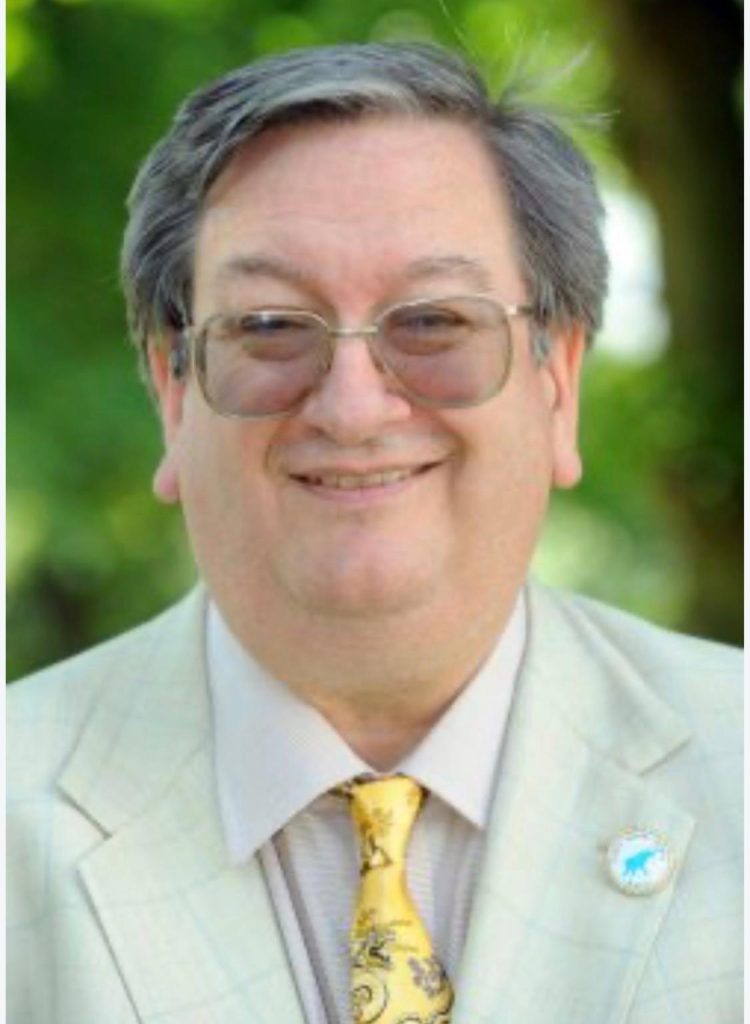
Sir Raymond Keene OBE International Chess Grandmaster and Patron of the Labour Asians Society
A leopard cannot change its spots, and Reform UK has once again revealed what I believe to be its deeply troubling political character.
Recent undercover investigations have reportedly exposed shocking remarks by individuals associated with Reform, including references to machine-gunning opponents in the Rose Garden of 10 Downing Street and placing migrants in concentration camps.
One particularly disturbing statement, referring to migrants crossing the English Channel, reportedly declared:
“They just need to be rounded up, every single last one of them, and sent to those concentration camps.”
Another individual reportedly claimed that Muslims could not be British, comparing the two identities to “oil and water”.
Such language should alarm everyone who believes in democracy, tolerance and human dignity.
References to concentration camps evoke some of history’s darkest chapters. Yet the suggestion that being Muslim is incompatible with being British is equally dangerous in its implications.
This is absolute nonsense! Britain’s historical connections with the Indian subcontinent, including modern-day India, Pakistan and Bangladesh, demonstrate centuries of interaction with Muslim civilisation. The British Empire encountered societies rich in culture, scholarship, architecture, traditions and political institutions.
Queen Victoria herself became Empress of India, ruling over millions of Muslim subjects.
Today, British Muslims contribute enormously to our national life as doctors, scientists, teachers, entrepreneurs, politicians, charity workers and community leaders. In my personal experience, they are overwhelmingly proud to be British.
I discovered this firsthand when I was warmly welcomed into the Labour Asians Society. Having witnessed the Conservative Party’s endless internal leadership battles, seemingly at the expense of governing Britain, I became deeply disillusioned. I briefly sought political refuge with Reform UK but soon became uncomfortable with what I perceived as its paranoia, prejudice and divisive attitudes.
I subsequently joined my Muslim friends in Labour, publicly cut up my Reform membership card and threw it into the rubbish bin, where I believed it belonged. My decision reflected something fundamental: politics should unite communities, not divide them. Modern science also challenges outdated racial thinking. The Human Genome Project established that human beings share approximately 99.9 per cent of their DNA. Traditional racial categories do not represent clearly separated biological groups.
Differences in appearance reflect ancestry, adaptation and human diversity, not superiority or inferiority. Although race is largely a social construct, racial discrimination has produced devastating consequences throughout history, particularly through colonialism and slavery.
Britain has evolved through centuries of migration and cultural exchange, from the Romans, Saxons and Normans to communities arriving from Asia, Africa and across the Commonwealth. Our national identity has never been static. There is profound irony in attempting to impose rigid definitions of Britishness upon a country shaped by diversity.
Being British is not determined by religion, colour or ancestry. It is about belonging, shared responsibilities, democratic values and respect for others. A Muslim can be proudly British, just as a Christian, Hindu, Sikh, Jew or person of no faith can be.
The British Muslims I know love this country, contribute to its success and cherish its freedoms. I am proud to call them my friends. Britain’s strength lies not in excluding people because of their faith, but in bringing communities together through mutual respect, equality and unity.
That is the Britain I believe in, and the Britain worth defending.
