Bureau report
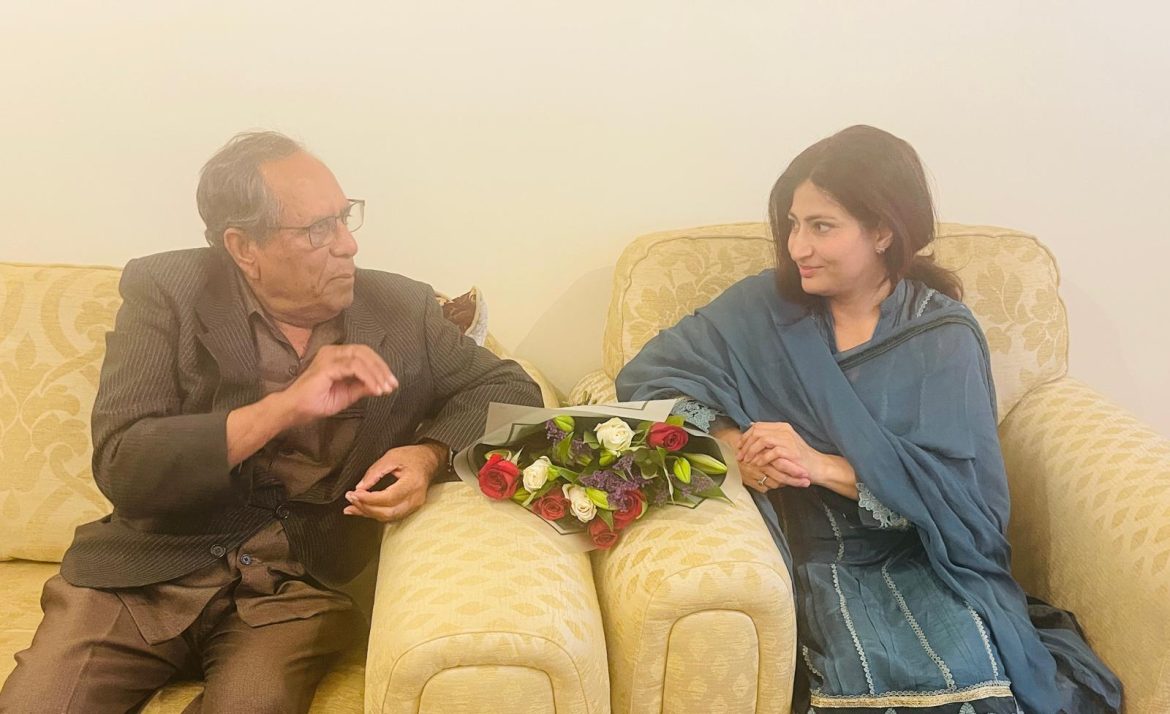
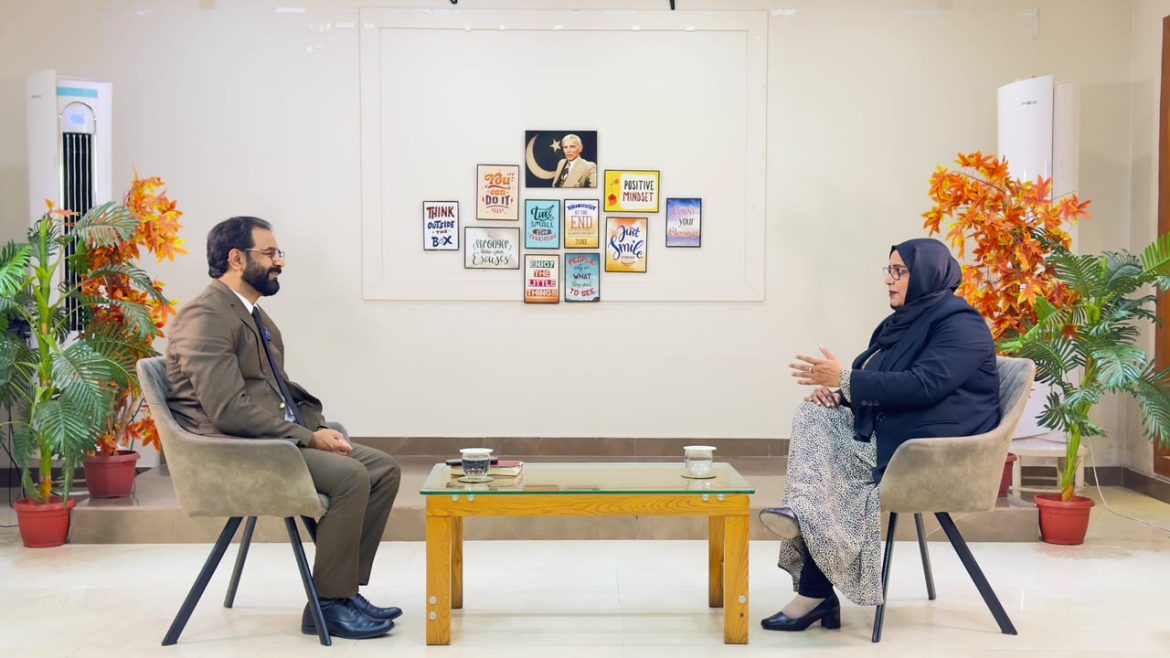
A special podcast was recorded with the Qasim Ali Shah Foundation to highlight Al Mustafa Pakistan’s journey of humanitarian service, its vision, and its ongoing efforts for the welfare and well-being of different segments of society.
The discussion explored Al Mustafa’s years-long humanitarian work, its various welfare initiatives, and its efforts to bring about positive change in society.
Held under the inspiring theme “Silent Work Deserves a Loud Stage,” the conversation highlighted Al Mustafa Pakistan’s wide-ranging humanitarian services and its continued commitment to serving communities in need.
The session also marked important progress towards greater cooperation between the two organisations in the future.
These joint efforts represent a positive step towards expanding the scope of humanitarian services and improving access to healthcare and welfare facilities for people in need.
Photography: Aman Pasha
London Post
Health correspondent
The winter pressures are already affecting the NHS in England, according to senior health leaders. The warning comes as new data reveals the waiting list for routine hospital treatment in England rose for the second month in a row.
An estimated 7.37 million treatments were waiting to be carried out at the end of August, relating to 6.24 million patients.
The numbers are the highest since October 2025 and have raised questions over whether the NHS will meet a government target of treating 92% of patients within 18 weeks by 2029.
The rise in waiting lists comes despite the NHS in England delivering what were described as record levels of planned, elective care over the summer, while demand for services also reached its highest level ever.
A record 4.7 million planned treatments, procedures and appointments occurred across June, July and August – more than in any previous summer.
But both A&Es and ambulance services also saw a record number of patients for the month of September.
NHS England’s national medical director, Professor Frankie Swords, warned that despite the progress delivered by frontline teams, winter pressure was already building.
“Staff are already seeing the ominous early signs of pressure, with more patients coming to A&E with flu and other respiratory viruses than usual for this time of year, and unfortunately many people are still waiting longer than we would like them to,” she said.
Raja Faiz Sultan of RFS News interviewing Nazia Rehman, a councillor from the Wigan area of Greater Manchester
Manchester: Raja Faiz Sultan of RFS News interviewing Nazia Rehman, a councillor from the Wigan area of Greater Manchester. Councillor Nazia Rehman, first elected in 2016, is a Cabinet Member for Finance, Resources and Transformation. A Chartered Accountant by profession. Represents UK Government on The Council of Europe and Chair of Social Inclusion and Human Dignity Committee. An LGA Peer with a breadth of experience in peer reviews and mentoring councillors and cabinet members across parties. Nazia also represents the Council on the Greater Manchester Combined Authority (holding the portfolio for Resources and Investments), GM Pension Fund, North West Employers Association, Statutory Functions Committee, GM Reform Executive and Yorkshire Purchasing Organisation Joint Management Committee. Currently, she is leading on implementing Progress with Unity, leading on transformation plans, public service reform and growth & customer services. She also has responsibility for human resources and links to communication in relation to its strategic lead for outward-facing services across the Council in terms of commissioning i.e. organisational development, reputation management, policy support and performance management. She is responsible for ensuring that the Council has high standards of accountability by monitoring how well resources are used, which includes technology, property/assets, finances and people and the One Council theme, together with the client functions.

Suhail Warraich
Preparations begin well in advance when signs of a seasonal shift appear. A ten-day Basant festival has been announced in Lahore, and the season of kites is just around the corner, currently, crucial negotiations are underway between two major factions to determine the nature of Basant’s festivities. One group is led by Paddi Ustad the uncrowned king of kite flying and a master tactician of aerial duels while the other is led by Ziddi Ustad, an outspoken advocate for revolutionary changes to Basant’s traditional rules. He seeks to abolish restrictions on kite strings, allowing anyone to use chemical-coated lines, create a raucous spectacle, play loud music, or even start fires without facing any objection. The final verdict on these negotiations’ rests with Falaki Shah, who holds ultimate authority over the freedoms and restrictions governing the festival.
Paddi Ustad is short in stature, and age has rendered him frail; having ruled the world of kite flying for years, his popularity among kite enthusiasts has waned over time, though he remains highly favoured in official circles. He is a seasoned veteran unrivalled in the art of aerial combat and cutting down opponents’ kites and while he is still hailed as a “King,” the masses have turned against him. On the other hand, the obstinate master is inexperienced yet relatively powerful and immensely popular; however, the freedoms he demands for kites during Basant have previously sparked riots and unrest. The public chafes against the cautious pragmatism of the ‘Paddi Ustad’ (the ‘Little Master’) and, despite their reservations, finds itself compelled to rally behind the obstinate master. They view restrictions on kites as contrary to the spirit of the sport, desire the release of those imprisoned following the May Basant, and hope that the Paddi Ustad will ultimately crown the obstinate master the “King of the National Basant”
Based on years of reporting, this writer anticipates that negotiations could lead to Imran Khan being allowed to visit the hospital, the transfer of Bushra Bibi to Bani Gala, and the release of his sisters’ parameters beyond which no further concessions seem likely. There is currently no prospect of Imran Khan’s release or return to active politics; rather, Bushra Imran’s transfer to Bani Gala would be part of a new strategy to drive a wedge between the factions led by Aleema Khanum and Bushra Imran. Moving Bushra Imran to Bani Gala would diminish Aleema Khanum’s influence, given that Imran Khan places greater weight on the counsel of his spiritual guide and wife than on that of his sister. Both the government and the establishment are deeply frustrated by the narratives propagated by YouTubers and aim to split the party into two distinct factions. the overseas wing and the domestic wing. The establishment and political stakeholders have reached a critical juncture where their prestige and credibility could be bolstered, or should negotiations fail completely despair and uncertainty could deepen further.
Both ‘Paddi’ and ‘Ziddi’ must exercise prudence and seek reconciliation for the sake of the country’s betterment and prosperity; it is essential to take ‘Falaki Shah’ fully into confidence. ‘Ziddi Ustad’ should formally announce the end of the sit-in, and a joint principle should be established that no such sit-in will be staged in Islamabad in the future. Any progress possible in the negotiations between ‘Paddi’ and ‘Ziddi’ depends entirely on ‘Falaki Shah’ ensuring that both parties ‘Paddi’ and ‘Ziddi’ grasp the gravity of the situation, accept what is achievable, and steer the ship out of the political whirlpool. The recent conflict between the ‘Paddis’ and ‘Ziddis’ has brought matters to a point where political and democratic freedoms have been curtailed, the space for political workers has shrunk, and restrictions have been imposed on speech and writing. Politicians can only engage in politics if democratic freedoms exist where there is liberty of expression rather than restrictions. Politics and democracy will only be possible if political workers have the breathing space to function.
There is no need to pin excessive hopes on the ‘Paddi-Ziddi’ negotiations; no revolution is imminent, nor is the government about to change. However, if the political temperature cools, Parliament resumes functioning, the government and opposition begin to interact, and measures such as allowing a medical check-up for Imran Khan in a hospital and treating female prisoners leniently are implemented, it would mark a significant success for these talks. Otherwise, the situation will remain deadlocked exactly where it is.
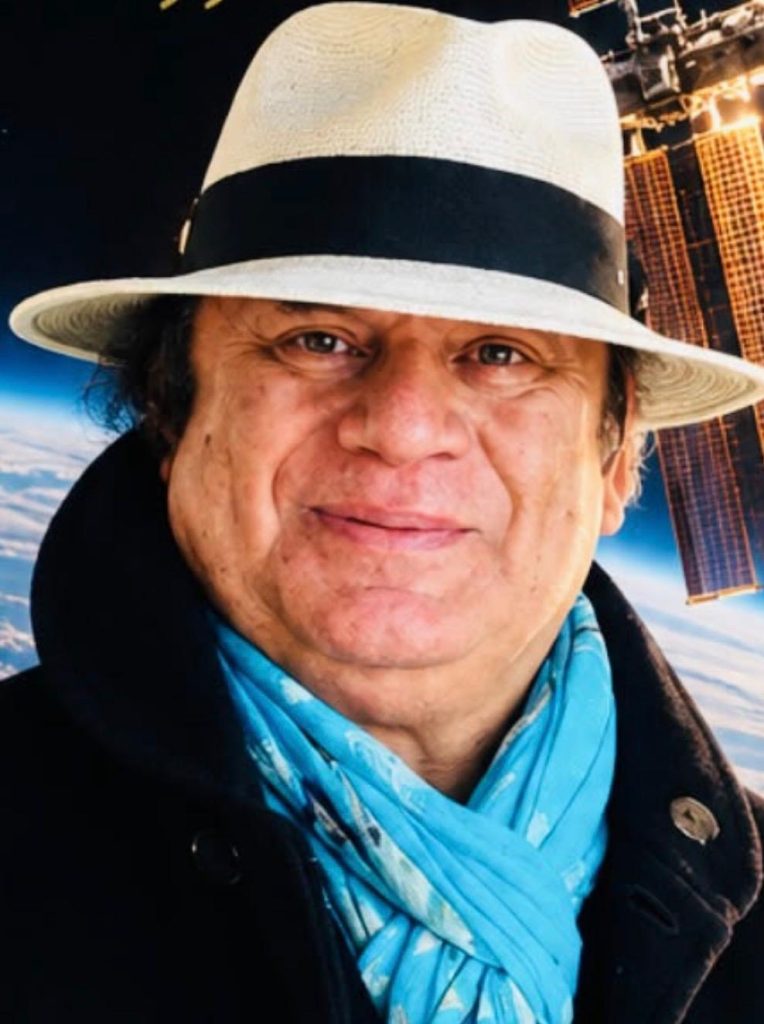
Believe in Your Journey, Even When Others Cannot Understand Your Vision

Atta Haq
Every meaningful journey begins with a vision. Sometimes that vision is clear only to the person carrying it. Others may question it, misunderstand it or even tell you that what you are trying to achieve is impossible. That is exactly when belief in yourself matters most.
Throughout my life, I have learned one important lesson: “Believe in your journey, even when others cannot understand your vision.”
A vision is not simply a dream. It is the ability to see possibilities before they become reality. When you start something new, whether in business, media, community service, charity, politics or events, you cannot expect everyone around you to immediately understand where you are going. If every great idea had waited for universal approval, many extraordinary achievements would never have happened.
There will always be noise. There will be criticism, disappointment and people who doubt your ability. Some will support you at the beginning and disappear when challenges arrive. Others may only recognise your vision after it becomes successful. But your responsibility is not to convince everyone. Your responsibility is to remain focused, work hard and allow your results to speak.
My own journey has taught me that success is rarely a straight road. Behind every photograph, award, successful event or public achievement are countless hours of work, difficult decisions, sacrifices and moments when giving up would have been the easier option.
But challenges can also be our greatest teachers.
Every setback teaches us something about ourselves. Every closed door encourages us to search for another entrance. Every disappointment helps us understand who genuinely believes in our journey. If we remain positive and disciplined, even difficult experiences can prepare us for greater opportunities.
I also believe success becomes truly meaningful when it creates opportunities for others. Personal achievement alone is never enough. Whatever influence, experience or platform we develop should be used to bring people together, encourage young people, support communities and give a voice to those who may otherwise remain unheard.
Leadership is not about standing above people. It is about standing with people.
We live in a world where comparison has become increasingly common, particularly through social media. People see someone else’s success but rarely see the years of struggle behind it. My message, especially to young people, is simple: do not measure your beginning against somebody else’s established journey.
Stay focused on your own path. Learn continuously. Surround yourself with positive and quality people. Respect those who support you, remain humble when success arrives and never allow temporary failure to define your future.
Most importantly, once you make a commitment, honour it. Your reputation is built not only through what you achieve but through the trust you create along the way.
There may be moments when nobody understands your vision. Keep going.
Because sometimes the difference between a dream that disappears and a vision that changes lives is simply having the courage to believe in it long enough to make it real.

Asif Saleem Mitha Columnist | Editor, Nawa-e-Jang London
In the Pakistani journalistic community of London, the name Shaukat Dar needed no introduction. He was not merely a journalist; he was a warm-hearted, lively and politically astute man who possessed the rare gift of bringing people together. His sudden passing on 15 September 2026 has left a profound void in Britain’s journalistic and Pakistani community one that will not easily be filled.
Much of Shaukat Dar’s life revolved around journalism, politics and human relationships. He served with several prominent media organisations, including FM 100, DM Urdu, DM English, Dunya TV and Samaa TV. He also served as Director of News at DM English and played an active role in the journalistic community as President of the Pakistan Press Club UK International.
Throughout his career, he interviewed some of Pakistan’s most prominent political figures, including Benazir Bhutto, Bilawal Bhutto Zardari and Nawaz Sharif. His involvement in student politics during his younger years also led to his imprisonment, an experience that became part of the remarkable journey of his life. His political friendships extended across party lines. He maintained personal relationships with people belonging to different political parties, reflecting his ability to see beyond political differences and value people for who they were.
From Murree to London. Shaukat Dar was born in 1964 in Murree, to Abdul Jabbar, His mother belonged to Lahore’s distinguished Kakkezai family, and the family also had a connection with the renowned poet Qateel Shifai.
Shaukat was one of three brothers. Tragically, all three brothers eventually passed away after suffering from heart-related illnesses.
His elder brother, Zafar Dar, was a well-known artist, calligrapher and painter in Rawalpindi. Through his artistic talent and creative work, he earned a respected place in the city’s literary and cultural circles.
Three brothers, three distinct personalities, each pursuing their own paths and talents, yet fate ultimately brought them together in the same sorrowful manner. One by one, heart disease took them away from their family, friends and loved ones.
Shaukat Dar’s “White House”
Shaukat Dar had given his office the affectionate name “White House.” It was far more than an office. Over the years, it became an informal meeting place for Pakistani journalism, politics and community life in London.
Journalists, politicians, community leaders and friends would regularly gather there. Conversations ranged from the politics of Pakistan to British community affairs, journalism and everyday life.
But perhaps Shaukat’s greatest quality was his ability to connect people.
Today, that very “White House” carries a silence that is difficult to describe.
Waheed Ahmed still sits on the same sofa, almost as if waiting for Shaukat Dar to return the very place from which his friend departed on his final journey.
The sofa remains.
The office remains.
The walls remain.
The telephone remains.
But Shaukat is no longer there.
For a friend, perhaps there is no greater sorrow than returning to a place filled with years of shared memories, only to realise that the person who made those memories possible will never walk through the door again.
Our Last Meeting
Only a day before his death, Shaukat Dar attended a dinner hosted by Senator Nasir Butt and later returned to his office, where I had a detailed and memorable conversation with him.
We spoke at length about journalism, community affairs and several plans for the future. There were projects we hoped to pursue together and ideas that we intended to develop in the months ahead.
Neither of us could have imagined that evening would become our last substantial conversation.
Life rarely announces its final moments.
The Final Hours
Even in the final hours of his life, Shaukat Dar was living in his familiar way surrounded by friends, making telephone calls, preparing to welcome a guest and thinking about the days ahead.
He was with Sajjad Shauwal and, at 5:41pm, shared a post on TikTok.
Later, he asked Waqas to go to the market to buy lentils and other provisions. When the groceries arrived, Shaukat began preparing daal and rice for Waheed.
He also spoke on the telephone with Zameer Chaudhry, who was returning to London from Birmingham. Neither could have known that this would become one of their final conversations.
That same day, Shaukat was due to go to the airport to receive Faheem Farooqi. Only a few hours earlier, he had also invited Ahmed Ali Syed over for a chat.
Then, suddenly, his health deteriorated.
Waheed contacted Ahmed Ali Syed, who began calling out to Shaukat. Rauf Butt and Jeetu soon arrived as well.
Every possible effort was made to save him. Three ambulances attended the scene, but despite the determined efforts of those present and the emergency services, Shaukat could not be saved.
A heart attack brought his life to an abrupt end.
He left behind, without warning, the friends, colleagues and countless people who had grown accustomed to his presence.
As Zameer Chaudhry returned from Birmingham and approached Shaukat’s street, he found a large gathering of people. Only a few hours earlier they had been speaking on the telephone. Now that conversation had become a final memory one that time can never erase.
Thousands Gathered for His Funeral
Thousands of people attended Shaukat Dar’s funeral prayer. People travelled from different parts of Britain to pay their final respects, while some also came from Pakistan.
Journalists, politicians, community leaders, social workers, friends, relatives and people from many different walks of life gathered to bid farewell to a man whose life had touched so many.
He is survived by his wife, three daughters and a son. His children have completed their education and have moved forward in their respective fields.
A Friend, a Colleague, a Memory
After Shaukat Dar’s departure, his “White House” may never feel quite the same again.
The office is still there.
The sofa is still there.
The desk is still there.
The chair is still there.
The telephone is still there.
But the voice that once welcomed every visitor is gone.
And perhaps the most poignant image of all is that of Waheed Ahmed sitting on that same sofa, almost as though he is still waiting for his friend to return—the place where Shaukat’s final journey began.
Even on the last day of his life, Shaukat was surrounded by friends. He was making calls, preparing to receive a guest, cooking food and discussing plans for the future.
Perhaps that was the most beautiful characteristic of his life: until his final moments, he lived fully, generously and among the people he loved.
Many people enter journalism and eventually leave it. But there are some whose legacy extends far beyond the stories they write or the broadcasts they make. They leave behind friendships, affection, human connections and memories that continue long after their voices have fallen silent.
Shaukat Dar was one of those rare people.
His voice, his distinctive manner of conversation, his “White House,” his journalistic memories and the countless friendships he cultivated will remain part of the collective memory of the Pakistani community in Britain.
Shaukat Dar has left us. But the memories remain. The friendships remain.
And the chapter he wrote in the story of journalism will not easily be forgotten.
May Almighty Allah forgive the departed soul of Shaukat Dar, elevate his and grant patience and strength to his wife, three daughters, son, family, friends and the entire journalistic community.

Iqbal Latif
And physics does not grant him the city. A tower on the street reuses the same airwaves every few hundred metres; a satellite hundreds of kilometres up must share them across a patch of ground many kilometres wide. In a desert, at sea or in a village with no road, the net is a blessing, and I say so. In Karachi, Lagos or Manhattan, where millions of phones stand shoulder to shoulder, the sky cannot carry what the street carries. The big American carriers have refused to rent their customers to him, and T-Mobile’s chief financial officer said at an investor conference on 10 September that satellite signals do not go through walls and a million satellites cannot break physics. His own prospectus tells the story: the average Starlink customer paid $99 a month in 2023 and $66 in early 2026. That is a network reaching poorer customers, which is good. It is not the arithmetic of a network that will own the world’s conversation. Starlink is a real achievement, and its connectivity business reported about $11.4 billion of revenue last year at a healthy margin. But a good business at sea is not a monopoly of every telephone on earth. His future is not financed by escaping the Earth economy. It is financed by capturing more of it. And I have not even counted the rest: the tunnels, the chip factory his filing describes at length without a date or a cost, and every other venture that arrives with its own promise and its own bill.
Now the robots, and here I move from his contract to his word. In Riyadh in October 2024, he said that by 2040 there will be at least 10 billion humanoid robots, priced at $20,000 to $25,000 each, more robots than people. That is a forecast made from a stage, not a milestone in a filing, and I treat it as one. But it is his forecast, it is the basis on which he has told investors Tesla could be worth $25 trillion, and he has never withdrawn it. So take him at his word. Ten billion robots at his price cost $200 to $250 trillion, about two years of everything the human race produces. If a robot lasts about 10 years, which is my assumption, the first ones wear out before the fleet is even complete, and replacing them becomes a permanent bill of $15 to $18 trillion a year. Building them is its own problem. The world has about 1.5 billion vehicles on its roads, built over more than a century, and it makes about 90 million a year. Ten billion robots by 2040 means building about 700 million a year from now on, nearly eight times the entire world car industry. His own Fremont line is designed for 1 million a year, so the world would need around 700 such factories. Every robot needs copper for its motors, lithium for its battery and rare earth magnets for its joints, most of them processed in one country, China, and all of them already fought over by electric cars, wind turbines and power grids. If each robot draws an average of 300 watts, again my assumption, 10 billion of them need about 26,000 terawatt hours a year. That is close to all the electricity the world generates today, before a single data centre is switched on to think for them. And if he is only a tenth right, if there are 1 billion robots rather than 10, the bill is still $20 to $25 trillion, close to a whole year of the world’s investment, and every argument below still stands.
Then the checks. He says everyone will have a high income, and the Treasury should simply issue them. There are about 8.2 billion people on earth. Suppose a high income means even $30,000 a year, my figure and not his; then the bill is about $246 trillion a year, twice the entire world economy. Do it only in America, for 340 million people, and the bill is about $10 trillion a year, roughly twice everything the federal government collects in taxes. His answer is that prices will fall so far that a small income buys everything. But if prices fall that far, the revenues of the companies that own the robots and the satellites fall with them. And if their revenues fall, their market values cannot climb to the $7.5 trillion his share grant needs. If goods become nearly free, a company worth $7.5 trillion needs enormous income from somewhere else: from the machines, the networks, the rights, or the sheer volume it controls. The prices can fall for the buyer while the income gathers in the owner. His pay package bets on that. His speeches promise the falling prices and leave out who owns the machines.
Now let me put his future on one page, as a banker would. The world economy today is about $124 trillion a year. Of that, the world invests roughly a quarter, about $30 trillion, in everything it builds: homes, factories, roads, power, hospitals and the replacement of what wears out. Take his timetable. Ten billion robots by 2040 costs about $15 to $18 trillion a year for 14 years, and replacing them costs about the same every year after that. If the orbital data centres are built over 20 years, they add $5 to $10 trillion a year. Mars and the Moon, even on his cheapest numbers, add a few hundred billion more. Together that is roughly $20 to $28 trillion a year, every year, for a generation.
Set that beside the $30 trillion the whole world invests, and his future needs between two thirds and nearly all of it. So there are only two roads. Either the world stops building almost everything else, the houses, the grids, the schools and the water, for 20 years. Or the world must first become 16% to 22% richer than it is today, and it must do so before the robots have produced a single thing. In a good year the world economy grows by about 3% in real terms; even in its best recent year, the rebound after the pandemic, it grew by about 6%. At a good pace, finding that extra output takes five to seven years of the whole world’s growth, and every dollar of that growth already has a family, a firm or a government waiting to spend it.
Where does the money come from? There are only four places. The first is the world’s savings, and they are already spoken for. The second is government borrowing, which the rich countries already carry at record levels and which must be repaid from taxes that shrink as wages shrink. The third is the stock market, which is where he has gone: the listing, the $25 billion of bonds, and the index rule that made every fund tracking the Nasdaq 100 a buyer of his shares. The fourth is the pension funds, which hold nearly $60 trillion across the world’s largest markets and which now own his shares whether their members chose them or not.
What does the rest of the world suffer while all this is paid for? First, its ordinary investment starves. Every tonne of steel, every chip, every megawatt and every engineer’s year sent to Mars, the Moon or orbit is one not sent to Manchester, Lagos or Sukkur. The grid is not upgraded. The hospital is not built. The water plant never comes. Second, materials become dearer. Ten billion robots, millions of launches, a million satellites and a fleet of data centres all want the copper, lithium, magnets and electricity that the rest of us already need. When that much new demand arrives for the same things, their prices rise, and a family that only wants to run a fridge and a fan pays more for its power because the robots and the orbital computers bid for it first. (To be continued)
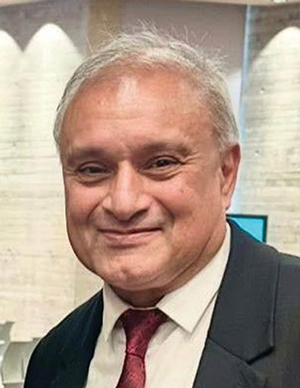
A Meaningful Life Is Shaped by the Courage to Serve Beyond Ourselves

Dr. Shahzad Qureshi
Success is often measured by titles, wealth, recognition or professional achievement. Yet, as life progresses, we begin to understand that its true value lies somewhere deeper. A meaningful life is not defined simply by what we achieve for ourselves, but by what we contribute to the lives of others.
I have always believed that “a meaningful life is shaped by the courage to serve beyond ourselves.” Service requires courage because it asks us to look beyond our own ambitions, comfort and personal interests. It challenges us to recognise that our knowledge, experience and opportunities carry a responsibility to make a positive difference.
Whether we are doctors, entrepreneurs, educators, community leaders, professionals or young people beginning our journeys, each of us has something valuable to offer. Service does not always require a grand gesture. Sometimes it is giving someone our time, sharing our knowledge, mentoring a young person, supporting a family in difficulty or simply standing beside someone when they need encouragement.
Our communities become stronger when successful people remain connected to the people around them. Achievement should never create distance; it should create opportunity. Education should empower us not only to advance ourselves but also to lift others. Leadership should not be about authority or status; it should be about responsibility, compassion and the willingness to act.
Britain is home to wonderfully diverse communities whose stories, cultures and experiences enrich our national life. Within these communities, we see countless examples of people working quietly every day to support charities, businesses, schools, hospitals and neighbourhood initiatives. Their contributions may not always make headlines, but collectively they form the foundation of a compassionate society.
We must particularly invest in the next generation. Young people need more than advice; they need opportunities, mentors and role models who genuinely believe in their potential. We must encourage them to dream boldly while reminding them that the greatest achievement is not simply reaching the top—it is remembering to extend a hand to others along the way.
The same principle applies to business and professional life. Profit and progress are important, but they become far more meaningful when accompanied by social responsibility. Organisations and individuals who use their influence to create opportunities, promote equality and support vulnerable people leave a legacy far greater than financial success alone.
Life inevitably brings challenges. There will be moments of uncertainty, disappointment and change. Yet these experiences can deepen our understanding of others and strengthen our determination to contribute positively.
Ultimately, we will not be remembered merely for the positions we held, the awards we received or the possessions we accumulated. We will be remembered for the people we helped, the hope we created and the difference we made.
True success is not simply about how far we travel in life. It is about how many people are able to move forward because we chose to serve beyond ourselves.

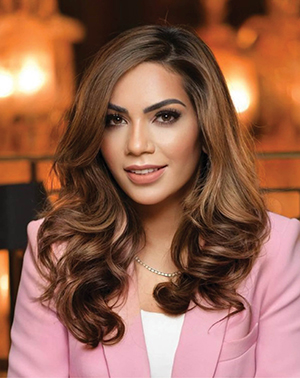
Prof. Fatima Zaman
Equality should never be regarded as an act of generosity offered by one group to another. It is a fundamental principle upon which a fair, successful and progressive society must be built. Equality is not a favour; it is the foundation of progress.
For generations, women have fought for the right to be heard, educated, employed, represented and respected equally. Considerable progress has been made, but progress should never make us complacent. Across society, barriers remain in workplaces, leadership, healthcare, education, business and public life. Some are obvious; others are hidden within attitudes and traditions that have existed for decades.
True equality means creating an environment where talent is recognised without prejudice and opportunity is determined by ability rather than gender, background, ethnicity, disability, faith or social circumstances.
This is not simply a women’s issue. Equality benefits everyone.
When women are empowered economically, families become stronger. When workplaces embrace diversity, organisations gain different perspectives and ideas. When women participate fully in decision-making, policies better reflect the communities they serve. When girls see women succeeding in medicine, science, education, business, politics and leadership, they begin to understand that their own possibilities are unlimited.
Representation therefore matters enormously.
But representation alone is not enough. We must ensure that people are not simply invited into the room but are genuinely heard once they arrive. Inclusion cannot become a photograph, slogan or annual campaign. It must be reflected in recruitment, pay, promotion, investment, leadership and everyday decision-making.
Education has an especially powerful role to play. We should teach our children from an early age that ambition has no gender and opportunity should have no artificial boundaries. A young girl’s dreams should never be reduced because society has traditionally imagined a different future for her.
At the same time, achieving equality requires partnership. Men must be part of this conversation. Progress is strongest when women and men work together, challenge unfairness together and create institutions where everyone has the opportunity to flourish.
We should also recognise that equality does not mean that everyone’s journey will look identical. People begin life from different circumstances and face different challenges. Creating genuine opportunity sometimes requires us to understand those differences and remove barriers that prevent talented individuals from reaching their potential.
Leadership carries a particular responsibility. Those of us who have been fortunate enough to gain experience, influence or a platform must create opportunities for others. Success becomes far more valuable when it opens doors rather than closes them behind us.
My message to the next generation is simple: believe in your ability, invest in your education, develop your confidence and never accept that your background or gender determines the limits of your future.
A truly progressive society does not ask whether equality is convenient. It recognises equality as essential.
Because when every individual has the freedom and opportunity to contribute their talent, ambition and ideas, we do not simply empower individuals—we strengthen our communities, our economy and our shared future.
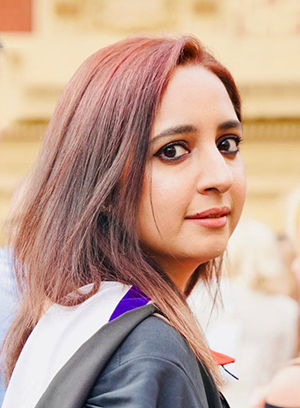
From Policy to Pay Cheque: Investing in Britain’s Young People

Sana Kardar
For decades, youth unemployment has been discussed principally as a labour-market statistic: something to reduce, monitor and periodically lament. Yet behind every percentage point lies a far more consequential question about Britain’s economic future.
When a young person remains outside employment, education or training, the loss is not theirs alone. Skills remain undeveloped, earning potential is diminished, confidence can decline and productive capacity that could have strengthened the wider economy is left unrealised.
Against this backdrop, the Government’s renewed emphasis on young people represents a welcome step. The expansion of employment support, including the Jobs Guarantee, apprenticeships and incentives for employers to recruit young people, reflects an important shift in philosophy: intervention should begin before temporary disadvantage hardens into long-term economic exclusion.
The urgency is difficult to ignore. Nearly one million young people in the UK are currently not in education, employment or training. Measures designed to create opportunities for those struggling to enter the workplace also begin to confront one of the labour market’s enduring paradoxes: young people are routinely expected to possess experience before anyone has given them the opportunity to acquire it.
Employment, however, should be the beginning of our ambition, not its conclusion. A first job creates considerably more than a wage. It develops professional judgement, confidence, networks, discipline and transferable skills. It establishes foundations upon which future opportunities and careers can be built.
Seen through this lens, investment in youth employment is not simply public expenditure designed to reduce unemployment. It is investment in human capital whose economic and social returns can accumulate across an entire working life.
Fair pay belongs within the same argument. Young workers should be able to see employment as a genuine route towards independence, security and progression. The challenge for government is not simply to choose between higher wages and more jobs, but to develop policies capable of advancing both.
Recruitment incentives, high-quality apprenticeships and sustained investment in skills can help employers take a chance on those at the beginning of their careers while ensuring young people have realistic prospects of progressing towards better-paid and more secure employment.
The next step must be to connect these opportunities with the economy Britain is attempting to build.
Life sciences, engineering, artificial intelligence, advanced manufacturing and clean energy will require more than investment and infrastructure. They will require people with the knowledge, confidence and technical skills to sustain them. Youth employment policy should therefore not sit at the margins of economic strategy; it should be one of its foundations.
Perhaps the most important change must be conceptual. Young people should not primarily be regarded as a challenge for the welfare system to manage. They should be recognised as economic, creative and intellectual capacity waiting to be developed.
Government initiatives can provide an important foundation, but their lasting significance will depend upon whether Britain can turn opportunity into a pathway: from education and training to employment, from employment to progression, and from a first pay cheque to genuine economic independence.
A country that invests in the potential of its young people is doing more than helping them enter the economy.
It is deciding what kind of economy, and what kind of Britain, it intends to leave in their hands.