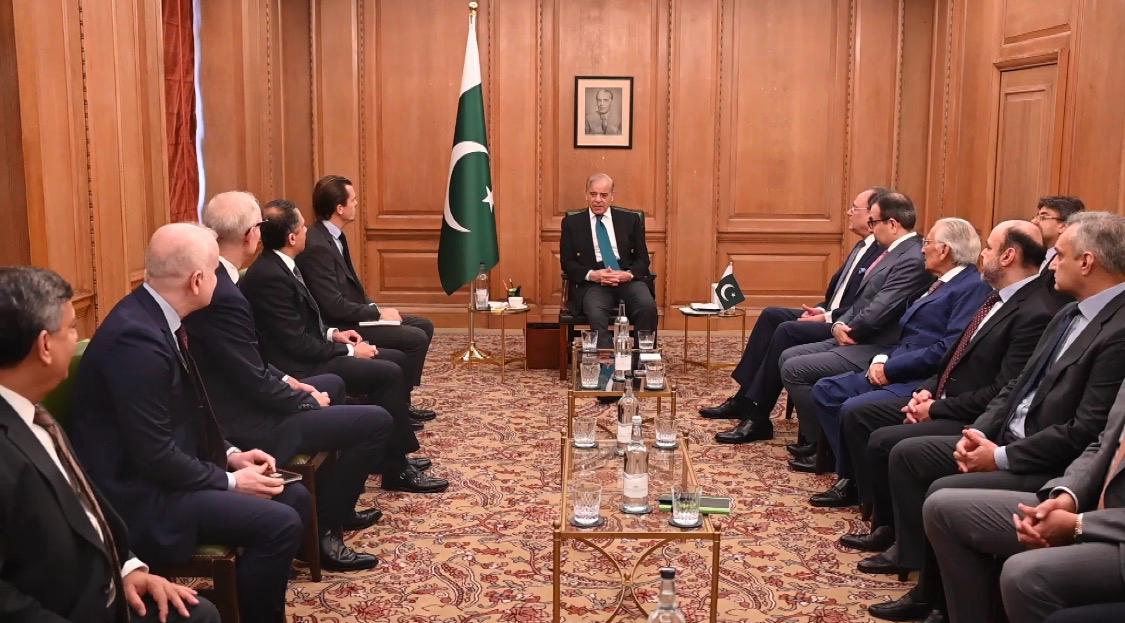
PM Office Media Wing: Prime Minister Muhammad Shehbaz Sharif held a series of meetings today with senior executives from leading global financial institutions Barclays, J.P. Morgan, Citi, BlackRock and Rothschild & Co — during his visit to the United Kingdom. The engagements underscored growing international financial sector interest in Pakistan’s economic reform trajectory and improving investment climate.
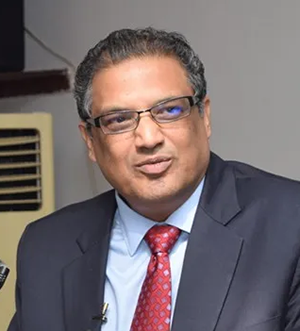
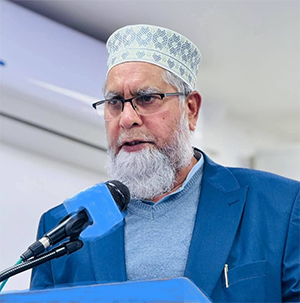
Meeting Mr Mohammad Kamal Syed, Head of Private Bank and Wealth Management UK at Barclays, the Prime Minister welcomed the bank’s interest in Pakistan and briefed him on the government’s macroeconomic stabilization measures, encouraging Barclays to explore opportunities in the country’s financial sector.
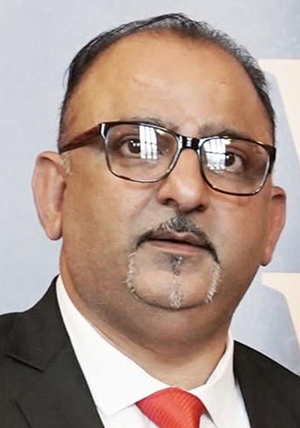
With a high-level J.P. Morgan delegation led by Mr. Matthieu Wiltz, Co-CEO for EMEA, the Prime Minister discussed deepening the partnership across capital markets, trade finance, and investment banking, and invited the firm to expand its footprint in Pakistan. The delegation reaffirmed its interest in sovereign debt capital markets and corporate banking opportunities.
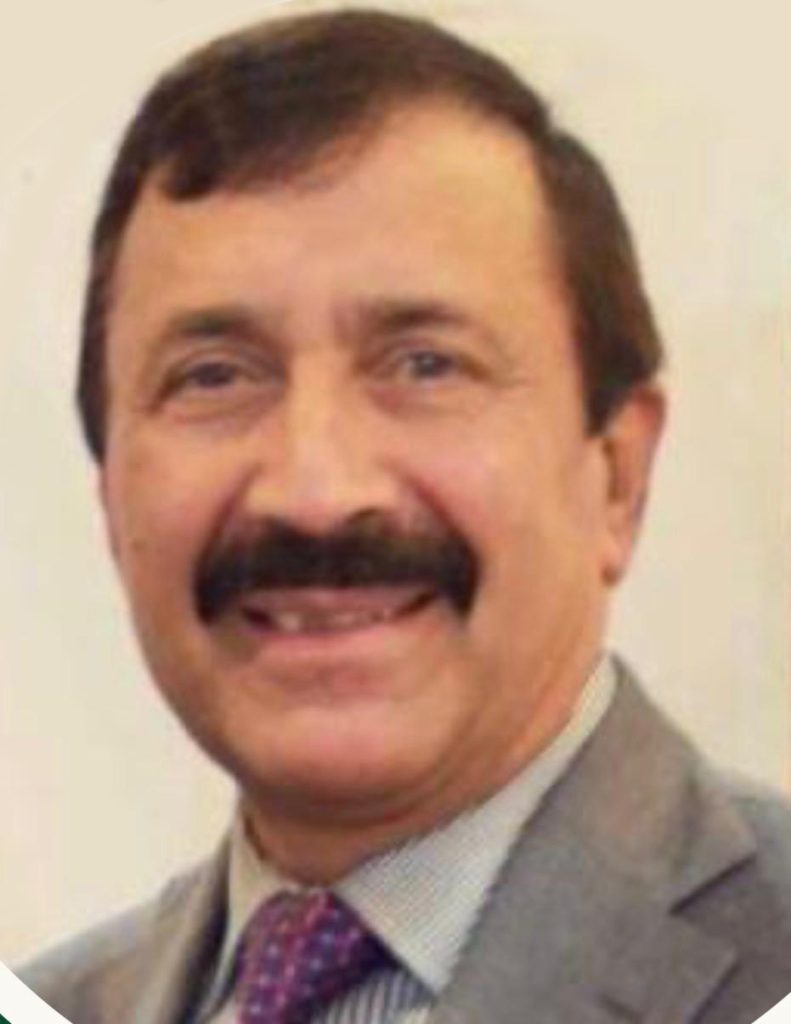
The Prime Minister also met a group of senior officials of Citi, led by Mr. David Livingstone, Chief Client Officer. Prime Minister commended the bank’s long-standing presence in Pakistan and encouraged an expansion of its corporate and institutional banking services in the country.
In a meeting with a BlackRock delegation comprising Gordon Fraser and Sam Vecht, Co-Heads of Emerging Markets and Frontiers, and Emily Fletcher, Portfolio Manager and Research Analyst, the Prime Minister invited increased allocations to Pakistani equities and fixed income within the firm’s frontier markets strategy, with both sides emphasizing the importance of sustained policy consistency in building investor confidence.
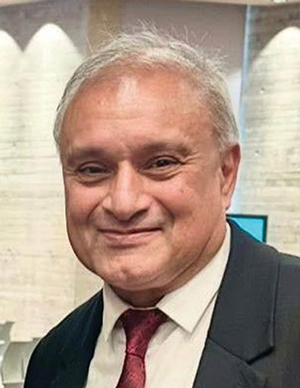
In a meeting with Rothschild & Co, represented by Lord Mark Sedwill, Chair of Geostrategic Advisory and Mr. Majid Ishaq, Head of UK Investment Banking, discussions centered on Pakistan’s geo-economic priorities and potential advisory collaboration on capital markets and investment strategy.
London Post
Bureau Report
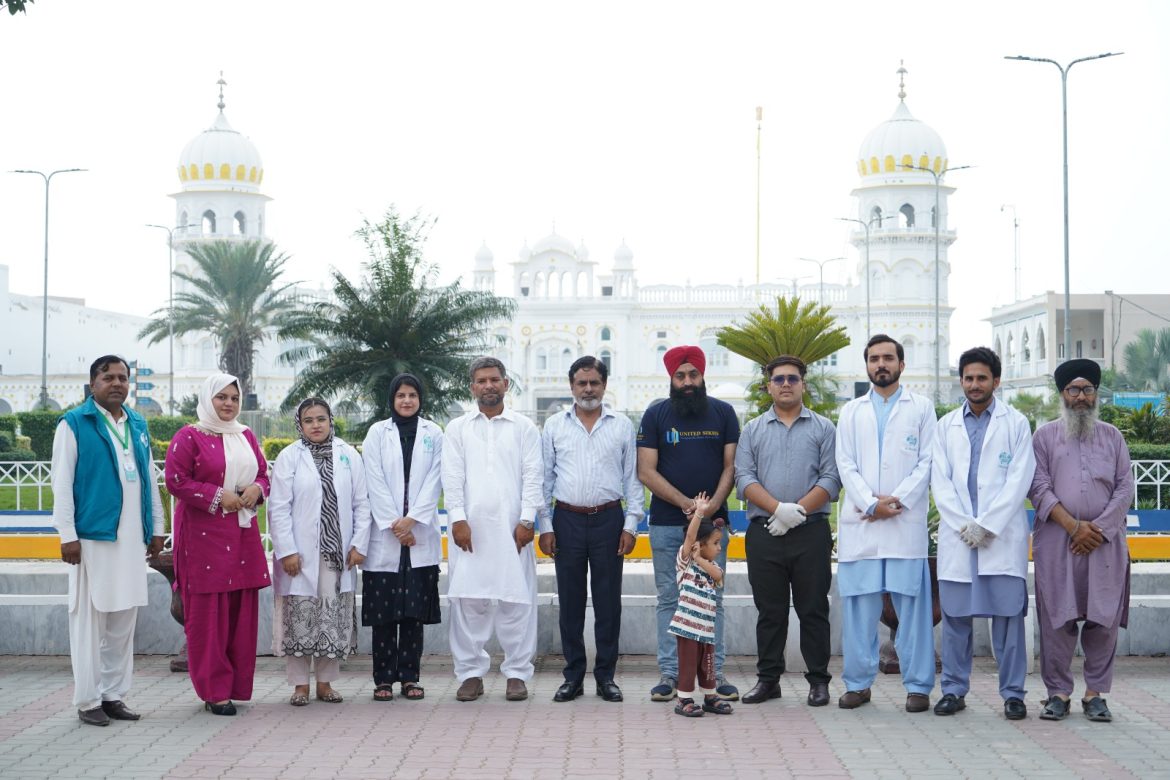
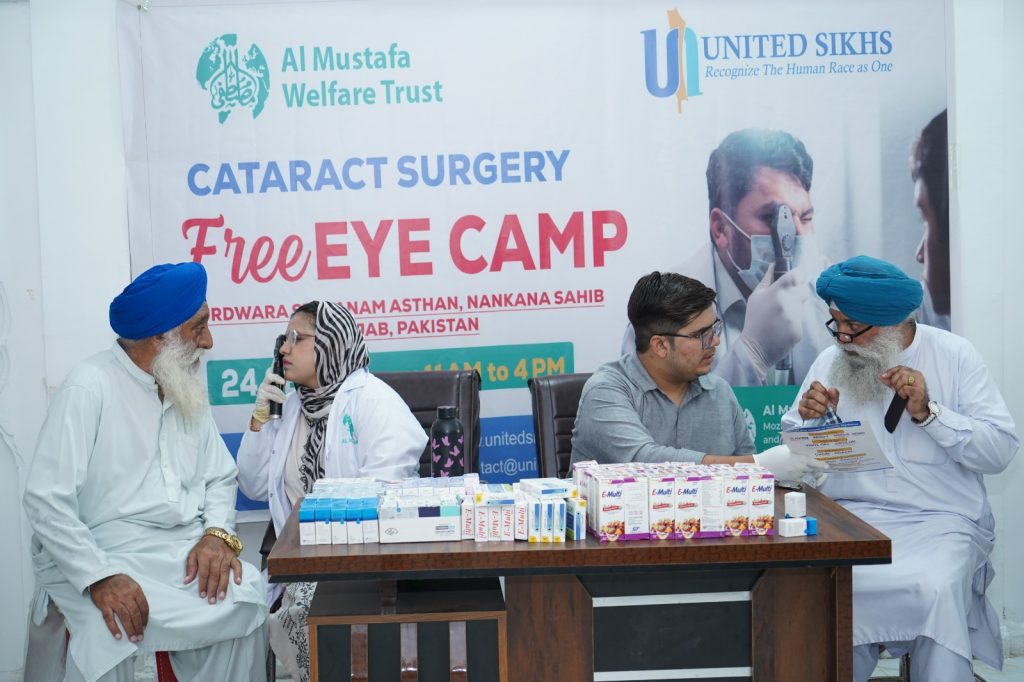
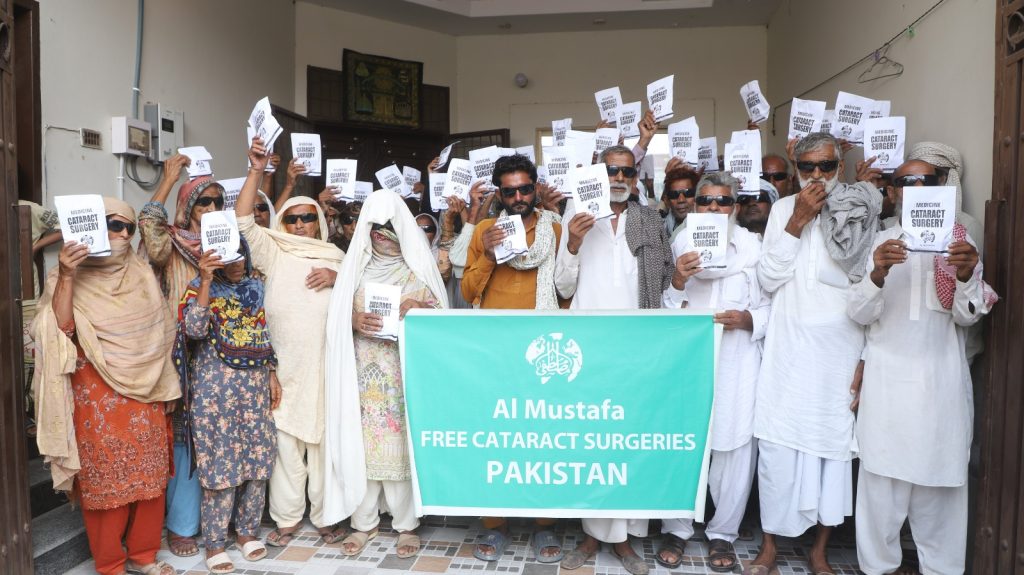
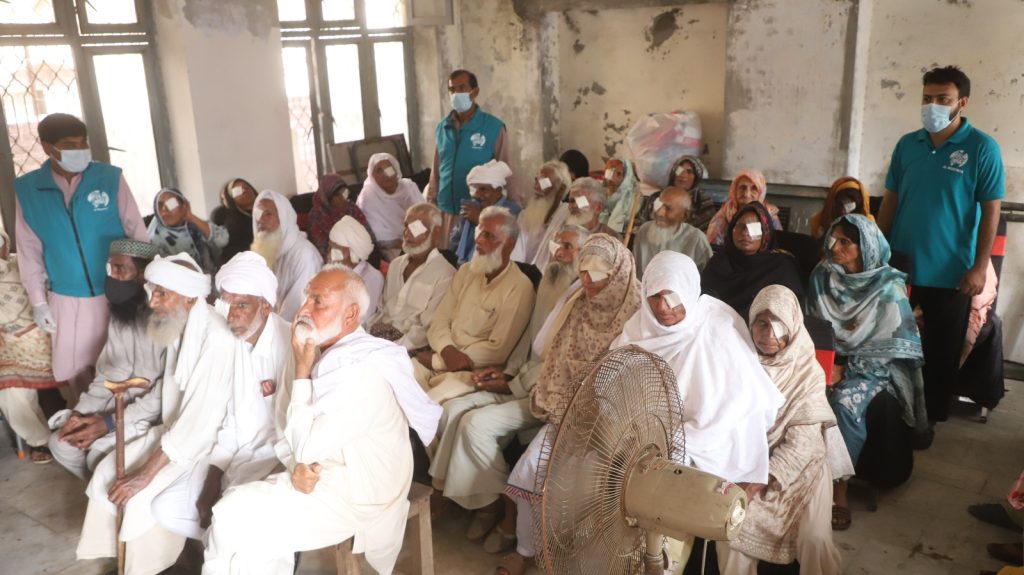
NANKANA SAHIB: A free eye camp was organised at the Gurdwara in Nankana Sahib, the birthplace of Baba Guru Nanak, by Al Mustafa Welfare Trust in collaboration with the Sikh United Organisation, providing free eye care to members of the Sikh community and other people in need.
The camp offered free eye examinations to patients, while those requiring spectacles were provided with glasses at no cost. Medicines were also distributed among patients in need.
Patients diagnosed with eye conditions requiring surgery were referred to Al Mustafa Eye Hospital Lahore for further treatment and surgical procedures.
Head of Media and Public Relations at Al Mustafa Welfare Trust Muhammad Nawaz Kharl and South Punjab Manager Arham Saleem Qadri also visited the camp and reviewed the medical services being provided. They met patients and appreciated the efforts of the medical and welfare teams in organising the free eye camp.
During their visit, they also met representatives of the Sikh community and discussed mutual cooperation, interfaith respect and opportunities for further welfare initiatives in the future.
Representatives of the Sikh community appreciated Al Mustafa Welfare Trust for providing medical assistance without discrimination and for extending its humanitarian services to people from different religious communities.
The initiative highlighted the role of humanitarian work in bringing communities closer together. By providing free healthcare regardless of religion, colour or background, the eye camp served as an example of compassion, mutual respect and community solidarity.
The organisers expressed their commitment to strengthening cooperation between the Sikh community and Al Mustafa Welfare Trust and to jointly promoting further welfare activities.
The message from Nankana Sahib was one of humanity, compassion and brotherhood — with better vision for the eyes and greater understanding among hearts.

Al Mustafa Free Eye Camp Provides Eye Care to Hundreds in Kasur
Bureau Report
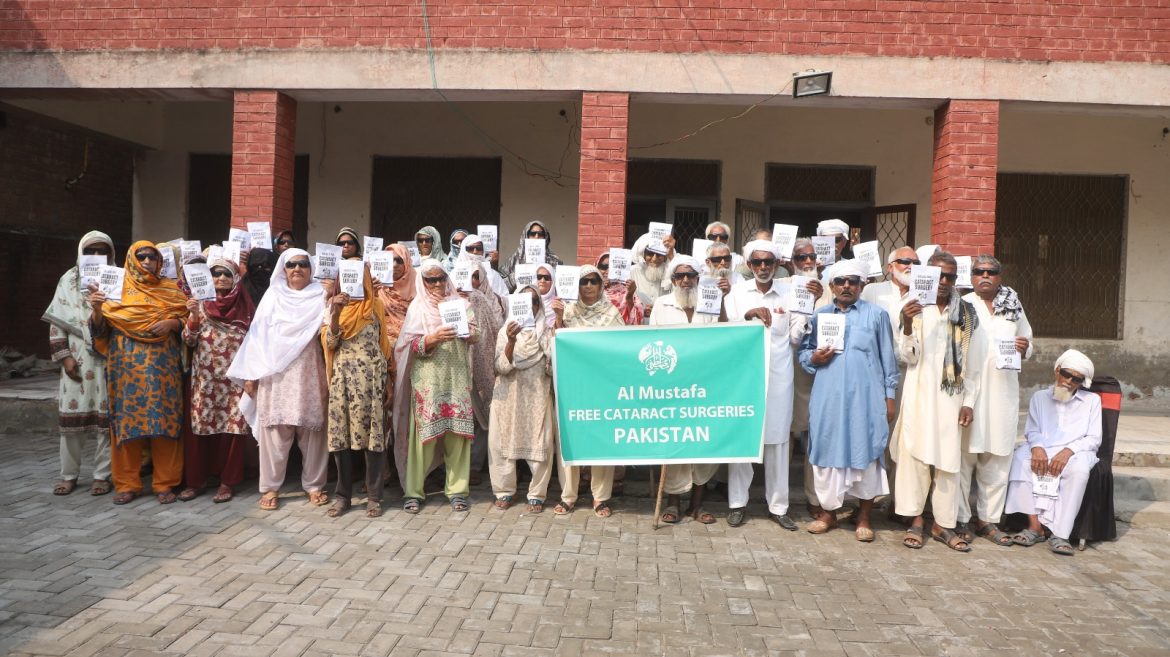
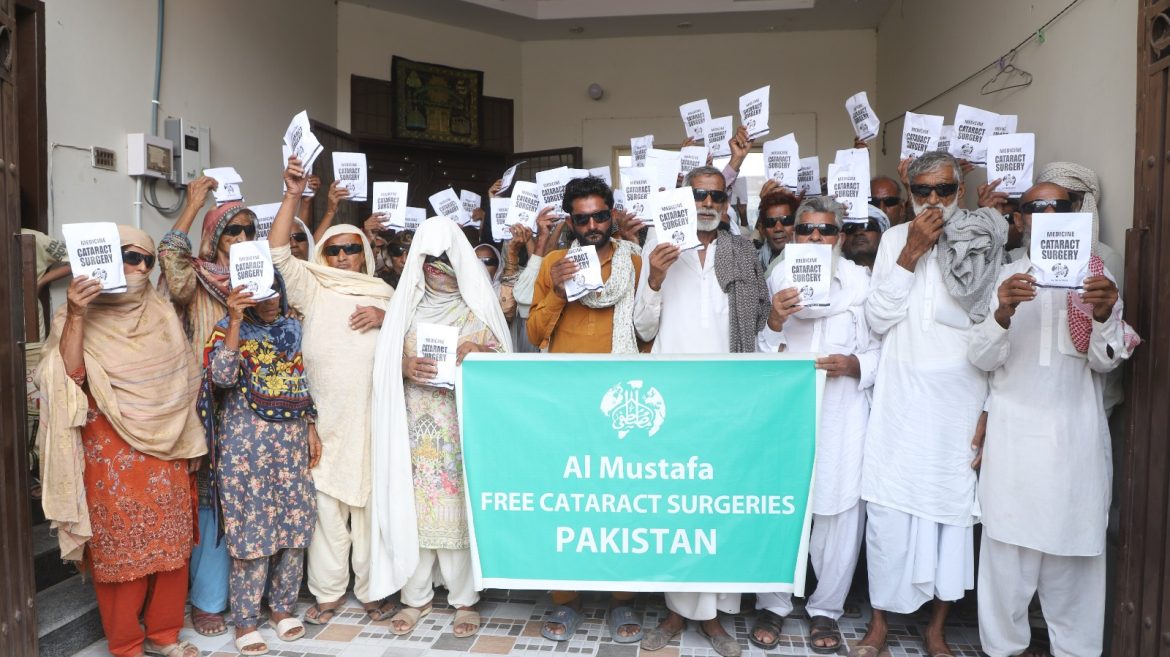
KASUR: A free eye camp organised by Al Mustafa Welfare Trust in Kangun Pur, Tehsil Kasur, District Kasur, provided medical and eye-care services to hundreds of people on 26 September 2026.
According to the camp’s progress report, a total of 769 patients attended the outpatient department (OPD), including 468 men and 301 women.
Medical teams performed 63 eye surgeries, comprising 39 male and 24 female patients.
The camp also provided 357 patients with spectacles, while 41 patients underwent refraction tests to assess their vision and determine their corrective requirements.
As part of the medical screening programme, 75 patients each were tested for Hepatitis C (HCV), Hepatitis B (HBsAg) and HIV. No patient tested positive for HCV or HIV, while two patients tested positive for HBsAg.
The camp also identified 15 diabetic patients, who were provided with appropriate medical attention and guidance.
The figures reflect the continued efforts of Al Mustafa Welfare Trust to provide free eye care and essential medical services to communities with limited access to healthcare facilities.
The camp was coordinated by Wahid Bakhsh, Eye Camp Coordinator, Al Mustafa-Pakistan
Al Mustafa Free Eye Camp Provides Free Eye Care to Hundreds in Faqeeria Wala, Kasur
Bureau Report
KASUR: Al Mustafa Welfare Trust, in collaboration with Al Mustafa Eye Hospital Lahore, organised a free eye camp in Faqeeria Wala Village, Tehsil Kasur, District Kasur, providing free medical examinations, eye surgeries, spectacles, medicines and other essential services to hundreds of local residents.
Held on 24 September 2026, the camp received 720 patients at its outpatient department, including 403 women and 317 men.
Medical teams performed 60 eye surgeries, comprising 33 female and 27 male patients. A total of 321 patients were provided with vision glasses/spectacles, while 13 patients underwent refraction tests.
The camp also included screening for Hepatitis C, Hepatitis B and HIV. Seventy-one patients were tested for each of the three conditions. Two patients tested positive for HCV, while no positive cases were recorded for HBsAg or HIV. Three diabetic patients were also identified during the camp.
Patients were provided with free medicines, spectacles, lenses and other necessary medical supplies.


Iqbal Latif
The second of two essays. The first, I Refuse to Accept a Demigod, asked what a man is for if Elon Musk is right. This one grants him everything and counts. In my last essay I refused to accept a demigod. Now let me do something his followers never do. Let me accept every word he says. From 1 January 2027 every promise works, on schedule, and nothing fails. Starship is fully reusable at his own target price. Rockets fly every day. A city of 1 million people rises on Mars. The Moon is mined. Data centres fill the sky, and satellites become the world’s communications network. Robots number in the billions, robotaxis fill the streets, and the Treasury sends everyone a high income. The lenders keep lending, the shares keep rising, and he keeps the credit for all of it. I will not argue with the physics. I will ask only the question an engineer is trained to ask before anything is built. Who pays, out of what, and what happens to the rest of the world while it is being paid for?
Two of his promises are not speeches. They are written into his contract. SpaceX’s own prospectus, filed with the American regulator this year, grants him 1 billion shares that vest only when the company reaches market values up to $7.5 trillion and a permanent colony of at least 1 million people is living on Mars, and 302 million more tied to market values up to $6.565 trillion and to data centres in space capable of 100 terawatts. The same filing shows him holding 85.1% of the company’s voting power before the listing. Those two grants are the spine of this essay, because a company and its founder signed them. The rest, the robots and the checks, he said in public, and I take him at his word. Every number I use is his, his company’s, or an assumption I name as mine. And at the end I have drawn up what nobody has shown us: a balance sheet of the Earth for the years 2027 to 2050, in plain words, so that anyone can see what we have, what his fantasy demands, and the gap between them. If you read nothing else, read that.
Let me begin with two concessions, because they make everything that follows harder to escape. The first is his own sum for Mars. He has said a city on Mars that can grow by itself needs at least a million tonnes of equipment. At today’s price of landing cargo on Mars, about $1 billion a tonne, that would cost over $1,000 trillion, which he rightly calls impossible. His answer is that Starship makes it 1,000 times cheaper, bringing the whole colony down to about $1 trillion. Spread over 40 years, that is less than $25 billion a year, about 0.02% of a $124 trillion world economy. If that number held, he would be right. The rocket is not where his future breaks.
The second concession is the market. At the very beginning, the bond market agreed with my doubts. When his bonds first traded in June their prices fell, and by August the cost of insuring against a SpaceX default had climbed to record levels. Since then, as the shares have recovered, the spread has contracted. The lenders are charging him less for his risk. His stories are selling, and I say so plainly. But a bondholder is paid first, from the money that exists today: Starlink, the launches, the rent from the AI companies. A bond is a bet that the company survives, not that Mars gets built. The bond market doubted him first and forgave him later, but it is still lending against Starlink, not against Mars.
So grant him the $1 trillion. Grant him the credit. Now count.
A city of 1 million people at about 100 people a ship needs some 10,000 ships of people. His million tonnes of cargo at about 100 tonnes a ship needs 10,000 more. That is 20,000 ships, and most of them are meant to stay and become the city. Every ship bound for Mars must be refuelled in orbit before it leaves, and nobody knows the exact number of tanker flights. If each ship needs 5, the Mars programme needs about 120,000 launches. If each needs the high teens that NASA estimated for a single landing on the Moon, it needs about 320,000. At 27 launches a day, every day, without a single failure or pause, that is 12 years of flying at the kind end and 32 at the other. And the planets line up only once every 26 months. To reach 1 million people by 2050, he would need around 2,000 ships leaving at each window, twice the fleet he has spoken of. If a launch ever costs as little as $10 million, an aspiration and not a fact, the launches alone cost $1.2 trillion to $3.2 trillion. His whole colony was supposed to cost $1 trillion. The rockets have spent it before a single house is built.
And we have only counted the journey out. Some of those ships must come home, with crews, with the sick, with anyone who changes their mind. Leaving Mars is easier than leaving Earth, because its gravity is only about 38% of ours, but a Starship still needs its tanks filled on the ground: well over 1,000 tonnes of fuel and oxygen for each flight home. Carry that from Earth, and every returning ship needs about 10 cargo ships of fuel sent ahead of it, each of which needed its own tankers to leave Earth. That is impossible, and he knows it, so his plan is to make the fuel on Mars, out of the Martian air and the ice beneath the ground. But a fuel factory on Mars is not a wish. It needs mining for ice, a chemical plant to turn carbon dioxide and water into methane and oxygen, and a power station large enough to run it, in sunlight less than half as strong as ours and through dust storms that can darken the sky for weeks. All of it must be carried from Earth, built and working before the first ship can come back. The only oxygen making technology yet demonstrated on Mars, NASA’s small MOXIE experiment on the Perseverance rover, was a test, not a factory, and it made about 122 grams of oxygen in two years. A single ship needs roughly 800 tonnes of oxygen to come home. Nothing on the scale he needs has ever been built on another world. It appears in no price I have seen, including his.
Then there is the city itself. His million tonnes works out at about one tonne of equipment for each settler. For comparison, everything humans have built on Earth, the concrete, steel, roads, buildings and machines, came to roughly 1.1 trillion tonnes around 2020, about as much as all living things on the planet, or roughly 140 tonnes for every person alive. Mars will not need our motorways and dams, so nobody should read that as a Martian requirement. But somewhere between one tonne and 140 lies everything a settler needs that his cargo does not carry: the mines, smelters, chemical plants, glassworks, electronics factories and pharmacies that do not exist there and that took Earth 200 years to build. All of it must be built on Mars, out of Martian rock. Nobody has priced that, including him.
The Moon needs its own million tonnes. At about 100 tonnes a landing and 10 to 16 tanker flights for every landing, that is another 100,000 to 160,000 launches. Then comes the sky. On 30 January 2026 his company asked the American regulator for permission to fly up to 1 million satellites as data centres in orbit, which it called the first step towards a civilisation that harnesses the full power of the Sun. Today about 14,000 working satellites of every kind circle the earth. His share grant ties one award to what it calls “non-Earth-based data centers capable of delivering 100 terawatts of compute per year.” The phrase is strange, because a watt is already a rate. I read it as 100 terawatts of power; if the company means something smaller, it should say so, and say what. On that reading the company’s own arithmetic, 1 million tonnes a year in orbit for about 100 gigawatts, gives the scale: 100 terawatts is 1,000 times that, about 1 billion tonnes in orbit, 5 to 10 million launches, and $100 to $200 trillion even at his dream price of $100 to $200 a kilogram. It is about five times all the energy the human race now uses. And notice what his two numbers say together. A billion tonnes shared among his 1 million satellites is about 1,000 tonnes each, more than twice the International Space Station, in every single one. The two claims cannot be combined without an assumption the company has not explained: a satellite with a radically different power to weight ratio, a different meaning of 100 terawatts, or a different design altogether. Until it explains which, one of the two numbers cannot be taken as it stands. Nor does a satellite in low orbit last forever. If these last about five years, which is my assumption, 1 million of them means some 200,000 new satellites a year, and about 550 old ones falling back and burning up in our upper air every single day. What that does to the atmosphere is still an open question. Nobody has answered it, and nobody asked the rest of us whether our sky could be used this way. Put Mars, the Moon and orbit together, and 27 launches a day is not the ceiling of his plan. It is the floor. And beneath the computers in the sky sits a business I have not yet counted: the net that connects them to us. Starlink is not only a way of reaching a farmhouse without fibre. The grander investment story is that satellites take a growing share of the business now carried by towers, fibre and the 4G and 5G networks of every telephone company on earth. That matters, because Starlink is the engine meant to pay for everything else. The orbital computers consume capital; Starlink is supposed to generate it. The Earth business finances the space business. So ask what a trillion dollar business means: a trillion of revenue every year, or a trillion of market value? They are not the same thing, and a trillion of market value does not pour a single tonne of concrete on Mars. The world already spends well over $1 trillion a year on telecom services. For the net to pay for Mars, the Moon, the robots and the orbital computers, it must capture a great part of that spending from the households, firms and governments that pay it today. And to the extent that the new net displaces the old one, part of the bill is paid twice: once for the net in the sky, and again in the write off of the towers, cables and exchanges on the ground, owned, once again, by pension funds and infrastructure funds. The saver pays for the new network and loses on the old.
(To be continued)

Suhail Warraich
If someone possesses a peculiar temperament finding fair skin incredibly attractive yet simultaneously discovering beauty in a dark complexion where and by whom would such a nature be accepted? Similarly, if a person acknowledges Alexander the Great as a supreme conqueror while also regarding Raja Porus as truly great, such a mindset would hardly appeal to anyone. If an impassioned soul delights in the fragrance of a flower yet also Savors the pain and the flow of blood caused by its thorns, they would simply be deemed mad. Yet, upon witnessing these contradictions, one should not hastily reject the person harbouring such innate quirks; after all, ordinary people enjoy the sweetness of a dessert while also relishing the sharp heat of a chili pepper. Human temperament and thought are diverse; one might simultaneously enjoy the taste of two opposing things, appreciate the distinct virtues of two rivals, or find beauty in two contrasting colours. Monotony breeds narrow-mindedness, whereas a multifaceted nature fosters broad-mindedness. Regrettably, however, our realms of politics and romance tolerate no such duality. Majnu cannot look at anyone other than Laila; a fair-skinned woman holds no appeal for him his heart is set solely on the dark-complexioned Laila. Even if Heer is married off to Saida Khera, Ranjha becomes a Jogi (ascetic) for her sake alone; were he to even glance at another woman, the entire romance would be ruined. Ahmad Khan Kharl is my hero, yet praising the bravery of Berkeley his adversary could cost me dearly, potentially leading to accusations that I am an agent of the British. It is easy to recount the story of the British army’s valour in the final battle at Chillianwala (1849), yet it is difficult indeed, a formidable challenge to narrate the tale of the fierce resistance put up by their adversaries. Sher Singh Attariwala, along with the Gujarati and Peshawari Muslims.
The predicament facing this flawed, wayward soul afflicted with a certain “technical glitch” and an innate quirk is that in the land of contradictions, it is practically an established rule that one cannot ride two boats or two horses simultaneously, fit two swords into a single scabbard, or harbour two beloveds in one heart; yet, all such notions have become obsolete. Today, the prevailing trend is one of diversity, multiplicity, and an embrace of every hue. Old concepts and mindsets have become outdated; the times have surged ahead with astonishing speed. If the times have changed, then idioms must change too, and their meanings and implications require reinterpretation.
This flawed, wayward sinner finds appeal in both the lover and the villain. What is he to do if he admires the roles of both the hero and the antagonist in a film? What is this frail soul to do if, during a cricket match, he applauds and cheers whether a player from his own team performs well or an opponent hits a four or a six? He loves his own dog, ‘Tommy,’ yet feels affection for others’ dogs as well. We have left no room for such a sinner; the space for his existence has been constricted because everyone insists on branding the other as entirely wrong. If a journalist writes a single sentence against them, PTI supporters immediately label him a “lifafa” (paid hack) or an army agent, if there is even a slight disagreement with a policy of the establishment or the government, the impression is created that he is conspiring with the enemy; if one criticizes the “Nooni” (PML-N) leadership or their style of governance, they mockingly call him “Einstein.” Our institutions never mind the actual facts are quick to brand someone a liar or a fabricator of stories based merely on perception. The “Peepley” (PPP supporters) likely deliver speeches in their private gatherings too, yet they are sensible enough not to hurl public abuse. The reality is that the paths of politics and expression are blocked by the idols of personal likes and dislikes; turning opposition into stubborn hostility, taking criticism as a personal affront, and viewing those on a different path as misguided are utterly unwise actions. We are all fellow travellers on the journey of Pakistan our routes may differ, but the destination is the same: a prosperous and democratic Pakistan.
If the long march has indeed merely been postponed and is set to take place again, then the real issue concerns the “Dhola” (beloved) of the Tehreek-e-Insaf, and the Rola (uproar) is being raised for that very reason. In Punjabi, “Dhola” refers to a beloved, while “Rola” signifies an uproar or commotion. The word “Dhola” was immortalised by the “Queen of Melody,” Noor Jehan, through her song “Dhol Sipahiya.” If the clamour surrounding Tehreek-e-Insaf on social media YouTube and TikTok were mirrored in the streets and marketplaces, the system would have crumbled by now; however, the party that dominates the digital keyboard sphere remains unable to project its strength on the streets due to fear, pressure, or a lack of organisation. Conversely, the “uprising” and commotion the government is mobilizing against is largely imaginary and fabricated. Both sides are guilty of extremes and a detachment from reality. The notion that Tehreek-e-Insaf could stage a massive rally and bring the capital to a standstill is flawed and unrealistic. On the other hand, the government’s countermeasures roadblocks, barricades of containers and spiked barriers, and the closure of motorways were equally absurd; the preparations in Islamabad suggested an anticipation of something akin to Mao Zedong’s Long March, with the fear that its arrival might trigger a revolution. The “Gandapur Long March” proved to be far more dangerous, terrifying, and violent than the “Afridi Long March.”
The lyrics of a popular “Dhola” (folk song) go, “If there is no “Dhola” (beloved), there will be no “Rola” (uproar).” In other words, without a beloved, there are no complications or commotions. On one hand, this is linked to Sheikh Rashid’s bachelorhood implying that since he has no spouse or children, he faces no such burdens. On the other hand, the crackdown surrounding the “Long March” is also connected to this concept. Those without a family or a beloved have no fear of arrest, whereas for those who do have a beloved and a home, arrest is a serious concern.
Four years have passed since the current setup took charge; astute politicians, seasoned strategists, and visionary leaders are all part of it. Yet, they have failed to reach a decision regarding the “Dhola and Rola” Pakistan’s greatest political dilemma. While judicial verdicts have turned the “Dhola” into a prisoner famously known now as “804” no political “voice” or challenge has even been raised against him in the true political arena. That is why the same kind of uproar “Rola” keeps erupting; neither a lightweight “hola” nor a heavyweight “bhara” contender has stepped into the ring. If the “Dhola” remains the sole figure in the arena, politics and the prevailing narrative will remain stagnant.
The fundamental principle of democracy is that the government and the opposition are the two wheels of the same vehicle, yet both the “Insafis” (PTI supporters) and the government want to run it on a single wheel. Monotony cannot work; diversity is the only lasting solution to problems. However, both sides are blind followers of a single hero, a single colour, a single flavour, and a single form. It seems that, following in the footsteps of Ibn-e-Insha, “Asi” (the humble writer) will have to go into exile. “When the people of the city offer no passage, why not go and find rest in the forest?”

Prof Masood Akhtar Hazarvi
The sanctity of the Holy Kaaba, the Sacred Mosque in Makkah, the blessed resting place of the Messenger of Allah ﷺ, and the Prophet’s Mosque in Madinah are not granted by any government, kingdom, or regional power. Rather, their sanctity has been established by the Lord of the Universe Himself and by His beloved Messenger ﷺ. The Holy Qur’an explicitly declares that whoever enters the Sacred Sanctuary shall be secure. The Prophet ﷺ also prayed: “O Allah, make Madinah beloved to us as You have made Makkah beloved to us, or even more beloved.” (Sahih al-Bukhari, Sahih Muslim)
For this reason, throughout history, serving and protecting the Two Holy Sanctuaries has been regarded by the Muslim Ummah as a great religious responsibility and an honour. From the era of the Prophet ﷺ through the periods of the Rightly Guided Caliphs, the Umayyads, the Abbasids, and the Ottomans, political authority changed hands many times, yet one principle remained constant: the Two Holy Sanctuaries were never regarded merely as the private possession of a particular nation or government; rather, they were considered a trust belonging to the entire Muslim Ummah. The security, sanctity, and dignity of these sacred places transcend political interests and regional disputes, and the responsibility to protect them has remained an essential part of the collective religious consciousness of Muslims. The question, therefore, arises: what circumstances confront this sacred trust today, a trust whose protection remained above political changes for centuries? The answer lies partly in the political fragmentation of the twentieth century, which inflicted a deep wound upon the unity of the Muslim Ummah.
The abolition of the Ottoman Caliphate and the intervention of colonial powers severely damaged the political unity of the Muslim world. The secret Sykes–Picot Agreement, concluded between Britain and France on 16 May 1916, became a significant expression of plans to divide the Arab territories of the Ottoman Empire according to their respective interests following the anticipated defeat of the Ottoman Empire in the First World War. This agreement, together with the borders and political arrangements that followed, contributed to the formation of state structures in which external interests were often more prominent than local historical, tribal, and religious realities. Although the establishment of the Organisation of Islamic Cooperation in 1969 represented an acknowledgement of the need for a common platform for the Muslim world, regrettably, this platform has often remained limited to formal statements rather than developing into effective collective action. As a result, many regions of the Muslim world remain trapped in a complex web of mutual disputes, regional rivalries, and external interventions, the consequences of which affect the peace and stability of the entire Ummah. One tragic manifestation of this political vacuum and fragmentation can be seen today in Yemen and Saudi Arabia.
The present situation in Yemen is a painful example of this broader crisis. Following the Houthi takeover of Sana’a in 2014, the resulting civil war led to a Saudi-led military intervention in 2015, after which the region endured prolonged conflict, destruction, and humanitarian suffering. Millions of Yemenis have been affected by hunger, disease, and displacement. This conflict is not merely a confrontation between two sides; it is also connected with regional rivalries, external interventions, arms interests, and the strategic geographical importance of maritime routes. In recent days, reports of a drone attack near Makkah have deepened concerns that if the effects of regional tensions begin to reach the security of the sacred places, the entire Muslim Ummah must respond with extraordinary seriousness. The security of the Two Holy Sanctuaries cannot become a subject of political dispute. It is a shared responsibility of the entire Ummah and requires religious

Atta Haq
Not everything comes with patience, but everything comes after patience.”
We live in a world where everyone wants things quickly. We want success today, answers immediately and results without waiting. Technology has made our lives faster, but life itself does not always work at the same speed. Some of the most important things we achieve require time, hard work and, above all, patience.
For me, patience does not mean sitting quietly and doing nothing. Patience means continuing to work even when results are slow. It means believing in your journey when things are not going according to plan.
Throughout life, we all face difficult moments. Sometimes a business idea does not work. Sometimes a job opportunity disappears. A relationship may change, a project may be delayed, or something we have worked hard for may not happen when we expected.
At those moments, it is easy to become disappointed and ask, “Why is this happening to me?”
But sometimes a delay can teach us something that immediate success never could.
Patience gives us time to learn. It allows us to understand our mistakes, improve ourselves and prepare for the next opportunity. Many successful people did not achieve their dreams on their first attempt. Behind every achievement, there are often years of struggle, rejection, sacrifice and lessons that nobody else sees.
This is why we should never compare our journey with someone else’s. We often see another person’s success, but we do not see the difficult road they travelled to reach it. Everyone has a different journey and a different time.
Patience is also important when dealing with people. We all have different personalities, backgrounds and experiences. Sometimes misunderstandings happen. Instead of reacting immediately with anger, patience gives us the chance to listen, understand and respond calmly. Many problems can be solved simply by giving each other time and respect.
The same is true in our communities. Positive change rarely happens overnight. Whether we are trying to help young people, support vulnerable families, build stronger communities or bring people together, meaningful progress requires commitment over many years.
Patience, however, should never become an excuse to stop trying. We must continue taking action. Keep knocking on doors. Keep learning. Keep improving. Keep helping others. If one opportunity closes, look for another. If one plan fails, create a better one.
Life has taught me that we cannot control everything that happens to us, but we can control how we respond. We can choose frustration, or we can choose patience and continue moving forward. So, if something you have been waiting for has not happened yet, do not immediately believe that you have failed. Perhaps your journey is simply taking longer than you expected.
Keep working. Keep believing. Keep your feet on the ground and your eyes on your destination.
Because not everything comes simply through patience, but many of life’s greatest achievements come after patience.

Tahir Jamil Noorani
Today I want to share some information about the shifting political tides of the United Kingdom, the Britain of the present day, and the Great Britain of 1707 which, in the nineteenth century, became a great global naval, commercial and colonial power, earned the extraordinary distinction of being called the “Mother of Democracy”, dominated the world for 99 years and held global influence for 200. It is information that can prove extremely useful to school and college students, and above all to candidates sitting competitive examinations. To understand the boundaries of Britain, it is first essential to know the difference between Great Britain, Britain, the UK and England. Geographically and constitutionally, these four terms mean clearly different things. What is the UK? Its correct full name is the United Kingdom of Great Britain and Northern Ireland, and the state is made up of four nations: England, Wales, Scotland and Northern Ireland. Yet most people around the world, and anyone unfamiliar with British history, simply call the whole UK “England” which is not correct at all. “Great Britain”, by contrast, is the geographical name of one large island, which clearly includes England, Scotland and Wales but not Northern Ireland.
So, keep in mind that “Great Britain” and “United Kingdom” are synonymous. Then what does “Britain” mean? It is a word people generally use to mean “Great Britain”, though on some occasions it is also used to mean the United Kingdom. What matters is that geographical boundaries and the state are kept in mind. In the same way, there is a common misunderstanding about “England” and “the UK”. England is only one part of the UK, while Scotland and Wales hold their own separate national identities, so treating the two as one is not correct. Nor is it correct to call the people of all four nations “English”. That is why the UK Parliament at Westminster in London is described as the central institution of the United Kingdom: its 650 Members represent all four nations, and the world knows it as the Houses of Parliament. But the “Great Britain” that held sway for 300 years now appears to be entering a new geographical, political and constitutional process and the circle of questions around it is widening. Will Britain be able to hold on to its strength as a united state? That is the question now being asked: whether soon, the geographical and political paths of Scotland, Wales and Northern Ireland will compel Britain to take a new constitutional form. And another question is now being raised too: how much longer will Britain, as the UK, remain in its present political shape?
The circle of questions about Britain’s geographical standing grew wider still the following day, when US President Donald Trump was visiting Ireland. During the visit he spoke about Irish unity, saying he wishes to see Ireland united. He expressed a positive view of the prospect of Irish unification but stayed silent on the immediate separation of Northern Ireland from Britain. He did say that such a union could be expected at any time soon while also accepting that Britain would have its own position on the matter, one that could not be ignored. If Ireland is to be united one day anyway, he said, why not now? Meanwhile, the SNP leader in Scotland, John Swinney, the Plaid Cymru leader in Wales, Rhun ap Iorwerth, and Sinn Féin’s leaders in Northern Ireland Michelle O’Neill and Sinn Féin president Mary Lou McDonald have, through a memorandum of understanding, backed the principle that the people of these nations must have the full right to decide their own political and constitutional future.
Opinion polls and public statements make this plain as well: in an August 2026 poll, 47 per cent of Scots were in favour of an independent homeland and 43 per cent were against, while a significant number gave no firm view. The picture of Welsh independence is somewhat different. According to a poll carried out for ITV in September, 20 per cent of the public said they would vote for independence if a referendum were held. Most opinion in Wales wants greater powers instead. What happens next is still undecided.
Looked at separately, the recent speeches and political statements of leaders in Scotland, Wales and Northern Ireland point down three different political paths and no firm prediction can be made about any of them. In Scotland, the question of independence is the clearest of all. Wales wants more financial powers and greater autonomy. But one important strand of this alliance is “union with Europe”: it also wants to work alongside Europe on relations, regional cooperation and several other fields. The alliance also believes that Britain’s decision to leave the European Union through the Brexit referendum narrowed its economic and political opportunities so closer ties with the European Union in future cannot be ruled out. Given all this, the present assessment is that Britain is not about to break apart any time soon. For now, this is a current of public thinking; nothing of the kind is happening yet. The government in London has already made clear that its priority is the unity of Britain, economic growth and solving the problems ordinary people face not independence and referendums.

Dr. Shahzad Qureshi
Unity does not erase our differences; it turns them into collective strength.”
We live in a world full of differences. We come from different countries, cultures, religions and backgrounds. We may speak different languages, have different traditions and hold different opinions. But these differences should never become a reason to divide us. Instead, they can become one of our greatest strengths.
Unity does not mean that everyone has to think, speak or live in the same way. True unity means respecting each other while accepting that we are different. It means standing together for the common good and understanding that every person has something valuable to contribute.
A strong community is built when people listen to each other. Sometimes we may disagree, but disagreement does not have to create hatred. We can have different views and still respect one another. We can come from different backgrounds and still work towards the same goals.
This is especially important in Britain today. Our society is made up of people from many cultures and communities. Generations of families from across the world have contributed to British life through business, healthcare, education, public service, charity, science, technology and many other areas. This diversity brings different experiences, skills and ideas together.
When we work together, we become stronger. Unity is also important in our everyday lives. It begins with simple actions: helping a neighbour, supporting someone who is struggling, listening to another person’s point of view and treating everyone with dignity. Small acts of kindness and understanding can have a much greater impact than we sometimes realise.
We also have a responsibility to the younger generation. Young people should grow up understanding that differences are not something to fear. They should be encouraged to learn from people from different cultures, backgrounds and experiences. Education, community activities and open conversations can help build understanding from an early age.
Leadership also plays an important role. Whether in government, business, healthcare, education or community organisations, good leaders should bring people together rather than push them apart. Leadership should create opportunities for people to participate, contribute and feel that their voices matter.
There will always be challenges in society. Economic pressures, international conflicts and social tensions can sometimes create fear and division. During difficult times, unity becomes even more important. We must remember that blaming one another does not solve our problems. Working together gives us a much better chance of finding solutions.
Our differences are part of who we are. We should not try to remove them. We should celebrate them while recognising the values we share: respect, fairness, compassion, opportunity and hope.
A truly united society is not one where everyone is the same. It is one where different people stand side by side, respect each other and work together.
That is the real meaning of unity. Our differences do not make us weaker. When we bring them together with respect and understanding, they become our collective strength.