Bureau Report
Haripur, Khyber Pakhtunkhwa:
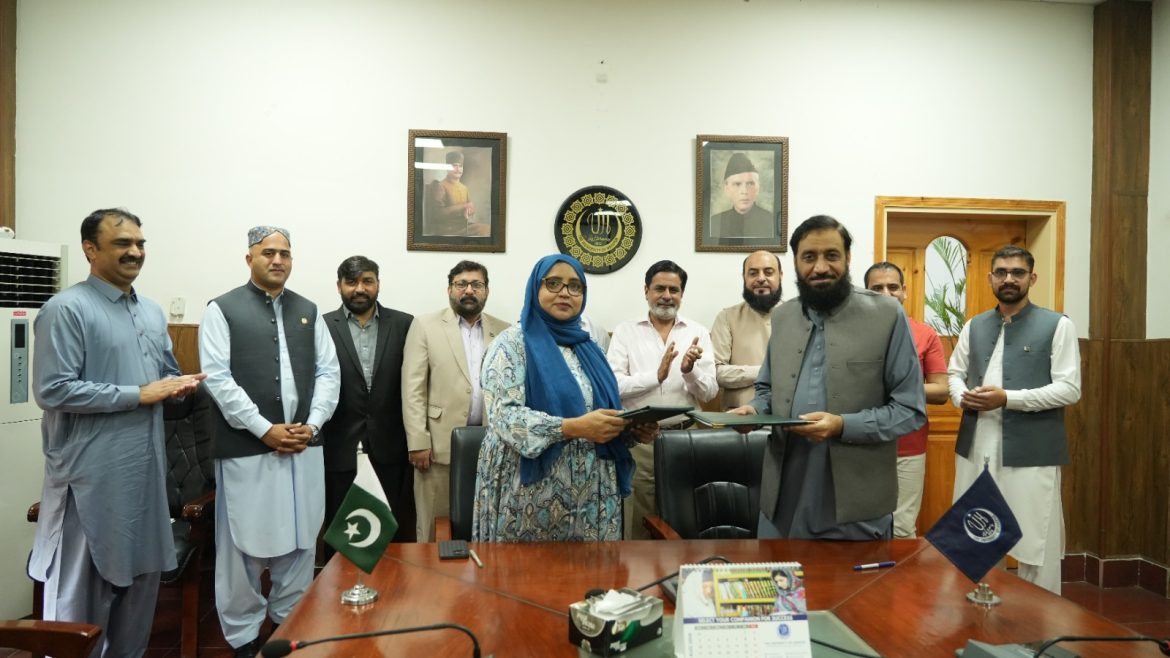
The University of Haripur and Al Mustafa Welfare Trust have signed a Memorandum of Understanding (MoU) to strengthen cooperation and promote joint initiatives in areas of mutual interest.
The signing ceremony was held at the University of Haripur, where Managing Director Al Mustafa Pakistan Ms. Nusrat Saleem signed the MoU on behalf of Al Mustafa, while University of Haripur Vice Chancellor Professor Abid Farid signed on behalf of the university.
University Registrar Riaz Muhammad, Professor Bakhtawar, heads of various university departments and senior faculty members attended the ceremony. Al Mustafa Pakistan Head of Media and Public Relations Muhammad Nawaz Kharal and Hamid Raza were also present.
Speaking on the occasion, Ms. Nusrat Saleem briefed the university leadership and faculty about Al Mustafa’s humanitarian mission and its welfare activities being carried out in different parts of the world.
She highlighted the organisation’s efforts in areas including healthcare, education, poverty alleviation, humanitarian assistance and community development, stressing Al Mustafa’s commitment to serving humanity without discrimination.
Vice Chancellor Professor Abid Farid appreciated Al Mustafa’s global welfare mission and praised its longstanding efforts to serve communities in need.
He described Al Mustafa’s journey of humanitarian service as highly commendable and said the University of Haripur was ready to work alongside the organisation in its noble mission.
“We stand with Al Mustafa in this mission of serving humanity and promoting welfare,” the Vice Chancellor said.
Following the MoU signing ceremony, the Al Mustafa delegation was taken on a tour of various departments and facilities of the University of Haripur. The delegation was briefed about the university’s academic programmes and activities.
The visit concluded with a luncheon hosted by the University of Haripur in honour of the Al Mustafa delegation.
The MoU is expected to provide a framework for strengthening collaboration between the university and Al Mustafa Welfare Trust and for developing initiatives that can contribute to education, social welfare and community development.
Photography: Nasir Iqbal
London Post
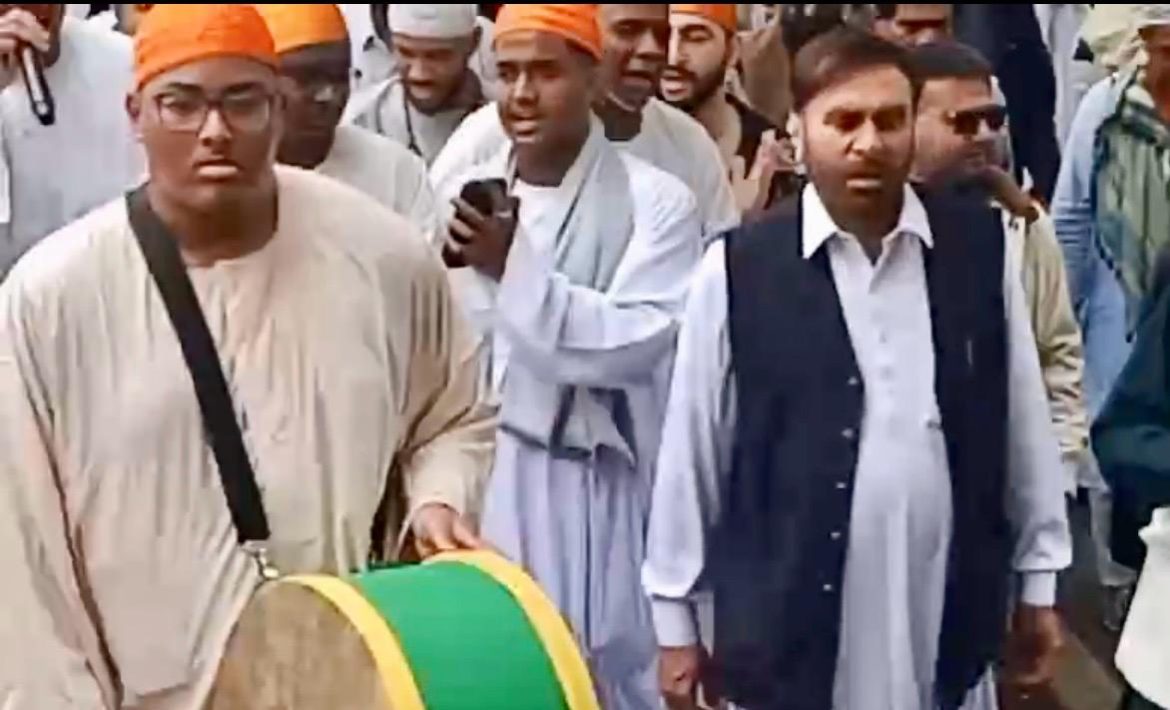
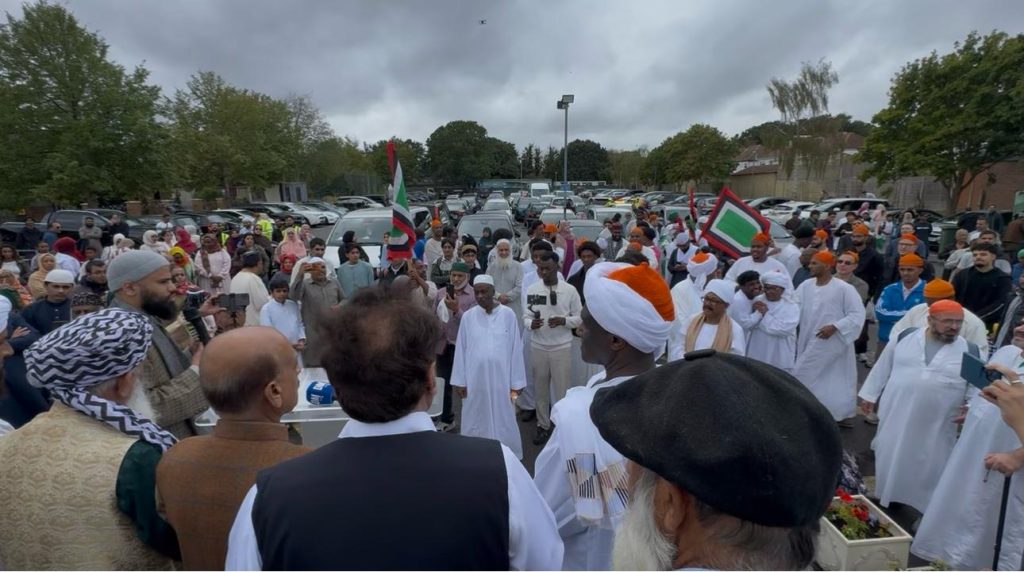
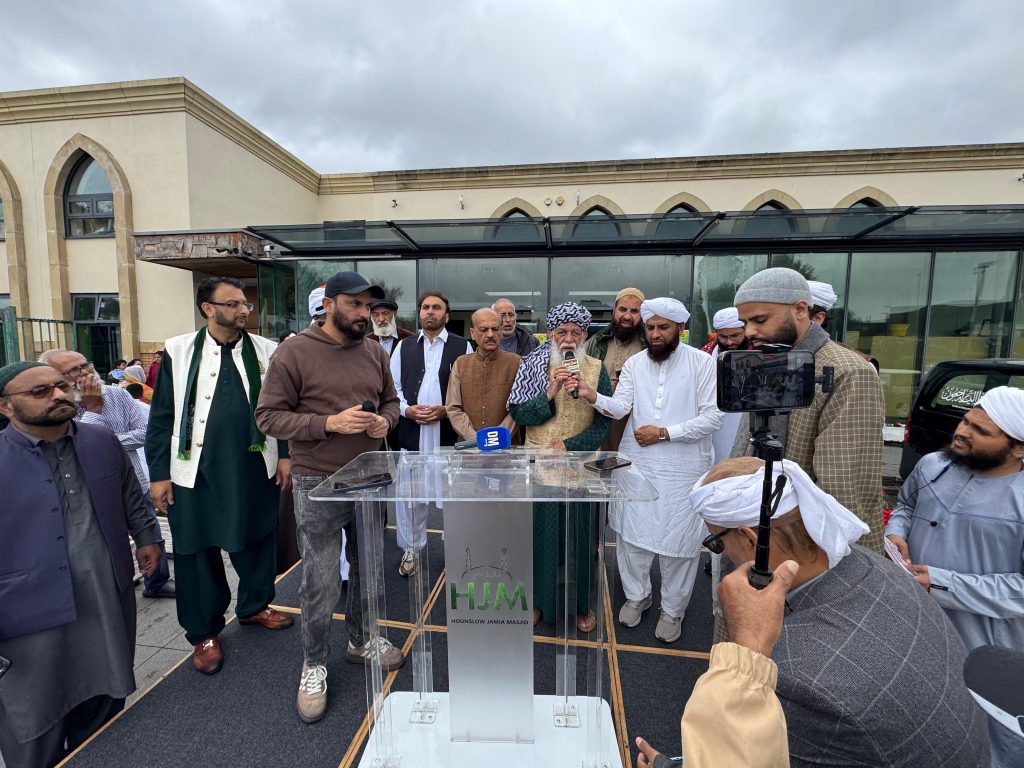
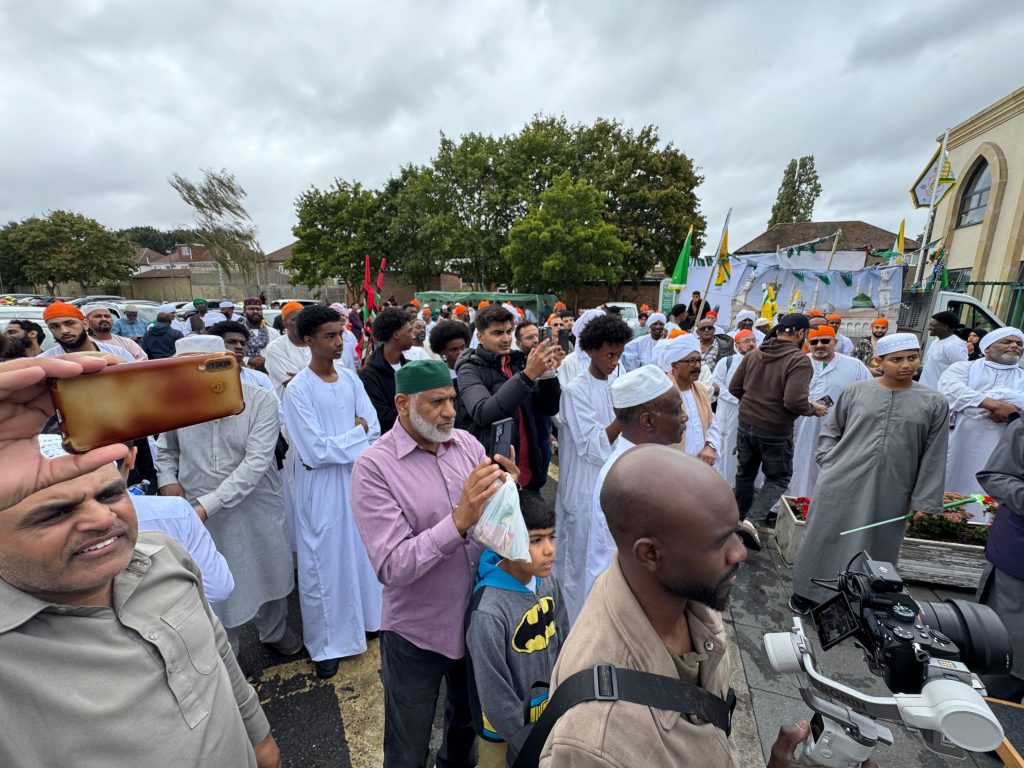
Procession organised by Hounslow Jamia Mosque on the occasion of “Eid Milad-un-Nabi”
Shaukat Dar
The procession started from Hounslow Central Jamia Mosque and passed through various main streets of Hounslow before returning to the mosque, where it concluded peacefully.
The procession was led by Mosque Committee Chairman Raja Javed, Abdulrazzaq Sajid, Shafiq Rehman, Councillor Tariq Gujjar and Councillor Shakeel Akram.
A large number of women and children also participated in the procession. Local businesses along the route welcomed the participants and arranged stalls providing water and refreshments. Following the procession, a special gathering was held at the mosque. Hazrat Manani Mian of Barelvi Sharif, grandson of Imam Ahmad Raza Khan, addressed the gathering and shed light on the life, character and teachings of the Holy Prophet Muhammad (PBUH).
The event concluded with special prayers for peace, unity and the prosperity and well-being of the community.
Photos: Raja Faiz Sultan

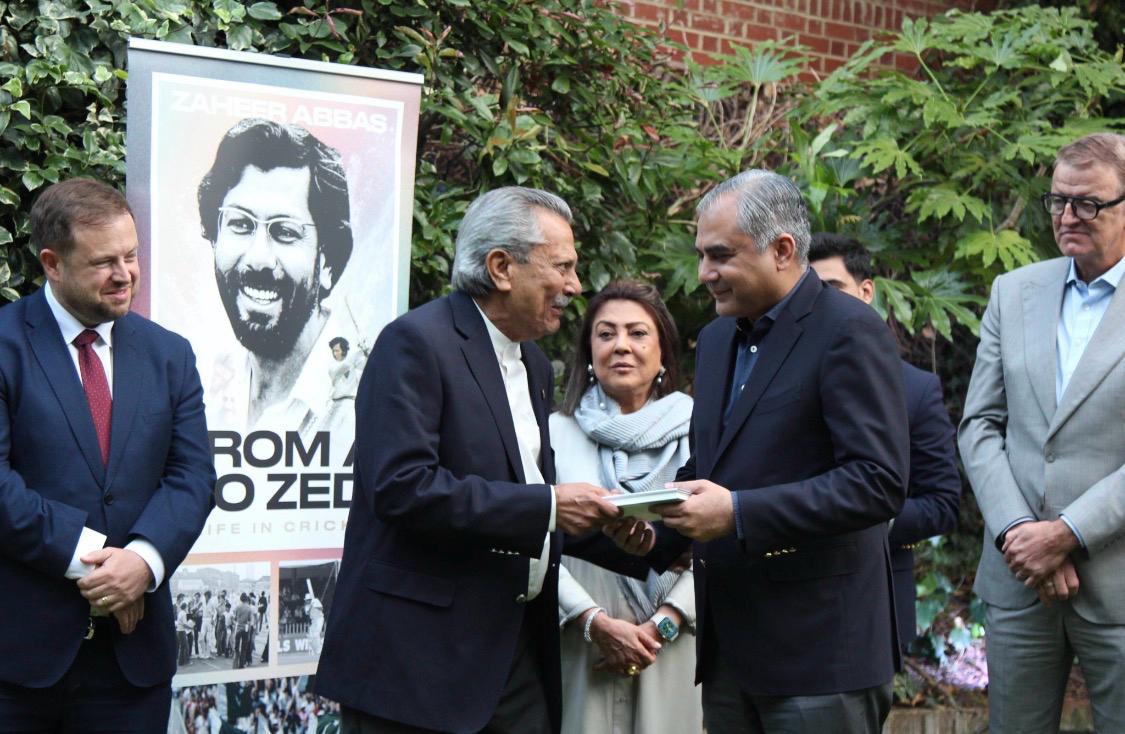
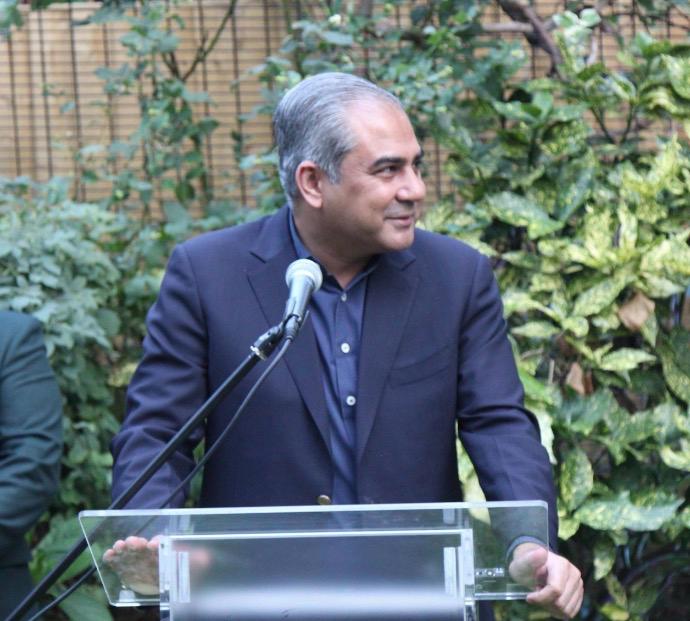
High Commissioner Tipu usman together with Chairman PCB Mohsin Naqvi Mohsin Naqvi hosted a warm and vibrant reception
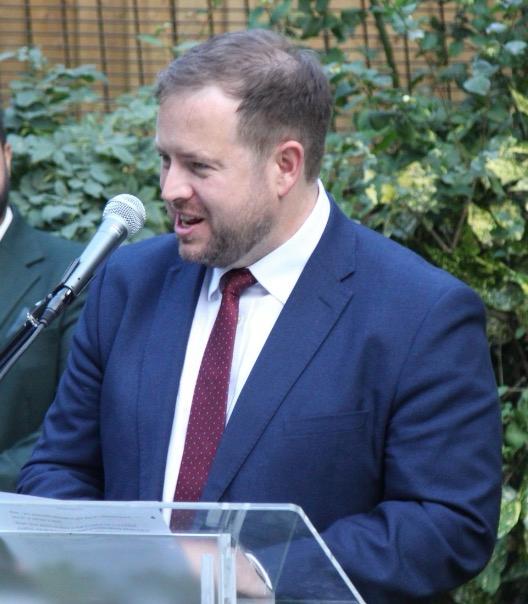
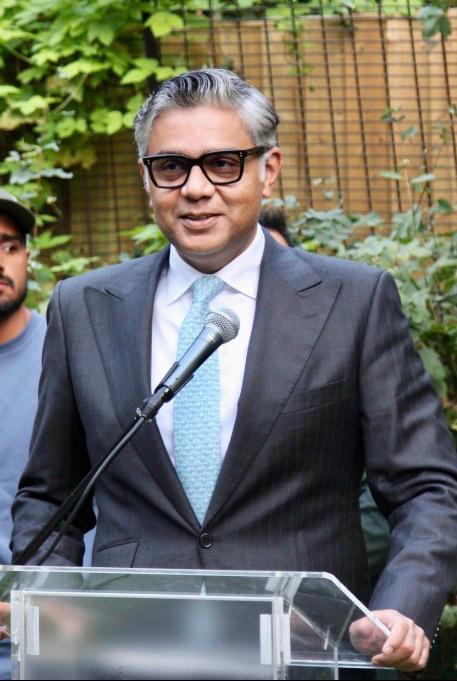
LONDON: High Commissioner Tipu usman together with Chairman PCB Mohsin Naqvi Mohsin Naqvi hosted a warm and vibrant reception celebrating the book launch of the legendary Zaheer Abbas and the visiting Pakistan Men’s Cricket Team. The occasion was graced by Rt Hon Stephen Doughty MP Minister of State at the FCDO, along with Richard Thompson, Chairman of the ECB Richard Gould, CEO of the ECB and other senior UK government officials and British High Commissioner to Pakistan Jane Marriott was also participated at this occasion. The evening brought together friends of Pakistan from across British society, and served as a timely reminder of warm relation between two countries.


Suhail Warraich
It is estimated that there is, to be, to be, to be, to be chosen. Where is the inscription of destiny averted? If the horse of politics is heeled, then it is difficult to rein it in. Once the pieces of the chess game are shaken, it is impossible to put them in their place again. The journey from the announcement of the destruction of the system to the court order to transfer the prisoner to Al-Shafa Hospital and then to its strange implementation has opened many new questions on all these matters. If someone says that the colour of Bazi is still the same and will remain the same, it cannot be assured. A lot of water has flowed under the bridge, politics has broken the status quo and entered the realm of dynamism. Let’s play tomcats to understand the situation in their political context through poor common sense. The masters of knowledge and mystics and the chickens of the court and the government will know the real facts, but this naive and unreachable pen dragger can only make guesses, so guesses should be considered as illusions and not news, those who are inspired are great people.
We lowly people like us can only cook imaginary pulao, so we relish the dish of khanali pulao. Wasn’t it important to consider the timing in announcing the collapse of the system? The current federal government has spent more than half of its time, despite the Prime Minister’s “day and night” efforts, neither a political narrative has been created, nor has there been any significant progress in the economy. In such a case, the talk of the demolition of the system has been stated by the federal minister, but actually it is a reflection of the state’s thinking. Prime Minister Shehbaz Sharif, the leader of the current political system, was already aware of this state thinking, so he has not yet commented on the collapse of the system and the reset, and the UN League has also considered silence as expedient since the initial agitation.
Was it an explosion? A Shirley firecracker or the first stroke of the reset drama? Noni Sayane reassures us that this stroke was not a Shirley firecracker, but an unintentional one. Someone had made a mistake, but when the smoke started to rise, it was ensured that he was taken to a government hospital instead of Al-Shifa, and both the state and politics were involved in this process. According to Noni Sayane, this was not a reset, but a course re-correction.
It was not a re-set effort, rather the action proved to be course re-correction of the perception of any deal or plan
The government’s implementation made it seem that the perception of the deal or plan was wrong and that nothing was going to change immediately. On the other hand, the “uninformed” people of the city of Kufa tell conspiracy stories. According to this legend, it became clear on the formation of this bench of the Supreme Court that the justice alien sitting in jail could get relief. According to them, if there was no planning, this decision would have been prevented in advance or a solution would have been thought of in advance, but there is no news of such thinking anywhere. These “unwitting conspirators” also consider the formation of the bench as a link in the reset plan. They also tell this false and true legend that an important member of the state had assured Barrister Gohar to implement the decision and send the letter of intent, and this was hidden in the expectation that the PTI would get public support in the re-set plan and the establishment of new administrative units or provinces, and thus the PTI would be able to easily rejoin the national political mainstream. According to this conspiracy story, if the court decision and its implementation had been carried out, the political climate would have changed. The “uninformed” were asked if all this was planned, then why couldn’t it be implemented? The “uninformed” replied, knowingly or unknowingly, that the reason for this was the Noni’s anger and discontent. The Noni Senator from Rawalpindi, Nasir Butt, even said openly that a conspiracy had started again against the Noni government. The Noni elders not only stood up but also turned red. What happened next? After reviewing the plan, the convoy was diverted to PIMS instead of Al-Shifa.
The Noni Sayane called this conspiracy a mistake, while the conspiratorial “uninformed” are calling it a temporary break. The just thinkers think that more offers will come, if it is not implemented this time, it will be implemented next time. In the “Honi” or “Chan Chhardne” under discussion, the most important role is played by the crazy Pipli, who is on the highest peak of Margalla, it is heard that he is ready to leave power and go home. “Journalist Mastane” told a strange story, saying that the people of Punjab are very wise and life-loving and can even sacrifice their lives for the prosperity and development of their situation and life, but the Sindhis and Baloch are death-loving. There, they are very proud of the traditions of death and wonder how someone died. Akbar Bugti had chosen a golden death for himself. The crazy person is a political chess player and a gambler in the field of power, but there is a madman hiding inside this Baloch who can suddenly choose a golden death like Akbar Bugti by putting a Sindhi cap on his bald head because he does not want to go to the grave with Hakim Ali Zardari and his mother in the graveyard of Nawabshah like a common man. He wants to attain such a status that he can be accompanied by the martyred queen of Sindh, Benazir Bhutto, and the king of Sindh Sagar, Zulfiqar Ali Bhutto, in the Garhi Khuda Bakhsh graveyard. “Journalist Mastana” keeps bragging like this, maybe this is also a brag. The childish madman is not that crazy, he is a regular worldly person, he has become accustomed to comfort and high facilities. The path to golden death passes through trials and prisons, the childish madman will not be able to pass through these stages now.
Since the “Journalist Mastana” is drunk, he often keeps bragging. Nowadays he is saying that “it will happen”, “it will happen”, “it will happen”, “the reset agenda will not stop, it will continue, whether someone believes it or not, no one believes it, so go wherever you want to go. The cut has been opened, in the next few days the cut will be made public, there will be a reset for national development, new provinces will also be formed, the financial share of the center will also increase, everything that is written in the plan will happen, all the documents are ready, the plans have been thought out, work is being done on the district economy, reforms will start this year and their full implementation will start next year. “Mastane” was asked that there are many risks in the reset, blood can flow in Sindh, secession can be promoted in Balochistan, unrest can increase in Pakhtunkhwa and nationalism can awaken in Punjab, so “Mastane journalist” replied that national development plans cannot be abandoned due to fear of fear. It is happening, it is happening, the horse has taken a heel now it cannot be stopped!!!

Hamid Mir
Azad Kashmir was once called the laboratory of Pakistani politics. In this laboratory, new political experiments were conducted and then those experiments were repeated in Pakistani politics. With the passage of time, this laboratory is now becoming a circus in which different circles are showing their own tricks in a very chaotic manner. The irony is that none of the tricks of these circles are clean. They proudly present some old political experiments conducted in this laboratory as a new trick and when they do not get appreciation, they celebrate very badly. Just look at the recent election of the Prime Minister in Azad Kashmir. The Muslim League (N) ignored its party president and former speaker Shah Ghulam Qadir in Azad Kashmir and made Iftikhar Gilani, who had lost the elections twice in a row, the Prime Minister. After losing the 2026 election, this gentleman was brought to the assembly on the technocrat seat. As soon as he became an assembly member on the technocrat seat, some powerful people included him in the list of candidates for the Prime Ministership.
The biggest argument brought in favour of Iftikhar Gilani was that he was very educated. If this argument is really accepted, then why didn’t the people of his own constituency decide in favour of such a worthy candidate? Shah Ghulam Qadir is one of the founders of the Muslim League (N) in Azad Kashmir. He left the Muslim Conference in 2010 along with Sardar Sikandar Hayat and Raja Farooq Haider and joined the Muslim League (N). Sardar Sikandar Hayat returned to the Muslim Conference, but Raja Farooq Haider and Shah Ghulam Qadir stood with the Muslim League (N). In the recent elections of Azad Kashmir, Shah Ghulam Qadir worked very hard as the party president. His great achievement is that he became a member of the Azad Kashmir Assembly on a Mohajir seat for the first time in 1998. Many members of his family still live in occupied Kashmir. He could have succeeded on a Mohajir seat in the future, but he made his constituency in Neelum Valley with great effort. In 2016, he contested the election for the first time on a general seat from Neelum Valley and won.
In the 2026 elections, he faced strong resistance from the Joint Public Action Committee, but as the party president, he campaigned throughout Azad Kashmir. He also won his seat and brought a historic victory to the Muslim League (N), but some supporters of Iftikhar Gilani say that someone else is behind the recent success of the Muslim League (N) in Azad Kashmir. This someone else is Maryam Nawaz, who herself says that the people of Azad Kashmir have voted for the performance of the Muslim League (N) in Punjab. The question is, if the Muslim League (N) was so popular in Azad Kashmir, then why has the election not been held on the seven seats of Poonch yet despite the use of all state power? The Muslim League (N) is claiming that the decision to make Iftikhar Gilani the Prime Minister was taken by the party leader Nawaz Sharif because he wanted to introduce a new face in Azad Kashmir. If Nawaz Sharif liked this new face so much, why didn’t he himself sit with Iftikhar Gilani and announce this new face for Azad Kashmir?
Nawaz Sharif can be criticized in other matters, but the decision to make Iftikhar Gilani the Prime Minister of Azad Kashmir is not his. According to my knowledge, when Shah Ghulam Qadir received the news that Iftikhar Gilani, who had become an MLA on a technocrat seat, was being made the Prime Minister, he sent a voice message to his leader Nawaz Sharif in a very polite manner. In this message, he said that if a person who had lost the elections twice in a row was made the Prime Minister of Azad Kashmir, he would not accept this decision and he would be forced to leave the post of PML-N, however, he would continue to work for the party as a worker. After hearing this voice message, Nawaz Sharif called Shah Ghulam Qadir and asked who told you that Iftikhar Gilani was being made the Prime Minister?
Shah Ghulam Qadir replied with great respect that I am the president of your party in Azad Kashmir, my newly elected colleagues are telling me that a technocrat is being made the Prime Minister, and he is being taken into confidence. Their leader Nawaz Sharif strongly denied this news and asked Shah Ghulam Qadir to delete his voice message. Then Nawaz Sharif asked him who should be made the speaker of the Azad Kashmir Assembly? Shah Ghulam Qadir named Chaudhry Tariq Farooq. He also gave two or three names for the deputy speaker and left the final decision in this regard to Nawaz Sharif. The respected leader also conveyed the greetings of Maryam Nawaz to Shah Ghulam Qadir, who was sitting next to him. The matter was over. After two days, the election of the speaker and deputy speaker took place. Now Shah Ghulam Qadir and Raja Farooq Haider were called to the Prime Minister House, Islamabad. Earlier, all the decisions were made by Nawaz Sharif, but this time they were called by Shahbaz Sharif. Ah Ghulam Qadir reached the Prime Minister with a beating heart. Apart from Shahbaz Sharif, Rana Sanaullah, Khawaja Saad Rafique and some other people were also present in this meeting held at the Prime Minister House. In this meeting, Rana Sanaullah decided to make Iftikhar Gilani the Prime Minister of Azad Kashmir, but before Shah Ghulam Qadir, Raja Farooq Haider rejected this decision. Shah Ghulam Qadir said that you should not make me the Prime Minister, but there are many educated colleagues among our elected members.
You should make any of them the Prime Minister, I will vote for him, but I will not vote for an unelected person as the Prime Minister. Shahbaz Sharif tried hard to convince Shah Ghulam Qadir, but he refused to be a puppet. This experiment is not happening for the first time in Azad Kashmir. General Ayub Khan also introduced KH Khurshid in 1961 as a new face compared to Sardar Ibrahim and Sardar Qayyum and made him the President of Azad Kashmir. KH Khurshid had obtained a law degree from the University of London, but after a few days, this experiment failed and he was removed from the presidency. Then after many years, Barrister Sultan Mahmood was made the Prime Minister and it was said that he was a new face. The deceased changed parties a lot but the situation in Azad Kashmir could not change.
One big difference is that KH Khurshid and Barrister Sultan Mahmood came back after winning the elections. Iftikhar Gilani has lost the last two elections. He became the Prime Minister of Azad Kashmir and even reached Shah Ghulam Qadir’s house to congratulate him, but now he has become an alarm bell for Pakistani politics. His becoming the Prime Minister will further strengthen the narrative of the Public Action Committee, which had declared the Azad Kashmir elections as a fraud.
Now, Pakistani politicians will also follow the path of pleasing someone else like Iftikhar Gilani instead of working hard in their constituencies like Shah Ghulam Qadir. Shah Ghulam Qadir has been offered to be the President of Azad Kashmir. As of the time of writing, he has not accepted this offer. The respect and honour he has been getting for the past few days is something he would never have received by becoming the Prime Minister. The Muslim League (N) is registered in his name with the Election Commission of Azad Kashmir. He should hand over this registration to Nawaz Sharif with great courtesy and respect because now the future of this party in Azad Kashmir is very uncertain. Shah Sahib should have the courage and tell Nawaz Sharif that after making a technocrat who lost elections twice in Azad Kashmir the prime minister, now there is a technocrat coming to Pakistan as well.
Strong Women: Breaking Barriers and Building Pathways for Others

Prof Fatima Zaman
Strong women don’t just overcome barriers; they create paths for those coming after them.”
Throughout history, women have faced barriers that have limited their opportunities in education, employment, leadership, business and public life. Yet, generation after generation, women have demonstrated that determination, courage and resilience can challenge even the most deeply established obstacles. Their achievements are not only personal victories; they can become stepping stones for countless others.
A strong woman is not defined simply by her ability to overcome difficulties. Her real strength can be seen in what she does with that experience. When she succeeds despite obstacles, she has the opportunity to make the journey easier for those who follow. She can open doors, share knowledge, challenge outdated attitudes and encourage other women to believe that they too belong at the table.
This is why representation matters. When a young girl sees women succeeding as doctors, professors, entrepreneurs, lawyers, scientists, artists, community leaders or public servants, she sees possibilities for her own future. Someone else’s achievement can become the inspiration that gives her the confidence to pursue her own ambitions.
Breaking a barrier is therefore only the beginning. The greater achievement is helping to ensure that the barrier does not return for the next generation.
Education is one of the most powerful ways women create pathways for others. A woman who gains knowledge and professional experience can become a mentor, teacher or role model. She can encourage young people to develop their talents and understand that their background or circumstances should not automatically determine their future.
The same principle applies in the workplace and in business. Women who reach positions of influence have an important opportunity to create inclusive environments where talent is recognised and people are judged on their ability, commitment and character rather than outdated assumptions. By supporting other women, sharing opportunities and speaking up when something is unfair, successful women can multiply the impact of their own achievements.
However, supporting women should not mean creating division between men and women. Strong communities are built when everyone has the opportunity to contribute. Men also have an important role to play as colleagues, mentors, fathers, brothers, husbands and leaders. Encouraging women’s progress ultimately benefits families, organisations and society as a whole.
Perhaps the most important lesson is that strength is not about having an easy life. Strength is continuing forward when circumstances are difficult. It is having the courage to challenge limitations while maintaining the generosity to help others along the way.
Every generation inherits the work of those who came before it. Some inherit opportunities that previous generations fought hard to create. The responsibility of today’s leaders is to continue that progress rather than take it for granted.
A strong woman therefore leaves behind more than a personal success story. She leaves behind confidence, opportunity, knowledge and a pathway.
Her greatest legacy may not be how high she climbed, but how many people she helped climb after her.
And that is the true meaning of breaking barriers: not simply opening a door for yourself, but holding it open for others.

Iqbal Latif
This is why I have grown impatient with the constant opposition school of Pakistani commentary. I know journalists who have been in opposition for twenty years. It makes no difference who is in power.
Before I say anything else, let me be clear. Suhail Warraich knows more about the day-to-day machinery of Pakistani politics than I do. He has spent his entire professional life observing it closely; he talks to people from every political faction and every institution, and, in the normal course of his work, he overhears things that I might not have heard by chance. There are some things that I know from my private conversations that I cannot and will not publish. So, this debate is not about who has better information. It is about how to interpret the information that we both have.
I know there are problems. There are problems, of course. I know there are tensions within the system, and I know there are dozens of things that could be done better than they are. But I also see something else happening at the same time, and it is not being reported with as much energy.
Pakistan is once again having a serious conversation with global capital. The people who matter in global finance are willing to sit down and listen. Relationships that were badly damaged are being rebuilt. Doors are opening, and those kinds of doors don’t open because someone gives a good speech in Islamabad. They open when people on the other side of the table start to believe that the country is becoming governable again. That word is the whole point: governable.
Pakistan is not on a better path because someone has finally discovered some magic economic formula. There is no such formula, there never was, and anyone selling such a formula should be shown the door. It is on a better path because too many parts of the machine are being handled at the same time right now. And it will fall off the path the moment they stop handling it.
This is the point that almost everyone misses. Economic stability is not a destination that Pakistan has already reached. It is something that must be built anew every morning. Reserves must be watched. Debt must be rolled over. IMF commitments have to be met and managed. The power sector has to be bailed out. The provinces have to be brought along. The security establishment and the civilian government must be able to sit in the same room. China must know exactly who it is dealing with, the Gulf must maintain confidence in the relationship, Washington must stay engaged, and the global banks and investors must be confident that there will still be someone to pick up the phone six months from now.
Drop three of those balls at once and see what happens to a country of 240 million people. This is why I have grown impatient with the constant opposition school of Pakistani commentary. I know journalists who have been in opposition for twenty years. It makes no difference who is in power. Musharraf comes, oppose him. PPP comes, oppose him. PML-N comes, oppose him. PTI comes, oppose him. Ittehad comes, oppose him. Every morning, Pakistan is seemingly six weeks away from disaster, and every evening, someone or the other has identified the government that should immediately replace the current one.
Criticism is inevitable. If I didn’t believe it, I wouldn’t be writing all this. But a permanent opposition is not criticism. It is a system. And running a country is not a system. I have seen governments come and go for so long that I know how tempting it can be to say, “Bring them down.”
Great. Brought them down. So what?
The debt remains. The IPP agreements remain. The provinces remain. The military remains. The IMF remains. The creditors remain. The energy problem remains, the tax problem remains, the water problem remains, the geography remains, and the population remains.
Someone still has to run Pakistan at nine o’clock the next morning, and each of these files will be on the same table, in the same state, waiting to be signed. This is why governance is the most neglected element in the entire Pakistani debate. We talk endlessly about personalities and almost nothing about competence. We talk about legitimacy and almost nothing about implementation. We talk too much about who should go and too little about whether the person coming in can run the machine.
Modern governance is no different from what we call corporate governance. A country is an institution. It has a balance sheet, it has creditors, it has liabilities, it has assets, it has cash flow, and it has shareholders, whom we call the public. And, just like in any institution, everything comes down to whom you put in charge.
You don’t have to go far to find evidence of this. Bring in a person from the Buzdar School of Management and you will find the Punjab of 2018 to 2022. Same province, same resources, same revenue base, same bureaucracy, same land, same population, same canals, same industrial belt. Nothing had changed except who was signing the file.
Put better governance in the same province, and the same province is discussed in Forbes, receives praise from international ranking bodies, and even the cleanliness of its cities is noticed by outside observers. No new canal has been dug. No new river has been discovered. No new oil reserves have been discovered.
Only the administrative capacity has changed.

Cllr Tariq Dar MBE
I’ve been following cricket for over 50 years, and in my opinion, one of our biggest problems in recent times, certainly over the past 10 to 15 years, has been inexperienced management at the top.
However, I also feel that the players themselves are not psychologically or mentally strong enough. They seem to carry fear and pressure in their minds when they are actually out in the middle. They may have all the skills and a wide selection of shots, but when the moment comes during a match, they often fail to make the right decisions or execute those skills properly, whether it is batting or fielding.
Sometimes I feel they need proper mental training and psychological support more than another coach in the dressing room. We already have numerous specialist coaches for batting, bowling and fielding, yet we continue to see experienced players making poor decisions under pressure.
For example, players like Babar Azam have sometimes attempted to hook balls that were simply not there to be hooked and got themselves out. Similarly, Saud Shakeel has also played inappropriate shots in situations where better judgment was required.
This is why I believe the real issue is not always a lack of cricketing education or technical ability. The players clearly have the talent and skills. What they seem to need is stronger mental preparation, better psychological education, and the ability to remain calm and make sensible decisions under pressure.

Atta Haq
Success is often celebrated when it becomes visible, but very few people see the difficult journey behind it. They see the award, the successful business, the recognition, the position or the achievement. What they rarely see are the sleepless nights, disappointments, sacrifices, failures and countless moments when giving up seemed easier than continuing.
The reality of life is simple: nobody fully understands your struggles or how difficult your journey has been. Most people only notice the result when you win.
That is why we must learn to stay focused on our own journey rather than constantly seeking recognition or approval from others.
Every successful person has a story that the outside world may never completely understand. Behind many achievements are years of hard work and moments when nobody was watching. There may have been financial difficulties, rejection, criticism or people questioning whether the dream was even possible.
These experiences can either stop us or strengthen us. One of the greatest lessons we can learn is not to allow temporary difficulties to define our future. A setback is not necessarily the end of the journey. Sometimes it is simply a lesson preparing us for the next opportunity.
In today’s world, social media can make success appear instant. We see people’s achievements but rarely see the years of preparation behind them. This can create unnecessary pressure and comparison.
Instead of comparing our lives with others, we should compete with the person we were yesterday. Are we learning? Are we improving? Are we becoming stronger and wiser? Are we moving closer to our goals?
If the answer is yes, we are already making progress. Criticism and negativity are also part of any meaningful journey. The more visible you become, the more opinions you will hear. Some will encourage you, while others may doubt or criticise you. We cannot control what everyone says, but we can control how much influence we allow those voices to have over our lives.
Use constructive criticism to improve, but ignore unnecessary noise. Success also requires patience. Great achievements rarely happen overnight. Building a career, business, organisation or reputation can take years. There will be times when your efforts appear unnoticed and when you question whether the sacrifices are worthwhile.
Those are often the moments when persistence matters most. Keep working when nobody is applauding. Keep improving when nobody notices. Keep believing when others doubt you. Your discipline during the difficult days will help determine what you achieve during the successful ones.
Most importantly, when success eventually comes, remember the journey. Stay humble. Remember those who supported you when there was nothing to celebrate. And wherever possible, use your success to open doors for others.
Life will always bring challenges, but challenges do not have to become barriers. Stay focused. Keep pushing. Keep learning. Ignore the unnecessary noise and never allow someone else’s opinion to determine the value of your journey.
In the end, you do not need to explain every struggle. Sometimes, you simply need to keep going until your results speak for themselves.

Dr Shahzad Qureshi
In a world filled with instant gratification, constant distractions and endless opportunities to seek comfort, self-discipline has become one of the most valuable qualities a person can develop. The simple idea that “self-discipline is choosing what builds your future over what satisfies you today” carries a powerful message: meaningful success rarely comes from doing what is easiest in the moment. It comes from making decisions today that create a better tomorrow.
Self-discipline is not about living a joyless life or denying ourselves every pleasure. Rather, it is about understanding priorities and having the strength to remain committed to them. It means recognising that some things we want immediately may not be what we truly need in the long term.
Whether in business, education, sport, relationships or personal development, progress requires consistency. A successful entrepreneur may have to work when others are relaxing. A student may need to study when friends are enjoying themselves. An athlete must train repeatedly, even on days when motivation is low. These choices may not always provide immediate satisfaction, but they build something far more valuable: a stronger future.
One of the greatest challenges to self-discipline is the attraction of instant rewards. Modern technology has made entertainment, shopping, social media and communication available at the touch of a button. We can easily spend hours consuming content without realising how much valuable time has passed. The problem is not enjoyment itself; the problem arises when temporary pleasure repeatedly takes priority over important long-term goals.
Self-discipline allows us to ask a simple but important question: “Will this decision help the person I want to become?” That question can change the way we approach our daily lives.
Success is rarely the result of one extraordinary decision. More often, it is the result of hundreds of small decisions repeated over time. Choosing to wake up early, learning a new skill, keeping a promise, exercising regularly, managing finances responsibly or completing an important task instead of postponing it may seem insignificant on a single day. However, repeated consistently, these habits can transform a person’s life.
The same principle applies to leadership. People who lead organisations, businesses and communities cannot depend solely on motivation. Motivation can come and go, but discipline creates consistency. A disciplined leader understands that reputation, trust and achievement are built through actions repeated over time.
Importantly, self-discipline should not be confused with perfection. Everyone has difficult days, makes mistakes and occasionally loses focus. What matters is the ability to recognise the setback, learn from it and return to the path. Discipline is not about never falling; it is about refusing to remain down.
Our future is ultimately shaped by the choices we make when nobody is watching. The decision to sacrifice a little comfort today for a greater opportunity tomorrow can be difficult, but it is often the difference between wishing for success and actually working towards it.
In the end, self-discipline is an investment. What we sacrifice today can become the strength, success and freedom we enjoy tomorrow. The future does not suddenly appear, it is built, one disciplined choice at a time.