Report Wajahat Ali Khan
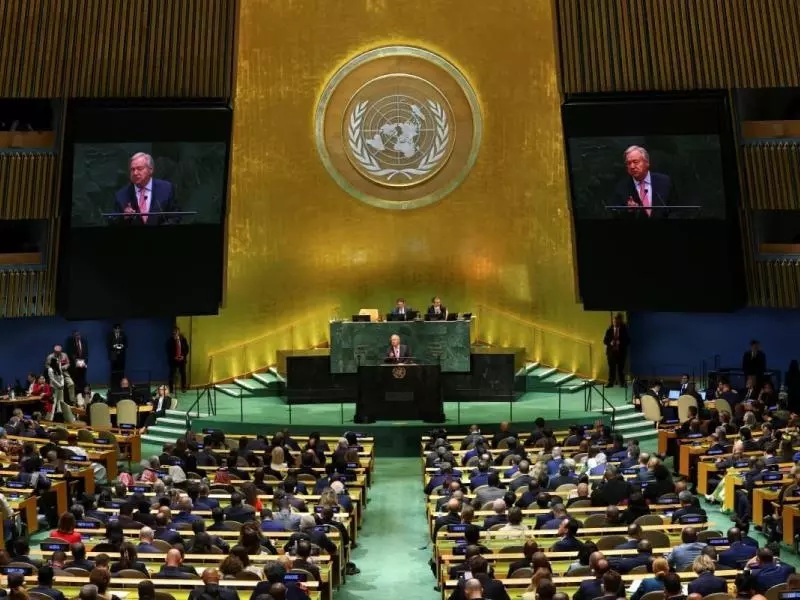
The 81st session of the United Nations General Assembly has opened against a backdrop of wars, diplomatic tensions and growing doubts about the ability of international institutions to respond effectively to global crises. Its theme — “Restoring Trust, Managing Transformation: A United Nations That Delivers for All” — reflects perhaps the central challenge facing the organisation. The immediate expectation is that world leaders will use the gathering not simply for speeches, but for diplomacy. The conflicts in the Middle East and Ukraine remain among the most pressing issues, while Sudan, climate change, nuclear risks and the rapid development of artificial intelligence are also demanding international attention.
The Middle East is likely to receive particular attention. The humanitarian situation in Gaza and the wider confrontation involving Iran have raised fears of further regional escalation. The UN faces pressure to encourage negotiations, protect civilians and create space for meaningful diplomatic solutions. Whether the major powers can narrow their differences will be crucial.
The General Assembly has repeatedly called for an end to the war and renewed diplomatic efforts, but translating international resolutions into negotiations remains difficult.
Beyond individual conflicts, the session is also about the future credibility of the United Nations itself. Its leadership has acknowledged the need to restore trust through concrete results and institutional reform.
The expectations, therefore, are substantial but realistic. Progress on ceasefires, humanitarian assistance, diplomacy and global cooperation. The real measure of the 81st session will not be the rhetoric heard in New York, but whether that rhetoric produces practical action after the leaders have gone home.
Arab
Trump Calls Xi Jinping “a Great Leader,” Offers Extraordinary Welcome After Waiting an Hour at Airport
Monitoring desk
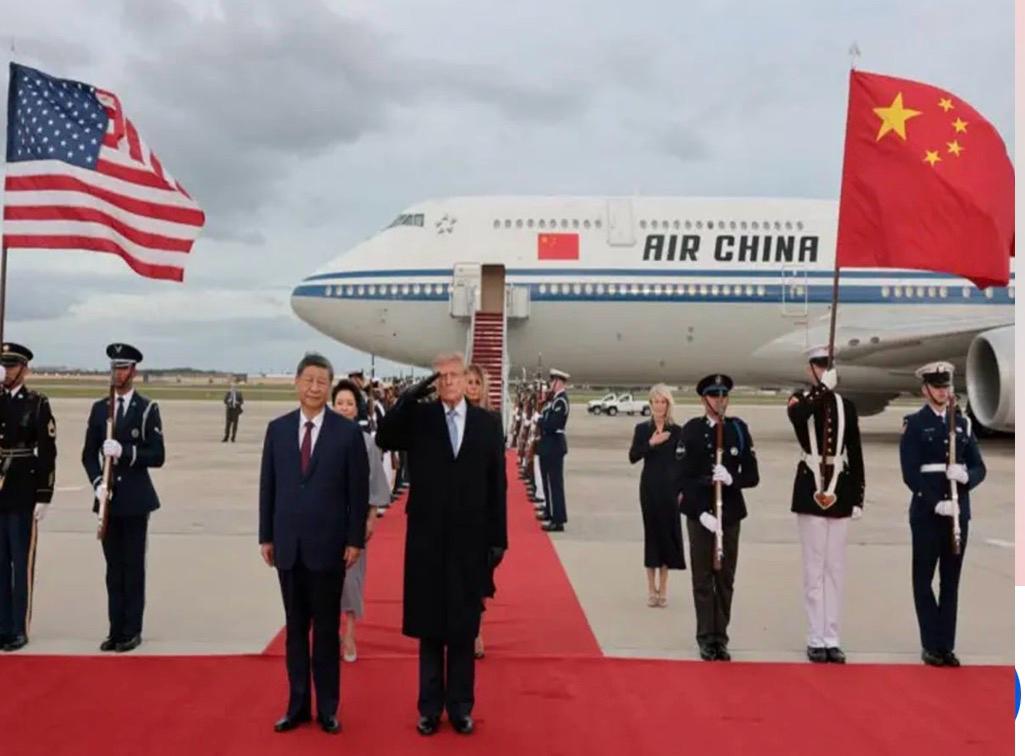
US President Donald Trump extended an imperial-style welcome to Chinese President Xi Jinping,
personally going to the airport to greet him ahead of their summit. Xi reciprocated the gesture but once again appeared “stiff,” responding with remarks that maintained his own firm stance. The world is watching to see what results Trump’s effort to placate China and Xi’s determination to speak frankly to the United States will produce at the leaders’ meeting between the two countries. The summit, scheduled to take place at the White House on the 24th (local time), is expected to address the trade war, semiconductors, rare earths and Taiwan.
Trump arrived by helicopter at Joint Base Andrews in Maryland on the 23rd, before Xi’s private aircraft landed, and waited for more than an hour in his private car. When Xi stepped off the aircraft stairs, Trump walked up to the bottom of the stairs to shake his hand. This was the first time Trump had gone to an airport to welcome a foreign leader since beginning his second term. Melania Trump also joined him to greet Xi’s wife, Peng Liyuan. The two leaders are meeting for the second time this year, four months after their summit in Beijing in May.
Xi returned to the White House for the first time in 11 years since his state visit in September 2015 during the Barack Obama administration. High-ranking Chinese officials, including Politburo Standing Committee member Cai Qi and Foreign Minister Wang Yi, accompanied the delegation.
A separate official welcome ceremony will be held again at the White House on the 24th. The event, taking place on the South Lawn and in the White House Rose Garden, will feature 479 service members representing all branches of the U.S. military. One B-2 Spirit stealth bomber and four F-22 Raptor fighter jets will conduct a ceremonial flyover. Formal talks and a state dinner in the East Room will follow. The dinner is expected to be attended by leaders of major U.S. technology companies, including Tesla CEO Elon Musk, Amazon founder Jeff Bezos, Apple CEO Tim Cook and NVIDIA CEO Jensen Huang.
Unlike the cordial reception, sharp clashes are expected during the main summit. After completing the airport welcome, Trump returned to the White House and made clear the key issues to be discussed. He stressed that the talks would focus on Iran, blocking the flow of fentanyl into the United States and additional tariffs on China. The two sides are still expected to remain far apart on advanced technology. The United States is seeking a stable supply of critical minerals, including rare earths, while China is strongly demanding that Washington ease its semiconductor export controls.
In the field of artificial intelligence, the two sides are expected to discuss establishing a hotline through which they would notify each other when an incident occurs. The idea is to prevent accidental clashes while allowing competition to continue, although specific operating procedures have not yet been determined. Taiwan is another variable. Since Trump’s remarks on Taiwan also sparked controversy at the Beijing summit in May, attention is focused on how the two sides will address the issue this time.
Birth Anniversary of the Sufi Master “Imam Abdul Qadir al-Jilani”
Amr khalifa
The global Qadiri-Kasnazani Order represented by its leader, Sheikh Shams al-Din Muhammad Nehru al-Kasnazani al-Qadiri al-Hussaini has extended official congratulations and blessings to the followers of the Qadiri path, the entire Islamic Ummah across the globe, and all adherents and seekers of various Sufi orders and traditions worldwide. This greeting marks the birth anniversary of the Sufi Master (Qutb) Sheikh Abdul Qadir al-Jilani (may Allah be pleased with him), observed on the 11th of Rabi’ al-Thani (Hijri calendar), corresponding to the 11th of the month of Al-Quds (Muhammadi calendar).
In a statement issued today, the Qadiri-Kasnazani Order affirmed that this momentous occasion represents a renewed manifestation of Divine graces; a time when souls stir with spiritual ecstasy and inner insights are illuminated with purity, all in commemoration of the birth of the “Pole of the Sphere of Truth” and the “Sultan of Spiritual Stations and States” Imam al-Ghawth al-A’zam (The Supreme Succor), our Master Sheikh Abdul Qadir al-Jilani al-Hasani al-Hussaini (may his secrets be sanctified).

The statement highlighted the exalted spiritual rank and lofty status attained by Sheikh al-Jilani, who ascended to the pinnacle of Sainthood (Wilayah) and rightfully earned the station of complete Muhammadi inheritance, as well as the throne of spiritual honour and empowerment. It further noted that al-Jilani was the pivotal axis through whom Allah established the landmarks of the faith; through the blessing of his presence, worshippers found spiritual well-being and lands flourished.
The Truth (Al-Haqq) Glory be to Him had chosen him for Himself, seated him upon the carpet of Divine Intimacy, and nurtured him within the precincts of Divine Holiness, allowing him to become the “Grey Falcon of Allah” (Baz Allah al-Ashhab) soaring through the heavens of Divine Knowledge and serving as the pillar of the spiritual path leading to the Truth. Sheikh Shams al-Din Muhammad Nehru al-Kasnazan extended his heartfelt congratulations and blessings to the followers of the Qadiri path numbering over a billion adherents across the globe. He prayed that, through the blessings and spiritual light of these sacred mysteries, all disciples and spiritual wayfarers might receive the abundant grace of the Ghawth al-A‘zam (The Supreme Helper), and that they might follow in his footsteps and walk the upright path derived from the legacy of his ancestor, the Chosen One (peace and blessings be upon him).
The statement concluded with a prayer that spiritual wayfarers might draw resolve and zeal from the spirit of this occasion to continue serving the Sufi path and spreading values of love, tolerance, and peace among all people, asking the Almighty to bring this anniversary back to the Islamic nation with goodness, prosperity, and blessings.
“Head of Gnostic Sufism” Unveils the Epistemological Concept of the “Rope of Allah”
Amr Khalifa
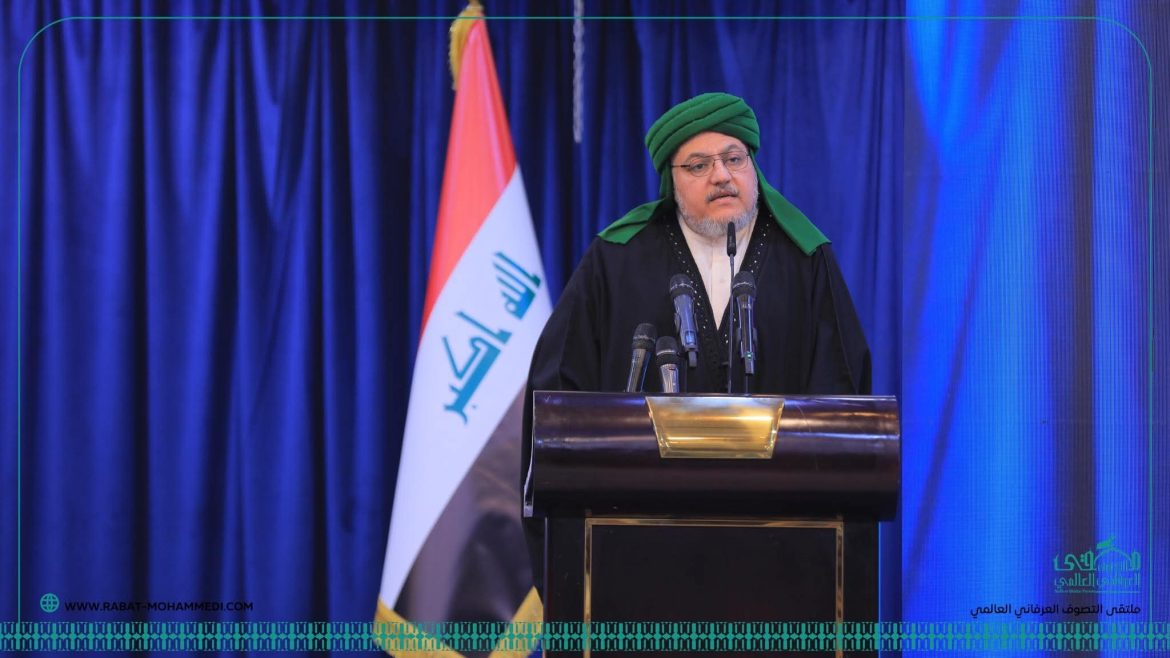
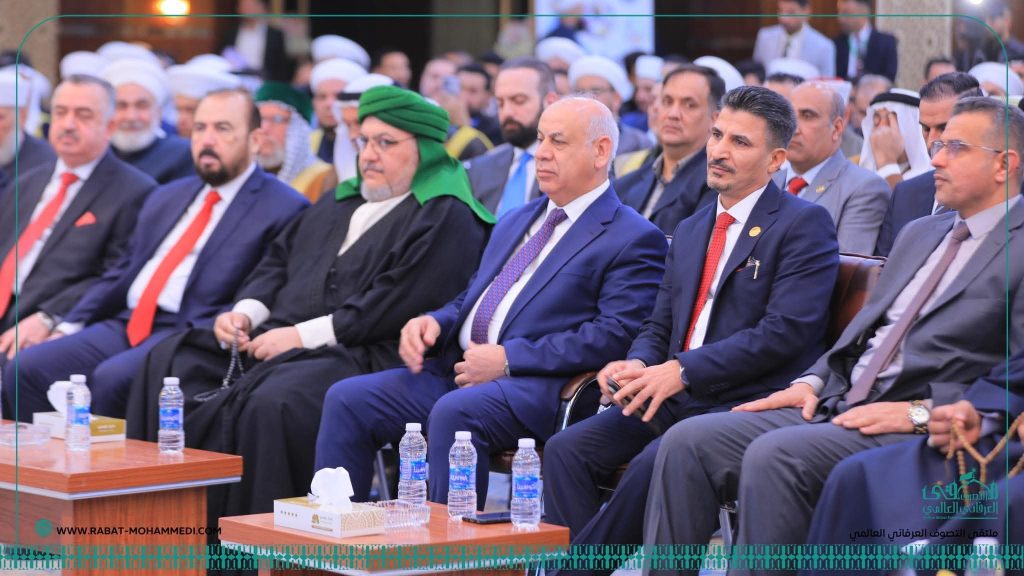
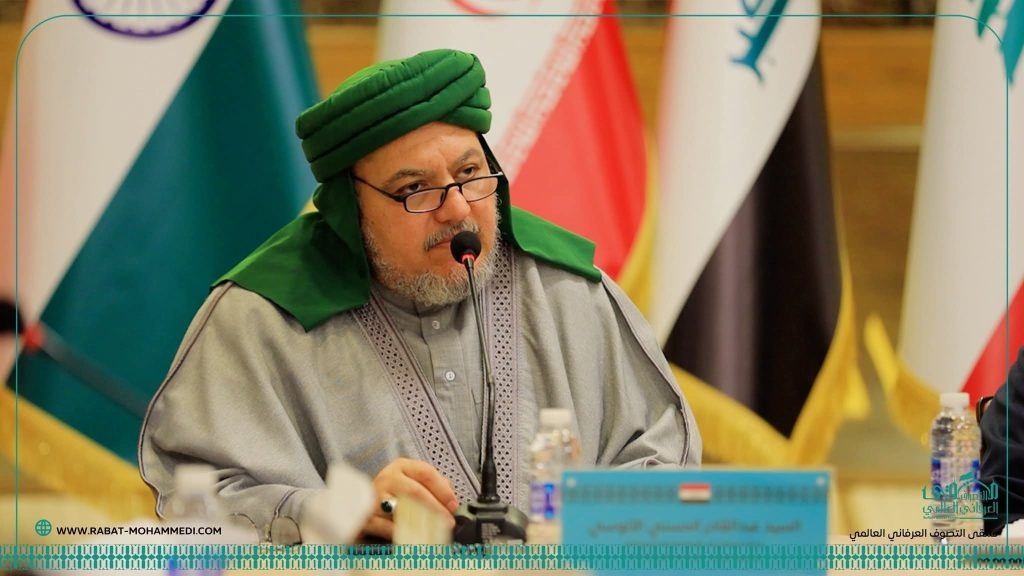
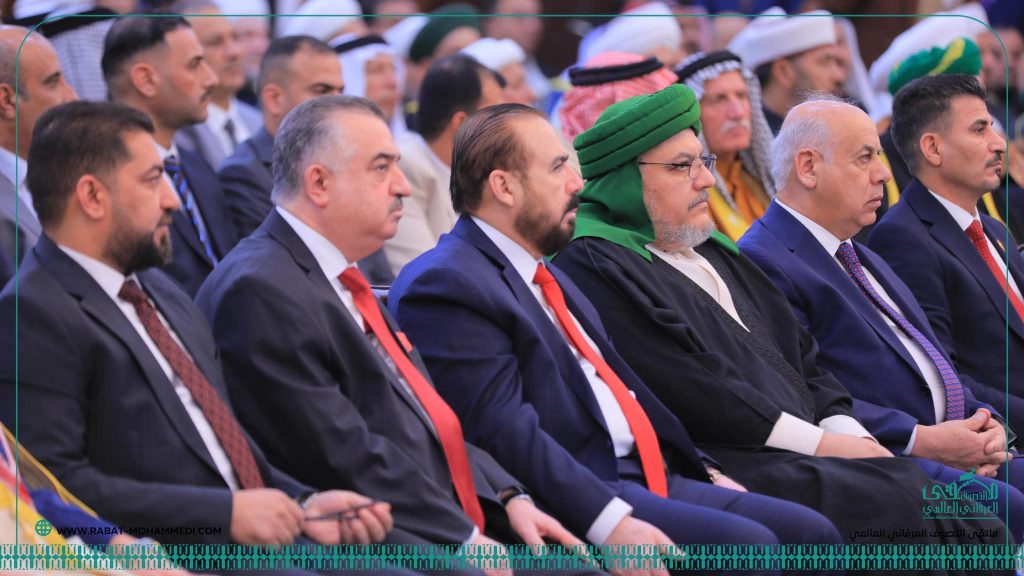
EGYPT : As part of the ongoing scholarly and Prophetic gatherings—organized by the Council of Scholars of the Muhammadan Ribat and the Global Forum for Gnostic Sufism in Iraq—aimed at reviving the meanings of Prophetic guidance, embedding a culture of unity and harmony, and addressing the causes of division and discord within the Ummah through a comprehensive, scholarly, and Quranic approach.
The lecture began with a fundamental question: If Allah has commanded the Ummah to hold fast to His Rope, what exactly is this “Rope of Allah” that must be understood before one can hold fast to it?
Sheikh al-Alusi explained that understanding the object to which one holds fast must precede the act of holding fast itself. This is because an error in identifying the point of reference can transform a movement however sincere into a gradual drift away from the ultimate goal. He illustrated this with the example of a traveler on a long journey who veers slightly off course at the start; the gap between him and his destination widens the further he proceeds.

Thus emerges the symbolism of the “Rope” in the Quran: it is that which connects the human being to their ultimate goal, prevents them from falling or slipping, and rescues them from danger. In terms of meaning, this concept aligns with another Quranic expression: al-Urwah al-Wuthqa (the Firm Handhold). Thus, the Ummah is called upon to employ its intellect and knowledge in seeking a reliable reference that connects it to God’s intent one that serves as a source of certainty rather than a point of contention.
From this fundamental premise, the lecture turned to a review of the history of Islamic sectarian divergence, posing the question: If the “Rope of God” is one, why have the Ummah’s various sects drifted so far apart over the centuries?
The head of the “Gnostic Sufism Forum” emphasized a central principle for building unity: Islamic unity cannot be founded upon matters of disagreement among Muslims.
Historically, these points of contention were causes of division; making them the basis for cohesion would not bring the parties closer together. Instead, the priority is to identify the “realm of certainty” shared by the entire Ummah—a common ground upon which all can unite.
Foremost among these shared certainties is the Holy Quran. The Ummah across its various schools of thought and traditions agrees that it is the Word of God and a source of guidance and legislation. It is established through tawatur (mass transmission) and has been preserved within the Ummah from generation to generation. His Eminence explained the concept of tawatur as a mode of knowledge that yields absolute certainty and assurance. The Quran was not transmitted merely by a single individual or a handful of people; rather, it was carried by successive groups across generations, making it rationally impossible for such vast numbers to have colluded to fabricate or alter its text.
Consequently, the lecture stressed that the strength of the Quran’s transmission lies not in the physical printed copy itself, but in the unbroken chain of mass transmission that has carried its words from the Prophetic era to subsequent generations. This renders the Quran “definitive in authenticity” (qat‘i al-thubut) and establishes it as the primary anchor to which the Ummah can hold fast with absolute certainty. The lecture then addressed the noble status of the Prophet, emphasizing that the Ummah despite its diverse schools of thought is unanimous regarding the prophethood, message, and station of our master Muhammad (peace and blessings be upon him and his family). Consequently, the person of the Prophet and his established guidance serve as a unifying reference and a “rope” connecting the community to the Divine Will.
However, from a scholarly perspective, the lecture distinguished between the certainty regarding the Messenger (peace and blessings be upon him and his family) and the varying degrees of authenticity associated with the narrations transmitted from him. While the Quran is mutawatir (mass-transmitted) and definitively established, a significant portion of Prophetic Hadith was transmitted via ahad (individual/solitary) chains of narration; regarding the latter given the nature of human transmission the authenticity of the report, the standing of the narrators, and the methods of inference remain open to scholarly scrutiny.
It is within this realm that a significant portion of jurisprudential disagreement has arisen; a Hadith might be deemed authentic by one Imam yet not established for another, or scholars may differ in their methodologies for evaluating narrations, interpreting their meanings, and deriving rulings from them leading to a multiplicity of rulings and schools of jurisprudence. Therefore, the lecture posited that the Sunnah established with certainty along with authentic narrations that scholars have accepted as consistent with the Quran and fundamental religious tenets falls within the sphere of guidance that connects the Ummah to the Divine Will, provided there is an appreciation of the scholarly distinction between the ranks of evidence and their respective degrees of authenticity.
The lecture did not stop at defining “the rope” it proceeded to examine a specific Quranic term jami‘an (collectively/together) viewing it as the key to understanding the verse’s social objective. The Quran did not merely say, “Hold fast to the rope of Allah”; rather, it called for a collective act of holding fast, in which the Ummah across all its diverse spectrums participates together.
This was then linked to the system of worship in Islam; Prayer establishes the concept of communal gathering; fasting unites Muslims within a shared timeframe of worship; and the Hajj presents the grand image of the Ummah’s unity as the faithful circumambulate, perform the Sa‘i, and stand at Arafat through shared rituals, transcending differences in homeland, skin colour and school of thought. Thus, Islamic unity is not merely a transient political notion, but a concept deeply embedded in the very structure of Islamic worship and religious obligation.
Staff Reporter
All Israeli settlements in the West Bank are illegal under international law. The UK sanctions come as Israel plans to develop 1,200 new homes in the occupied territory.
Britain is preparing to take a tougher line against Israel by imposing trade restrictions on goods produced in Israeli settlements in the occupied West Bank a move that threatens to further strain already tense relations between London and Jerusalem.
But what exactly is Britain trying to achieve and does this amount to a trade war with Israel?
The short answer is No the restrictions are aimed at settlements, not Israel as a whole
The UK Government’s new measures are focused specifically on goods produced in Israeli settlements in the West Bank, rather than a blanket ban on British trade with Israel.
Foreign Secretary Ed Miliband has argued that the policy is designed to oppose settlement expansion and protect the possibility of a future two state solution, in which Israel and a sovereign Palestinian state exist alongside one another. The move comes amid growing British concern about Israel’s expansion of settlements, particularly plans for development in the strategically sensitive E1 area of the West Bank.
Britain and other governments fear that further construction there could effectively split the West Bank in two, making the creation of a viable Palestinian state considerably more difficult.
Why does Britain regard the settlements as a problem?
The UK, like much of the international community, considers Israeli settlements in the occupied West Bank to be contrary to international law.
British ministers argue that allowing trade with settlements can help sustain an activity they believe undermines Palestinian territorial viability and the prospects for peace.
The Government has therefore framed the restrictions not as punishment of Israel itself, but as an attempt to put economic pressure on settlement activity.
Previous British measures have already targeted individual Israeli settlers and illegal outposts. The proposed trade restrictions would go further by covering goods from settlements more broadly.
Is this connected to the war in Gaza?
Yes but there is an important distinction.
Britain’s policy towards Israel has hardened considerably amid the continuing conflict and humanitarian crisis surrounding Gaza. However, the latest trade restrictions are primarily focused on settlements in the West Bank, rather than being a general trade embargo imposed because of Israel’s military campaign in Gaza.
Britain has separately restricted certain arms export licences where it assessed there was a clear risk that equipment could be used in serious breaches of international humanitarian law in Gaza.
That means it would be misleading to describe the latest announcement simply as Britain “sanctioning Israel over Gaza”.
How much British trade is actually at stake?
The economic impact could be relatively small.
UK Government figures show total trade in goods and services between Britain and Israel was around £6 billion in the year to the end of 2025. British exports were £3.5 billion, while imports from Israel were £2.5 billion. Only a fraction of that trade is expected to be affected by restrictions specifically targeting settlement goods.
That is why the measure is likely to have greater political and diplomatic significance than economic impact.
Israel and America are furious
The move has already triggered a sharp response from Israeli officials.
Israeli President Isaac Herzog warned that British sanctions against settlements would put Britain on the “wrong side of history”, while Israeli ministers have threatened retaliation.
The United States has also criticised the British approach, with US Ambassador to Israel Mike Huckabee warning of possible consequences.
For Britain, that creates a delicate diplomatic balancing act: London wants to maintain its wider relationship with Israel while simultaneously putting pressure on the Israeli government over settlement expansion and Palestinian rights.
So what is Britain hoping to achieve?
There are three main objectives.
First, pressure Israel over settlement expansion. Britain wants to make clear that it will not treat settlement activity as normal economic activity.
Second, protect the two state solution. The Government argues that continued settlement expansion risks making a geographically viable Palestinian state impossible.
Third, send a political message. Even if the economic consequences are limited, restricting settlement trade demonstrates that Britain is prepared to attach consequences to policies it believes undermine international law and the prospects of peace.
The UK Government insists that it remains committed to trade with Israel generally. The measure is therefore better understood as a targeted sanction against settlement activity, rather than a wholesale economic boycott of Israel.
Could this escalate?
That is the big question.
Britain’s move comes as several Western countries have been reassessing their relationships with Israel following the Gaza war and the expansion of settlements.
Critics in Britain argue that the policy is symbolic and risks damaging relations with a key Middle Eastern ally without changing Israeli policy. Supporters counter that failing to act would allow settlement expansion to continue unchecked.
Either way, the announcement marks a significant shift in Britain’s approach.
The message from London is becoming increasingly clear: Britain wants to maintain its relationship with Israel but it is no longer prepared to treat Israeli settlement expansion as business as usual.
Earlier, Israeli and US officials warned the UK over the plans – Israel’s President Isaac Herzog called them a “grave miscalculation”
Israel closes British consulate in response to British sanctions
The Israeli Foreign Minster has announced that Israel will close the British consulate in East Jerusalem, which plays a key role in Britain’s diplomatic affairs regarding the West Bank and the Palestinian territories. In addition, Israel has not only announced the closure of the consulate but has also taken further steps, including the announcement of the withdrawal of British representatives from the US-led coordination center for Gaza, the decision to end British training of Palestinian Authority security forces, and a ban on entry into Israel of some British politicians, MEPs and others, including former British leader Jeremy Corbyn. Israel described this move as interference in its internal affairs and political pressure, which is why it has taken retaliatory measures against the consulate and other British activities.
12 other countries also announce bans on Israeli settlement products & stressing a two-state solution
In addition to the UK, Canada, the UK, France, Spain, Ireland, Norway, Sweden, Denmark and others issued a joint statement, demanding that Israel stop settlement construction, expressing concern over the issuance of tenders for the E1 settlement project, and announcing support for restrictions on trade in settlement products. According to foreign media, Canada, the UK, France, Spain, Ireland, Norway, Sweden, Denmark, Finland, Iceland, Poland and Portugal have said in a joint statement that the Israeli government’s actions in the West Bank are harming the prospects for a two-state solution.
25 Years After 9/11: Why Has the Mastermind Still Not Been Sentenced?

Sajjad Azhar
September evenings in Islamabad are usually pleasant. At the time, I was working as a magazine editor at an Urdu daily whose office was located in Melody Market, in the same plaza that now houses the offices of Independent Urdu.
One evening, as I was walking through a nearby street on my way home after work, I heard people shouting. “America has been attacked,” they were saying.
I rushed home and switched on the television. I watched, with my own eyes, the second aircraft crash into the World Trade Center. Within minutes, I saw the Twin Towers collapse with a thunderous roar, reduced to smoke and ashes.
The following morning, when I arrived at the office, I consulted the late Irfan Siddiqui, who was then the newspaper’s executive editor, about the editorial. He was deeply worried. He declined to write the editorial and said to me: “Sajjad, God knows what calamity is about to befall our country.”
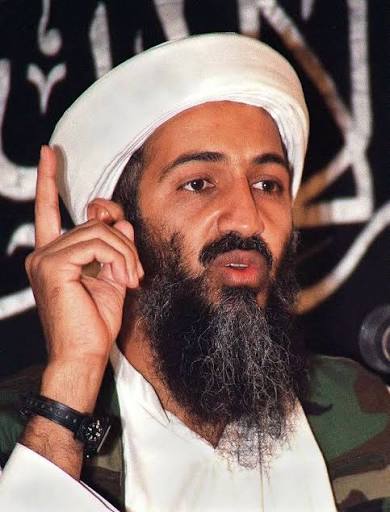
Not far from our office was the newspaper run by Hamid Mir. Just minutes before the planes struck the Twin Towers, one of Osama bin Laden’s messengers reportedly came to see Mir and told him to switch on CNN.
When Mir did so, the messenger reportedly asked him to give him ten or fifteen minutes, saying that he wanted to rest and then tell him something.
According to Hamid Mir, he later went into the newsroom. During that time, the messenger called him from behind the glass partition and asked him to come inside. Mir said that when he entered, CNN was showing smoke rising from the Twin Towers.
Mir disclosed this incident years later during a television programme.
Twenty-five years later
Twenty-five years have now passed since that catastrophe.
I also remember an evening in Jackson Heights, New York, when a foreign diplomat called me and told me over the phone that Osama bin Laden had been killed inside Pakistan.
It sometimes feels as though the calamity that befell Pakistan on September 11 has continued to reappear in different forms.
Before 9/11, Pakistan’s principal security threat was perceived to be India. Today, Afghanistan, the Taliban and Baloch separatist groups have all emerged as major challenges to Pakistan’s security.
Nineteen hijackers, none of them Pakistani citizens, seized four American passenger aircraft on suicide missions. Yet the mastermind of the attacks had a connection with Pakistan. Although he was a Kuwaiti citizen, his father was a Baloch who had moved to Kuwait in the 1950s to serve as an imam.
Osama bin Laden has been dead for 15 years, yet Khalid Sheikh Mohammed, the alleged mastermind of 9/11, has still not been sentenced.
Who is Khalid Sheikh Mohammed? How was he captured in Pakistan? And why, even 25 years after the 9/11 attacks, has he still not been sentenced?
These questions remain highly significant.

Who is Khalid Sheikh Mohammed?
Khalid Sheikh Mohammed was born into a Baloch family. There are differing accounts of whether he was born in Pakistan or Kuwait. What is known is that he moved with his family to Kuwait in the mid-1970s.
As a young man, he was influenced by the Muslim Brotherhood. Between 1984 and 1986, he studied mechanical engineering at North Carolina Agricultural and Technical State University in the United States.
After returning to Kuwait, he travelled to Afghanistan, where the jihad against the Soviet Union was underway. He began training at a camp associated with Abdullah Azzam. It was during this period that he met Osama bin Laden, Ayman al-Zawahiri and Riduan Isamuddin, better known as Hambali, who later became the leader of Indonesia’s Jemaah Islamiyah.
Khalid Sheikh Mohammed spent less than a year in Afghanistan before moving to Peshawar, where he taught engineering at Dawat-ul-Jihad, a university established by Abdul Rasul Sayyaf’s Islamic Union for the Liberation of Afghanistan. The institution was also involved in encouraging Afghan refugees to join the jihad.
In 1992, while KSM was in Pakistan, he sent money to his nephew Ramzi Yousef, who was living in New Jersey. The money was intended to support a planned attack on the World Trade Center, which eventually took place in the form of a bombing on February 26, 1993.
Another of KSM’s nephews, Ammar al-Baluchi, married Aafia Siddiqui in February 2003, according to accounts of the marriage. Al-Baluchi was later accused by US authorities of helping facilitate financial arrangements for some of the 9/11 hijackers.
After the 1993 World Trade Center bombing, Ramzi Yousef travelled to Karachi, where he met Khalid Sheikh Mohammed.
At the end of 1993, KSM moved to Qatar and took a job as an engineer with Qatar’s Ministry of Electricity and Water. But in early 1994, he travelled to Manila with Ramzi Yousef, where they began planning terrorist attacks.
One of their schemes, known as the “Bojinka Plot”, involved plans to bomb 12 American passenger aircraft over the Pacific. They also plotted to assassinate Pope John Paul II and US President Bill Clinton, both of whom were expected to visit Manila in late 1994.
Ramzi Yousef carried out an experimental bombing in an empty theatre in Manila. He later planted a bomb on a Philippine Airlines flight and got off before the aircraft took off. The explosion killed a Japanese businessman, but the pilot managed to land the aircraft safely.
The wider plot was exposed after an accidental explosion occurred while the bomb-making operation was underway.
Khalid Sheikh Mohammed escaped to Kuwait, while Ramzi Yousef returned to Pakistan. Philippine authorities were reportedly astonished to discover that KSM’s apartment had effectively been turned into a bomb-making laboratory.
Ramzi Yousef was arrested in Pakistan the following month.
In 1996, a New York court secretly indicted Khalid Sheikh Mohammed for providing financial support for the World Trade Center bombing and for his role in planning the Bojinka plot.
US authorities attempted to capture him in Qatar, but he had already fled to Pakistan.
After spending some time in Karachi, he travelled to Tora Bora, where he met Osama bin Laden. He asked bin Laden to provide funding for a major attack against the United States.
KSM proposed hijacking an aircraft and crashing it into CIA headquarters at Langley. Bin Laden initially rejected the idea, but told him that if he joined al-Qaeda, he would provide him with funding.
At the end of 1996, KSM travelled to India, Malaysia and Indonesia, where he met Riduan Isamuddin, better known as Hambali, the leader of Jemaah Islamiyah.
KSM invited Hambali to Afghanistan to meet Osama bin Laden, and Hambali accepted.
According to US authorities, KSM provided funding to Jemaah Islamiyah for attacks against American targets in Indonesia. The 2003 Marriott Hotel bombing in Jakarta and the 2004 attack on the Australian Embassy were later attributed to joint operations involving Jemaah Islamiyah and al-Qaeda.
The 9/11 plan
KSM’s breakthrough came when Osama bin Laden approved, in late 1998 or early 1999, a plan to use aircraft as weapons by crashing them into American buildings.
In 1999, KSM moved to Kandahar and began working on the plan.
In early 2000, he was appointed head of al-Qaeda’s media committee. Around the same time, he established safe houses in Pakistan.
He watched the 9/11 attacks unfold from an Internet café in Karachi.
Following the death of al-Qaeda’s military commander Mohammed Atef in November 2001, KSM established a cell to explore the development of biological weapons, including experiments involving anthrax.
On October 12, 2001, the United States designated KSM as a global terrorist.
In January 2002, he beheaded American journalist Daniel Pearl and released a video of the killing. He later told US interrogators that he had personally carried out the killing.
KSM continued planning further attacks against the United States. In 2002, he was appointed head of al-Qaeda’s external operations.
How was Khalid Sheikh Mohammed captured in Pakistan?
The prominent American journalist Peter Bergen, who conducted Osama bin Laden’s first televised interview in 1997, provides considerable detail about the hunt for bin Laden in his 2012 book Manhunt.
Bergen writes that Khalid Sheikh Mohammed and Ramzi bin al-Shibh, two of the principal planners of 9/11, gave an interview to Al Jazeera in a Karachi safe house in 2002, in which they discussed details of the planned attacks.
Several months after that interview, Ramzi bin al-Shibh was arrested in Karachi. Important documents were reportedly recovered from him, including passports belonging to members of Osama bin Laden’s family.
KSM had also sent money from Karachi to Osama bin Laden when bin Laden was trapped in the Tora Bora region. He also helped finance the Bali bombings from Karachi and was involved in planning an attempt to bomb an aircraft at Heathrow Airport and in efforts to develop anthrax weapons for al-Qaeda.
But all these plans came to an abrupt halt when KSM was arrested in Rawalpindi at around 3 a.m. on March 1, 2003.
According to accounts of his capture, the breakthrough came from a source who was present in the same house as KSM. The source sent a message from a bathroom indicating that he was with Khalid Sheikh Mohammed.
KSM was arrested that same night.
Three letters from Osama bin Laden were reportedly found in his possession, including one addressed to bin Laden’s wife and children in Iran. Important documents were also recovered, including information on 129 al-Qaeda members and details of their monthly salaries.
Yet the CIA was unable to determine where Osama bin Laden was hiding.
The most KSM could reveal was that the last time he had been in contact with bin Laden, the al-Qaeda leader was in Kunar province.
After that, KSM said, bin Laden’s communications were facilitated by a courier known as “al-Kuwaiti”.
Initially, US officials believed that KSM’s capture would quickly lead them to bin Laden.
But Michael Scheuer, who had headed the CIA’s Osama bin Laden unit since its establishment in 1995, warned that bin Laden was likely to be far more security-conscious than KSM.
Even after examining documents seized from KSM, investigators could not determine bin Laden’s location.
KSM was taken first to Bagram airfield and later to a secret CIA detention facility in Poland, where interrogators subjected him to harsh interrogation methods. Yet they could not extract the identity and whereabouts of “al-Kuwaiti”.
Eventually, information obtained from KSM helped US authorities locate Hambali in Thailand. Hambali reportedly told investigators that after the fall of the Taliban, when he travelled to Karachi, the safe house where he stayed had been arranged by al-Kuwaiti.

After KSM’s capture, Abu Faraj al-Libi became al-Qaeda’s operational commander. In December 2003, he was involved in two assassination attempts against then-President Pervez Musharraf.
Al-Libi was arrested in Mardan on May 2, 2005. After a month of interrogation, Pakistani authorities handed him over to US officials.
He reportedly told investigators that after KSM’s arrest, he received a message through al-Kuwaiti that he was being appointed as KSM’s replacement.
By the time he had risen to one of al-Qaeda’s most senior operational positions, al-Libi was living in Abbottabad.
Yet it took the CIA another seven years to focus seriously on Abbottabad.
In fact, neither KSM nor al-Libi revealed the true identity of Osama bin Laden’s courier. They repeatedly provided misleading information.
In 2010, the CIA finally located al-Kuwaiti after receiving information from a third country. Following the courier ultimately led the Americans to the compound in Abbottabad where Osama bin Laden was living.
Why has Khalid Sheikh Mohammed still not been sentenced?
After his capture in Rawalpindi, KSM was taken to Bagram and subsequently transferred to a secret CIA detention facility in Poland. The purpose was to extract information that could help US intelligence locate Osama bin Laden.
He was eventually transferred to Guantanamo Bay in 2006.
For approximately three and a half years after his capture, KSM was held in a network of secret detention facilities where interrogators used harsh techniques, including waterboarding.
This created a fundamental legal problem.
Questions arose over whether statements and confessions obtained during such interrogations could legally be used against him in court. The defence argued that statements obtained under coercion could not be treated as voluntary confessions.
In 2008, the United States attempted to prosecute KSM and four other defendants before a military commission at Guantanamo Bay.
But once again, the central question was the legal status of confessions obtained through coercive interrogation.
On May 5, 2012, KSM and his four co-defendants were formally arraigned before a military commission at Guantanamo Bay. They were charged with planning the September 11 attacks, murder, terrorism and aircraft hijacking—offences carrying the possibility of the death penalty.
But once again, questions surrounding CIA detention facilities, alleged torture, secret government programmes and the conduct of intelligence personnel became central to the proceedings.
Then, in 2024, a possible middle ground emerged.
KSM and his co-defendants agreed to plead guilty in exchange for the government agreeing not to seek the death penalty, meaning they could receive life imprisonment instead.
However, then-Secretary of Defense Lloyd Austin rejected the agreement. The matter subsequently went through further litigation in the US courts.
The case is once again awaiting trial, with the military commission having set *June 5, 2028* as the date for the start of the trial.
The paradox of the KSM case
In simple terms, Khalid Sheikh Mohammed has not been sentenced because *the actual trial on the evidence against him has still not begun*.
For more than two decades, the case has been entangled in a fundamental question:
Which evidence is legally admissible?
The paradox is striking.
The United States has an extraordinarily powerful justice system, yet it has been unable to bring one of the most consequential terrorism cases in its history to a final judgment.
The very interrogation programme that produced some of the most damaging statements against KSM also created the legal controversy that has helped prevent those statements from being straightforwardly used in court.
Twenty-five years after 9/11, the United States has captured its alleged mastermind—but has still not secured a final sentence against him.
The question is no longer simply why KSM was not caught.
The more difficult question is:
Why, after 25 years, has the world’s most powerful judicial system still been unable to bring the 9/11 mastermind to a final verdict?
11th International Fatwa Conference discusses the themes of “Family Challenges Amidst Major Transformations”
Amr khalifa
EGYPT
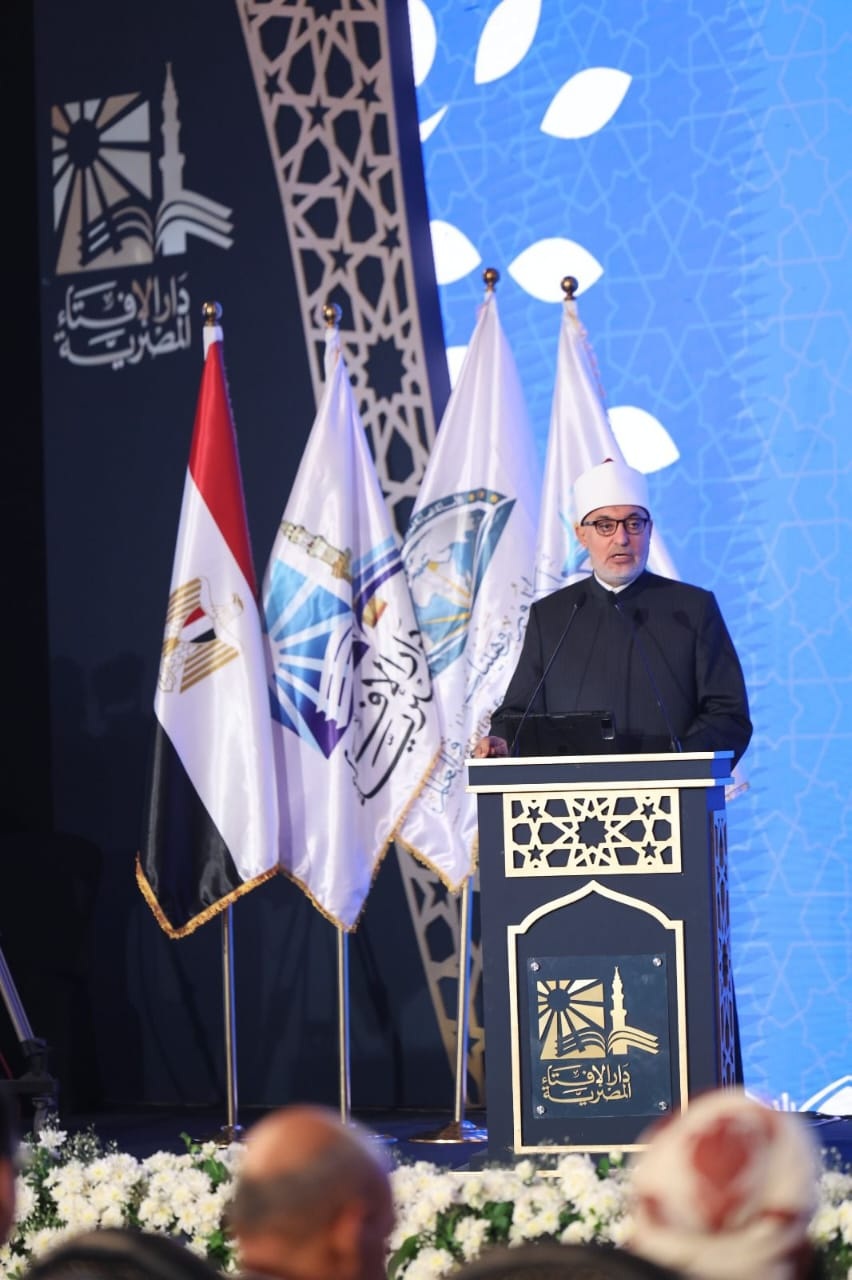
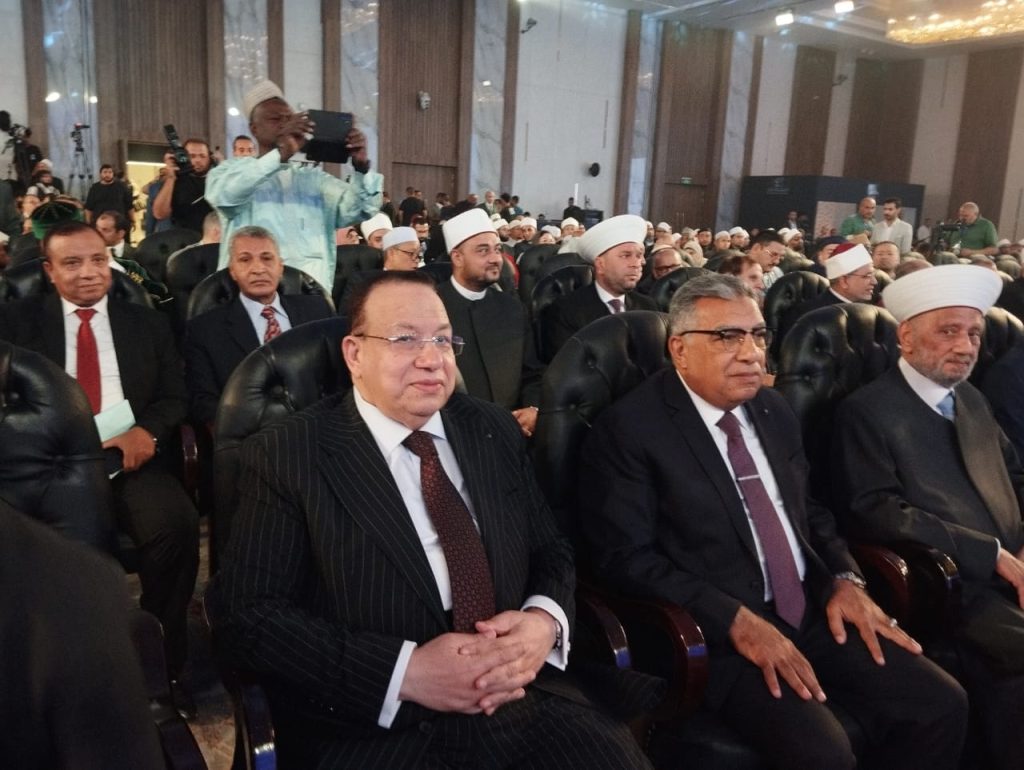
The 11th International Conference of the General Secretariat of Fatwa Institutions Worldwide, held on Wednesday and Thursday under the title “Family Challenges Amidst Major Transformations: A Fatwa Approach to Protecting the Family, envisioning its Future, and Preserving Identity,” discussed a number of scholarly and intellectual themes addressing the rapid transformations the world is witnessing and their impact on the family, values, and identity. It also explored ways to develop fatwa approaches capable of addressing these challenges and anticipating the future of the family.
The conference also addressed the phenomenon of “modern individualism” and the transformations it has brought about in patterns of thought, behaviour, and social relations. It examined the impact of rising individualism on the concept of family and shared responsibility, while also exploring ways to achieve a balance between respecting individual privacy and strengthening the values of solidarity, mutual support, and responsibility within the family and society.
The conference also discussed the issue of “digital isolation” and its associated transformations in the nature of human relationships, given the increasing influence of technology and digital spaces on communication and belonging patterns. It addressed the challenges the digital environment poses to families, necessitating a search for ways to promote the conscious use of technology, preserve family and social bonds, and mitigate the effects of isolation and social separation.

Dr. Nazir Muhammad Ayyad, the Grand Mufti of Egypt, stated that the conference’s scientific sessions also addressed issues of “belonging and coexistence.” This inrespect andning the role of the family and religious, cultural, and educational institutions in instilling the values of citizenship and belonging, promoting a culture of dialogue and mutual respect, and building awareness capable of confronting the polarization and intellectual and social challenges posed by major transformations.
He added that the conference’s themes also explored “social, cultural, economic, and technological transformations affecting the family,” and their repercussions on family stability, marital relationships, and child-rearing. Emphasis was placed on the importance of providing scholarly and legal perspectives capable of consciously interpreting these transformations and addressing emerging issues in a way that preserves fundamental principles while utilizing modern tools.
In a related context, Dr. Ahmed Al-Haddad, the Grand Mufti of Dubai, praised the pioneering role played by Dar al-Ifta al-Misriyyah (the Egyptian Fatwa House) and the General Secretariat of Fatwa Institutions Worldwide, noting the importance of bringing together scholars and religious authorities from around the world to discuss critical issues affecting the very core of societies.
Mr. Mahmoud Al-Sharif, Head of the Syndicate of Ashraf (descendants of the Prophet Muhammad), also expressed his pride in participating in this global event, emphasizing that discussing contemporary problems facing Muslim families is a fundamental step towards protecting society from factors of disintegration and isolation.
For his part, Dr. Arshad, the Grand Mufti of South Africa, affirmed the important and pivotal role played by the General Secretariat of Fatwa Institutions Worldwide, headed by Dr. Nazir Muhammad Ayyad, highlighting Dar al-Ifta al-Misriyyah’s dedication to addressing the issues and problems faced by Muslim families across the globe.
The conference pays particular attention to the role of fatwa-issuing institutions and religious, cultural, and educational institutions in addressing contemporary family challenges. It aims to present scholarly and legal perspectives grounded in a precise understanding of reality, integrating Islamic, humanistic, and social sciences to offer practical and applicable solutions, enhance family awareness, and protect families from factors contributing to their disintegration. The conference also aims to develop a comprehensive approach to issuing fatwas that safeguards the family, anticipates its future, and preserves its identity. This approach involves analysing the major transformations the world is witnessing and strengthening the system of belonging, coexistence, and mutual support, thereby contributing to the development of well-rounded individuals capable of positive interaction with their environment while simultaneously preserving the foundations and stability of the family.
The 11th International Conference of the General Secretariat for the Role and Bodies of Fatwa in the World was held on the second and third of September 2026, under the patronage of His Excellency President Abdel Fattah El-Sisi, President of the Republic, with the participation of scholars, muftis and researchers from 80 countries around the world, reflecting the importance of the conference as an international platform for dialogue on the future of the family, and enhancing the role of fatwas in dealing with issues and transformations that affect the lives and stability of societies.
Iran–US War, Trump Signals Talks Could Return as Economic Pressure Intensifies
Political editor
Trump leaves door open to renewed negotiations US President Donald Trump has signalled that Washington could return to negotiations with Iran, even as diplomatic efforts remain stalled and tensions continue around the Strait of Hormuz.
Asked Wednesday whether the United States would return to the negotiating table, Trump said talks could resume “maybe at some point,” while arguing that the current situation was favourable to Washington.
The comments came just days after Trump said there were no talks underway or scheduled with Tehran, highlighting the uncertainty surrounding the diplomatic track. Economic pressure replaces immediate military escalation
Trump has simultaneously announced a major new campaign of economic pressure against Iran. He described it as the most severe economic operation against a country and warned nations and businesses assisting Tehran that they could face serious consequences.
The shift follows the collapse of a 60-day negotiating period established under a June memorandum aimed at finding a broader settlement to the conflict. The deadline expired on August 17 without an agreement.
Strait of Hormuz remains the central dispute. At the heart of the confrontation is the Strait of Hormuz, one of the world’s most important energy routes.
Trump says the waterway is open and that the United States has control of it. Iran maintains that the strait remains effectively closed and has demanded an end to the US blockade and military pressure before normal shipping can resume. Shipping data indicates that traffic remains far below normal levels. Reuters reported that only nine commodity vessels passed through the strait on both Tuesday and Wednesday, underscoring the continuing disruption despite Washington’s claim that the route is operating.
Continued on Page 6
The 21st World Sufi Forum kicks off in Morocco under the auspices of the Boutchichiya Sufi order
Amr khalifa
Egypt
The 21st World Sufi Forum, organized by the Forum Foundation in cooperation with the Euro-Mediterranean Centre for the Study of Islam Today and the Qadiriyya Boutchichiyya Sufi order in Morocco and the Islamic world, will commence tomorrow, Saturday, in the Kingdom of Morocco. The forum will be held in the village of Madagh, in the Berkane region of Morocco, with the participation of scholars from Al-Azhar University and Sufi sheikhs from across the Islamic world.
This year’s forum is being held under the supervision and chairmanship of Dr. Mounir al-Qadiri Boutchich, Sheikh of the Qadiriyya Boutchichiyya order, President of the Forum Foundation, and Director of the World Sufi Forum. It will address a vital topic that touches upon the core of contemporary spiritual and civilizational challenges, under the title: “The Emirate of the Faithful and the Preservation of the Prophetic Legacy: The Stakes of Purification and Achieving a Civilizational Value Model for Establishing a Good Life.” The organising committee of the International Scientific Forum announced that extensive preparations are underway to host the 21st session of the “World Sufi Forum,” organized by the “Al-Multaqa Foundation” in partnership and cooperation with the “Qadiriyya Budshishiyya Order” and the “Euro-Mediterranean centre for Contemporary Islamic Studies” (CEMEIA). The forum will be held in commemoration of the Prophet’s birthday, from the 8th to the 12th of Rabi’ al-Awwal 1448 AH (August 22-26, 2026), at the main zawiya in Madagh.
Given the exceptional importance of this academic and spiritual event, a distinguished group of researchers, scholars, and university professors from various Arab, Islamic, African, and Western countries participate annually. This scholarly gathering aims to present scientific and practical approaches that interpret the concept of Sufism and spiritual purification as an effective reformist and ethical methodology for addressing the moral and social challenges facing modern societies.

The World Sufi Forum, through its scholarly sessions and intellectual seminars, seeks to highlight four key themes. Preserving the Prophetic Legacy. Highlighting the historical and pioneering role of the institution of the Commander of the Faithful in Morocco in safeguarding religious and spiritual principles and disseminating the values of moderation and balance. The Stakes of Behavioral Purification, how to adopt spiritual education as a driving force for refining souls and instilling the values of ethics and good citizenship.
The civilisation value model: Presenting a contemporary Islamic vision that integrates the material and spiritual aspects to build a balanced individual capable of contributing to society. Establishing a Good Life: Demonstrating the impact of spiritual stability and inner peace on achieving social harmony and human coexistence. President of the World Sufi Forum: The forum aims to consolidate the noble values of Islam and promote moderation and balance.
Dr. Mounir El Kadiri Boudchich, President of the World Sufi Forum and Sheikh of the Qadiri Boudchichiya Order in Morocco and worldwide, affirmed in his remarks regarding this session that the forum presents a valuable opportunity to strengthen bridges of dialogue and integration between academic discourse and spiritual education. He extended an invitation to researchers and thinkers from diverse academic backgrounds to contribute their research and insights to enrich this ongoing and evolving cultural discussion.
Al-Qadiri added, “The 21st World Sufi Forum represents a renewed intellectual and spiritual milestone, through which we seek to consolidate the noble values of Islam, disseminate the message of moderation and balance, and affirm the role of Sufism and moral education in building individuals and society. This exceptional session, coinciding with the celebration of the Prophet’s birthday at the headquarters of the mother zawiya in Madagh, has chosen the theme: ‘The Emirate of the Faithful and the Preservation of the Prophetic Legacy: The Stakes of Purification and Achieving a Civilizational Value Model for Establishing a Good Life.
Donald Trump furious with Netanyahu for rejecting Gaza peace plan
Political correspondent
Although Israeli Prime Minister Benjamin Netanyahu has categorically rejected the new Peace Board plan to disarm Hamas in Gaza, his statement is unlikely to be final.
The White House is reportedly “not bothered” by Netanyahu’s statement and sees it as campaign rhetoric ahead of a tough general election expected in Israel.
Israeli journalist Barak Ravid quoted a senior US official as saying that “we understand Netanyahu’s political needs.” He added that “we have no problem with that, as long as he continues to do what we (the US) are telling him, especially in terms of limiting attacks in Gaza. There has been an apparent pause in Israeli attacks on Gaza in recent days, which was what Hamas demanded when it agreed to the US-backed 15-point roadmap.
There is another sign that Israel is ready to push ahead with US President Donald Trump’s peace plan for Gaza. In this regard, preparations are underway to deploy the International Stabilization Force (ISF). The force, made up of international troops, is planned to work alongside a new Palestinian police force to secure the area. According to Israeli state-run radio Kan News, construction of the first ISF base amid the ruins of Rafah in southern Gaza is expected to begin later this month, which will finally allow the reconstruction of Gaza to begin.