Nawaz Kharal:
Lahore:
Pakistan’s well-known Qari, Syed Sadaqat Ali Shah, visited Al Mustafa Eye Hospital for a routine eye examination, highlighting the importance of regular eye care and specialised medical services.
During the visit, the Medical Superintendent of Al Mustafa Eye Hospital, Mr. Khalid bin Aslam, personally received and guided the respected religious scholar through the examination process. Hospital officials stated that the visit reflects growing public trust in the institution’s professional ophthalmic services.
Speaking on the occasion, representatives of the hospital emphasised their commitment to providing quality eye care to patients from all walks of life, ensuring accessible and modern treatment facilities.
The visit also served as an opportunity to promote awareness about preventive eye health and the need for timely medical check-ups, especially for individuals engaged in extensive reading and recitation.
Pakistan
Al Mustafa Pakistan Conducts Major Eye Care Camp in Tandlianwala, Serving Over 1,000 Patients
Bureau Report:
Faisalabad:
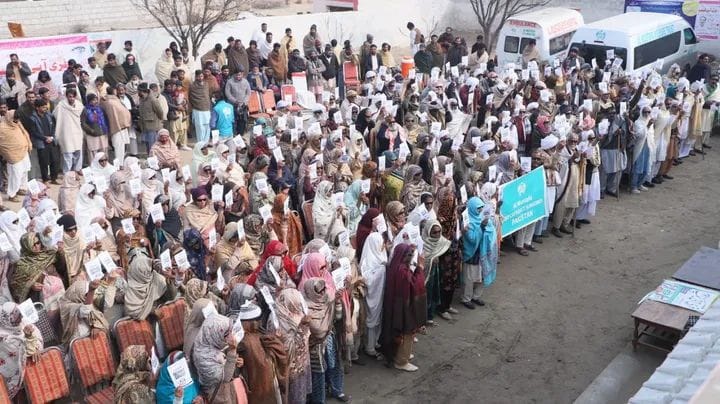
Al Mustafa Pakistan has continued its mission to deliver quality eye care and essential health services to remote and underserved communities through a large-scale medical camp held at Chak No. 596 GB, Jhamra Road, Tehsil Tandlianwala.
According to organisers, the outreach camp, conducted from 4–5 February 2026, provided extensive medical support despite challenging field conditions. During the two-day initiative, medical teams carried out 257 successful eye surgeries, treated 1,120 patients in OPD, and distributed 418 vision glasses, helping restore sight and improve the quality of life for hundreds of individuals.
Representatives of Al Mustafa Pakistan said the camp reflects the organisation’s ongoing commitment to reaching difficult terrains and neglected populations, ensuring access to healthcare for those who might otherwise remain untreated. Patients and local residents appreciated the services, describing the initiative as a lifeline for families with limited medical resources. The welfare organisation reaffirmed its pledge to continue similar humanitarian missions across Pakistan, focusing on eye care, preventive health services, and community wellbeing.
Basant Festival Becomes Rs50 Billion Economic Boom, Overtakes Eid as Lahore’s Biggest Celebration
By Sajjad Azhar:
Lahore:
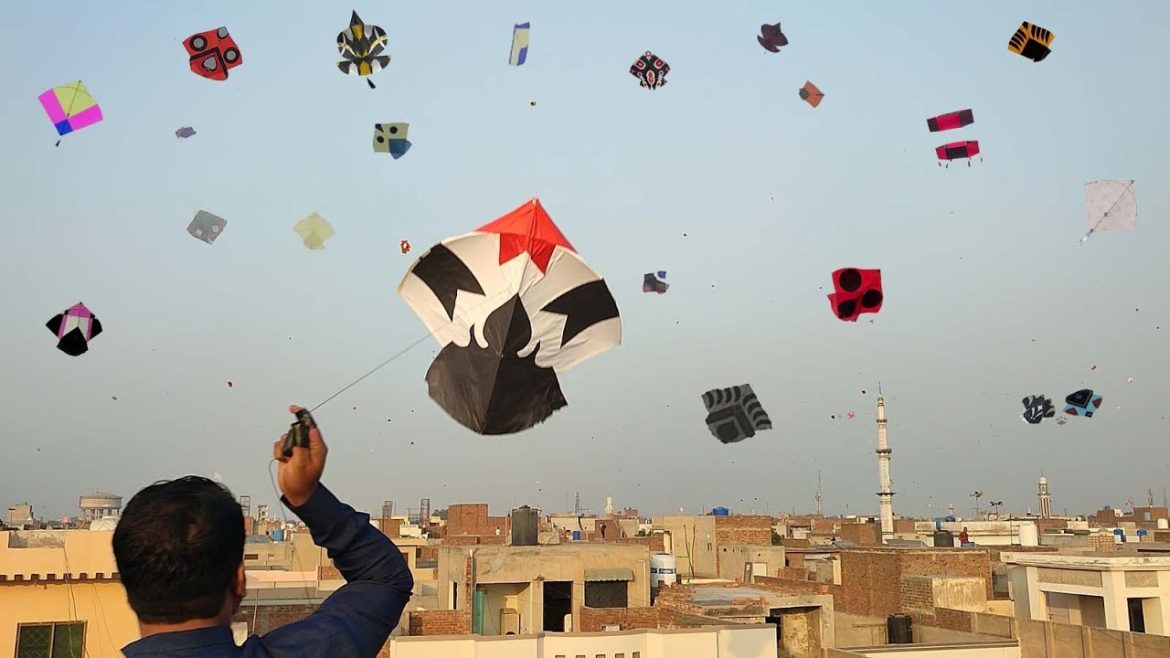
The revival of the Basant Festival has transformed Lahore into a massive hub of economic activity worth an estimated Rs50 billion, surpassing even Eid in scale and earning the title of the city’s largest cultural festival.
Syed Farrukh Zafar, an Islamabad-based NGO professional who frequently travels to Lahore, said he had to postpone his recent visit because hotel rooms were unavailable. “A room that usually costs me Rs15,000 at corporate rates is now double the price,” he told London Post, highlighting the extraordinary surge in demand during the festival.
The last official Basant celebration in Lahore took place in 2005. Since then, the city’s population has nearly doubled, but current economic indicators suggest that activity has multiplied many times over. According to a briefing presented to Punjab Chief Minister Maryam Nawaz, nearly 900,000 vehicles entered Lahore during the three-day festival, while 1.4 million people used free public transport within the city. Estimates suggest that more than three million visitors arrived from other cities to celebrate Basant, injecting billions of rupees into the local economy.
Kite Sales Reach Record Levels
Muhammad Aamir Rafiq, President of the All Pakistan Kites Association, said it was still too early to calculate exact figures but confirmed that kite and string sales reached billions of rupees. “If the poultry industry claims Lahoris consumed over Rs10 billion worth of chicken during these three days — more than Eid levels — you can imagine how big the kite market was,” he said. Local production ran out quickly, forcing suppliers to bring additional stock from Gujranwala, Faisalabad, Multan, and other regions, yet demand remained unmet.
Ahmed Sameer, founder of LahoreKites.com — the city’s first online kite store — said around 3,500 licenses were issued for kite sales, with his platform being the only dedicated online outlet. “Walk-in customers were so many that we couldn’t fulfill online orders. Even the smallest kite, initially priced at Rs200, rose to nearly Rs400 due to limited supply,” he said, adding that his store sold over 5,000 kites in just three days.
Hotels and Tourism Sector Lead Profits
Gulraiz Khattak, President of the Lahore Hotels and Tourism Association, revealed that nearly 1,000 hotels with around 50,000 rooms were fully booked 10 to 15 days before Basant began. “Even our regular clients could not find rooms,” he said, noting that some four- and five-star hotels started charging in dollars due to overwhelming demand.
With nearly a million vehicles entering the city via motorways and highways, business activity surged beyond the hospitality sector. Bakeries, fruit vendors, and gift shops also reported increased sales as visitors followed the local tradition of bringing gifts when visiting friends and family. While restaurants saw limited business during the festival days — as most gatherings took place at homes — they experienced a sharp rise in bookings in the week following Basant as out-of-town guests explored Lahore’s culinary scene.
Entertainment Industry Booms
Entertainment activities reached unprecedented levels, with sound systems in short supply and transported into Lahore from other cities. Traditional drummers (dhol players) and musicians reported earnings surpassing even the peak wedding season.
Singer Sajjad Ali Bela, son of renowned artist Hameed Ali Bela, said Basant and music are inseparable. “Artists, musicians, and performers from across Pakistan came to Lahore. Musical show fees reached record highs, with some events priced in the tens of millions of rupees,” he noted. Performers who typically charge Rs1 million reportedly earned up to Rs2 million during the festival, reflecting the cultural and economic scale of the event.
As Basant continues to evolve, analysts believe its revival has not only restored a cherished cultural tradition but also positioned Lahore as a powerful driver of seasonal economic growth, drawing millions of visitors and generating unprecedented commercial momentum.
Al Mustafa Welfare Trust Organises Pre-Ramadan Ration Distribution for Deserving Families in Cholistan
Hahmid Raza:
Cholistan:
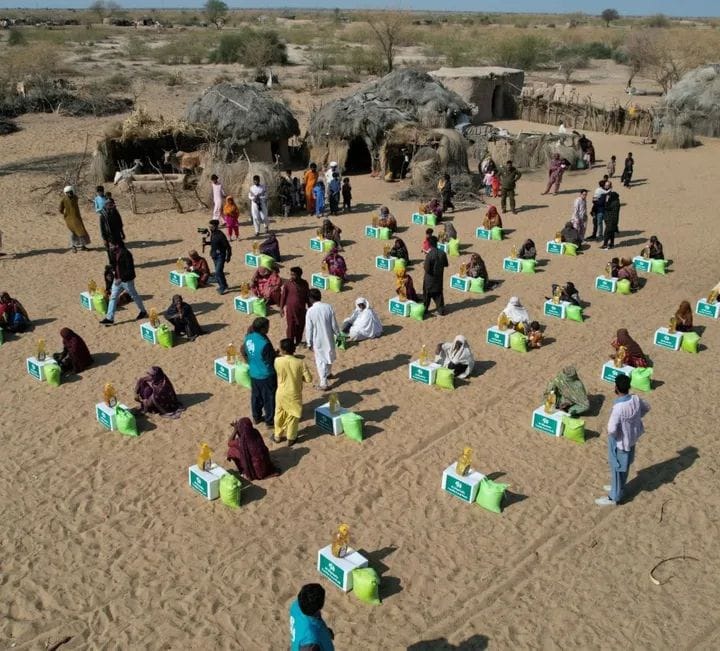
In preparation for the holy month of Ramadan, Al Mustafa Welfare Trust organised a special ration distribution drive for deserving families at the Al Mustafa Community Center in Cholistan, reinforcing its ongoing commitment to humanitarian service.
The initiative was carried out under the guidance of Managing Director Ms. Nusrat Saleem, with hundreds of underprivileged families receiving essential food supplies to help them observe Ramadan with comfort, dignity, and peace of mind.
Distinguished donors Sheikh Arshad and Mrs. Parveen attended the ceremony as special guests, alongside other notable participants who appreciated the organisation’s continued welfare efforts. Among those present were Ms. Ayesha Zeeshan, Director of Oxford School Systems, Mr. Zeeshan Ghaffar, and Chaudhry Mushtaq, who commended the trust for its timely and impactful support for vulnerable communities.
Speakers at the event highlighted that such initiatives reflect Al Mustafa Welfare Trust’s firm resolve to stand with those in need and to advance the mission of serving humanity with sincerity and dedication. The organisation reiterated its pledge to continue welfare programmes aimed at supporting disadvantaged families across Pakistan, especially during significant religious occasions such as Ramadan.
Al Mustafa Pakistan Supports Victims Following Islamabad Tragedy
Bureau Report:
Islamabad:
In the wake of recent violence in the capital, Al Mustafa Pakistan extended immediate support to those affected, standing in solidarity with the nation during a time of grief. Team members and volunteers from the organisation visited the injured, providing care and distributing fruits as a gesture of compassion and support for those impacted by the incident.
Representatives of Al Mustafa Pakistan said that while the pain and loss cannot be undone, the organisation remains committed to promoting hope, peace, and inclusivity, envisioning a Pakistan where humanity and compassion prevail over violence. The initiative reflects the organisation’s ongoing mission to assist communities in crisis and support victims of emergencies with practical and emotional aid.
Al Mustafa Pakistan Conducts Successful Free Eye Camp in Jauharabad, Restores Sight to Hundreds
Khushab, Punjab:
Al Mustafa Pakistan’s Free Eye Camp held at Chak No. 45 A/MB, Azam Colony, Jauharabad on 31 January 2026 delivered life-changing eye care services to hundreds of individuals in the region.
During the camp, medical teams performed 186 successful cataract surgeries, treated 867 patients through OPD services, and distributed 415 vision glasses, restoring sight, confidence, and independence to those in need. The initiative received an overwhelming response from the local community, reflecting both the urgent demand for accessible eye care and the trust placed in Al Mustafa Pakistan’s healthcare services.
Representatives of Al Mustafa Pakistan said the camp marks another milestone in their Spring Free Eye Camp 2026 Campaign, reaffirming the organisation’s ongoing commitment to serving humanity by providing quality healthcare to underserved communities across Pakistan.
Officials highlighted that such outreach initiatives not only improve vision but also enhance the overall quality of life for patients, empowering them to participate more fully in family and community life.
Al Mustafa Welfare Trust Distributes Pre-Ramadan Rations to Families in Remote Cholistan Area
Bureau Report Cholistan:
Continuing its humanitarian efforts ahead of the holy month of Ramadan, Al Mustafa Welfare Trust organised a ration distribution drive for deserving families in the remote locality of Qasai Walay Tobay, Cholistan.
During the initiative, essential food packages were distributed among 35 underprivileged families to help ease financial pressures amid rising inflation and to enable them to observe Ramadan with dignity, comfort, and peace of mind.
The distribution ceremony was attended by Managing Director Ms. Nusrat Saleem, South Manager Arham Saleem, and distinguished donors Brother Ishaq and Sister Asma Khan, who appreciated the trust’s ongoing commitment to supporting vulnerable communities.
Representatives of Al Mustafa Welfare Trust said the initiative reflects the organisation’s continued resolve to stand by those in need and to deliver timely humanitarian assistance in hard-to-reach areas. The trust reaffirmed its dedication to serving humanity through welfare programmes aimed at improving the lives of disadvantaged families across Pakistan.
By Wajahat Ali Khan:
Today Friday talks between Iran and the United States continue in Muscat, Oman. Mediators from Qatar, Turkiye and Egypt have presented Iran and the US with a framework of key principles to be discussed in the talks.
Arab states successfully lobbied the U.S. administration to keep the talks alive, and both sides agreed to resume these discussions. US and Iran aimed at discussing Tehran’s nuclear programme and tensions, though disagreements remain over the agenda, especially U.S. demands to include Iran’s missiles and regional proxies alongside the nuclear file.
However, Iran insists the discussions should focus only on its nuclear programme rejecting U.S. pressure to broaden the agenda to ballistic missiles or support for militant groups. U.S. officials want to include these wider security concerns. U.S. leadership messaging. Senior U.S. figures, including Secretary of State Marco Rubio, have emphasised that for talks to be meaningful they must address Iran’s ballistic missiles and backing for proxy forces, a stance Tehran opposes.

While, Qatar, Turkey and Egypt have reportedly proposed a “framework of key principles” to guide the discussions, including limits on Iran’s uranium enrichment and missiles, although full details have not been publicised. Today’s These negotiations represent the most significant US Iran diplomatic engagement since the breakdown of talks over Iran’s nuclear activities and escalating Middle East tensions last year. Both sides have repeated it’s their last major chance to avert wider military conflict, amid recent heightened tensions including Iranian drone activity and a U.S. military buildup in the region.
Seemingly Oman will be the immediate test of whether diplomacy can bridge deep disagreements. Iran is unlikely to drop its refusal to discuss missiles or regional proxy forces. US negotiators are under pressure to secure concrete commitments on nuclear limits and broader security issues.
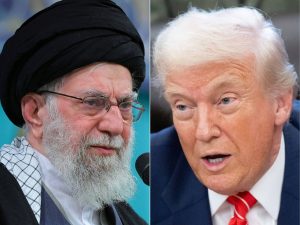
(COMBO) This combination of pictures created on February 04, 2026 shows, L/R, a handout photograph provided by the office of Iran’s Supreme Leader Ayatollah Ali Khamenei showing him addressing a meeting with the people in Tehran on January 17, 2026 and US President Donald Trump speaking in the Oval Office of the White House in Washington, DC, February 3, 2026. President Donald Trump said in an interview with NBC News on February 4, 2026, that Iran’s supreme leader Ayatollah Ali Khamenei should be “veryWhile, Qatar, Turkey and Egypt have reportedly proposed a “framework of key principles” to guide the discussions, including limits on Iran’s uranium enrichment and missiles, although full details have not been publicised. Today’s These negotiations represent the most significant US Iran diplomatic engagement since the breakdown of talks over Iran’s nuclear activities and escalating Middle East tensions last year. Both sides have repeated it’s their last major chance to avert wider military conflict, amid recent heightened tensions including Iranian drone activity and a U.S. military buildup in the region.
Seemingly Oman will be the immediate test of whether diplomacy can bridge deep disagreements. Iran is unlikely to drop its refusal to discuss missiles or regional proxy forces. US negotiators are under pressure to secure concrete commitments on nuclear limits and broader security issues.
Al Mustafa Pakistan Holds Successful Free Eye Camp in Pind Dadan Khan
Bureau Report:
Jhelum:
Al Mustafa Pakistan successfully organised a large-scale Free Eye Camp at Madarsa Farooque near Railway Station, Pind Dadan Khan, District Jhelum (Punjab) on 29 January 2026, providing vital eye care services to hundreds of people from surrounding communities.
The medical camp witnessed an impressive turnout, highlighting the urgent need for accessible healthcare in underserved areas. According to organisers, a total of 158 cataract surgeries were successfully carried out, while 902 patients received OPD consultations. In addition, 440 vision glasses were distributed among individuals suffering from eyesight problems, helping improve their daily lives.
Local residents appreciated the initiative, noting that such welfare projects bring much-needed relief to communities that often lack specialised medical facilities. The high participation also reflected the growing trust placed in Al Mustafa Pakistan’s humanitarian mission.
This initiative marked a significant milestone in the organisation’s Spring Free Eye Camp 2026 Campaign, reaffirming its commitment to restoring vision, promoting public health, and spreading hope among vulnerable populations across Pakistan.
By Sajjad Azhar:
Lahore:
A three-day kite-flying festival titled Basant Mela begins today in Lahore, often called Pakistan’s cultural capital. While many people associate Basant directly with kite flying, history suggests the two are not identical traditions.
The word Basant, derived from Sanskrit, simply means spring. Writer Shahid Ahmad Dehlvi notes that the festival originally involved offering mustard flowers at Hindu temples to welcome the season. Over time, Muslims in South Asia adapted the celebration within their own cultural practices. A popular account links the tradition to the poet Amir Khusro, who presented spring flowers to his spiritual mentor Khwaja Nizamuddin Auliya, inspiring gatherings marked by music, devotion, and shared festivities — long before kites became central to the celebration.
Kite flying itself carries a far older and more global history. Though commonly linked to ancient China, some anthropological narratives trace early kite traditions to regions such as New Zealand and Hawaii. In many early cultures, kites were not toys but sacred objects. Myths from Māori and Hawaiian traditions describe deities flying or transforming into kites, suggesting spiritual symbolism rather than entertainment.
Historical accounts also connect kites with experimentation and legend. Greek mathematician Archytas is said to have explored early flight concepts, while Chinese philosopher Han Fei Zi wrote of wooden kites capable of lifting humans — stories that blur the line between mythology and innovation. In China and Japan, kites were flown to repel evil spirits and attract good fortune, with certain days considered auspicious for flying.
Elsewhere, kites served practical purposes. In Malaysia and Papua New Guinea, they were used for fishing, while the Maya community in Guatemala still flies giant kites during the annual Day of the Dead to honour ancestors. Over time, China transformed kite flying into recreation, including competitive kite fighting, a tradition later carried to Japan.
Beyond festivals, kites have also become powerful metaphors. From Chinese poetry to European philosophy, writers have used the image of a kite rising against the wind to symbolise resilience and ambition — a theme echoed in South Asian poetry as well.
Today’s Basant celebrations reflect layers of history shaped by religion, mythology, and cultural exchange. What began as a seasonal ritual and spiritual symbol has evolved into a colourful public spectacle — reminding us that the story of kite flying is ultimately a shared human heritage that transcends borders.