
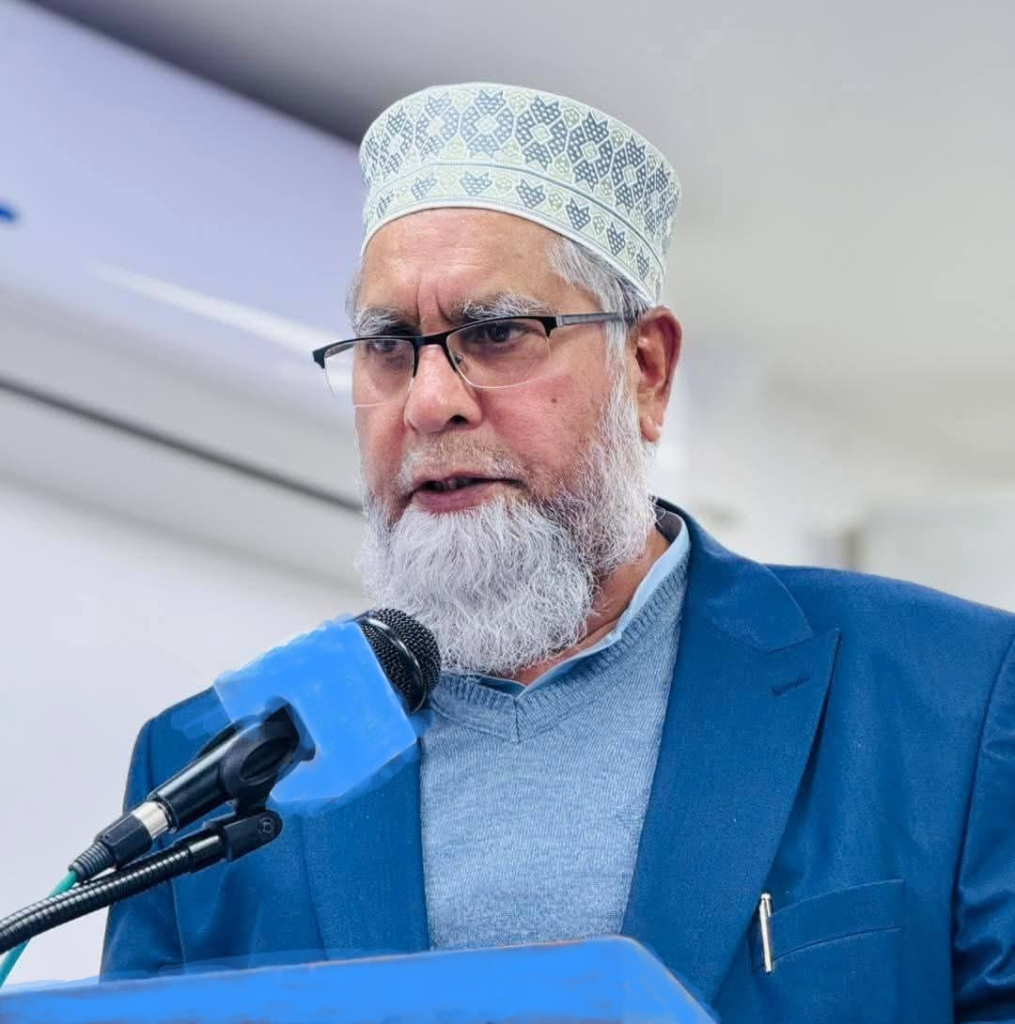
By Prof. Masood Akhtar Hazarvi
In this ruthless era of global politics, a striking contradiction is evident. On one side stand leaders like Benjamin Netanyahu, Vladimir Putin, Xi Jinping, and Donald Trump, who present their national interests and agendas to the world with complete boldness. There is no hesitation in their speech, no uncertainty in their tone, and no ambiguity in their stance. On the other side are the leaders of more than fifty Muslim-majority countries, who appear engulfed in an unnatural silence, an incomprehensible inaction, and a shameful pragmatism. This is not merely a difference in rhetoric; it is a difference in resolve, vision, and sense of responsibility.
Leadership is not tested in pleasant times; its true character emerges in the days of storms. When the righteous are oppressed, when innocent blood is shed, and when truth is crushed under the weight of power, it is precisely at that moment that the real face of leadership is revealed. Today, the ongoing genocide on the soil of Palestine, the suffocating cries in the valleys of Kashmir, and the ظلم inflicted upon Muslim minorities across various regions of the world stand as testimony to the fact that the collective silence of the Muslim world has become a historical tragedy one that future generations will not forget. Leadership does not mean delivering emotional speeches or issuing formal statements; its true responsibility lies in building mutual trust, devising a shared strategy, and taking concrete action.
Pragmatism may appear to be political wisdom, but when it is built upon the sacrifice of principles, it gradually hollows out the dignity of nations from within. This is a silent decline that follows a predictable pattern: first, conscience dies; then honour fades; then self-respect weakens; and eventually, sovereignty itself is compromised. Today, a pressing question must be directed at the rulers of the Muslim world: when you possess a complete code of life like Islam which teaches justice, courage, dignity, and truthfulness then what fear or temptation prevents you from implementing it in practical life? Is it cowardice or the illusion of worldly glitter? Is it strategy, or the death of conscience?
Amid this darkness, one aspect remains worth noting. The Iranian leadership—whether one agrees with it or not at least stands out in that it openly expresses its principled stance despite global pressure. There is a visible symbol of courage in expression and resistance, and this is the very quality that elevates leadership beyond mere power to the level of ideology. In contrast, the majority of other Muslim rulers are not only silent but at times appear trapped in compromises that run counter to their own collective interests.
Internal division within the Muslim world is a major cause of this decline. Mutual distrust, political rivalries, sectarian tensions, and personal interests have left the body of the الأمة intact but weakened its collective spirit. The adversary not only understands this weakness deeply but exploits it effectively, thereby hollowing out the Muslim world from within.
However, placing all the blame solely on external forces is also a form of self-deception. Our internal weaknesses are no less culpable. When rulers fail to provide justice, education, and basic rights to their people; when economies are burdened with debt; and when systems of accountability are paralyzed then claims of sovereignty at the global level become mere slogans, and even voices raised for the oppressed lose their impact.
History bears witness that when Muslims embraced unity, vision, and courage, they reshaped the course of the world. Salahuddin Ayyubi united fragmented forces and altered the direction of history. These examples share a common truth: strong resolve, clear purpose, and fearless leadership. Decline has always set in when leadership succumbed to expediency and the الأمة drifted away from its purpose.
Even today, the Muslim world does not lack resources. Natural wealth, human capital, and strategic geography are all present. What is absent, however, is collective vision, moral courage, and practical unity. If Muslim leadership continues to remain absorbed in the comforts of palaces and turns a blind eye to its responsibilities, history will remember it not merely as a failure but as a betrayal. Silence is no longer neutrality; it is complicity in ظلم.
This chapter of criminal silence must now come to an end. The Muslim world must determine its path not through emotional slogans, but through practical wisdom, moral courage, and collective strategy. This is the call of the moment, the demand of history, and the only path to preserving the dignity of the الأمة.
