
London: A large number of journalists and community members attended the ”Qul” ceremony of renowned journalist Shaukat Dar at Hounslow Jamia Masjid, here are a few photos from the event. Shaukat Dar passed away last week due to cardiac arrest.

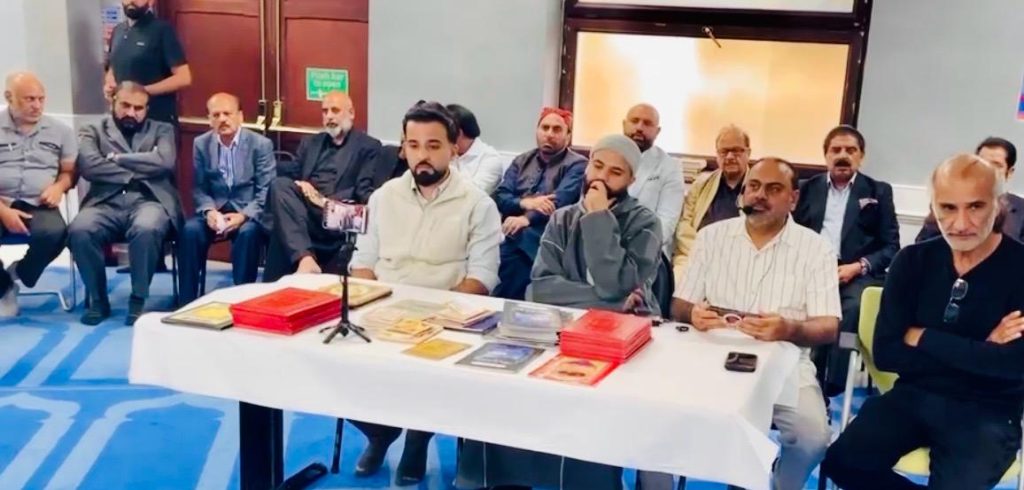
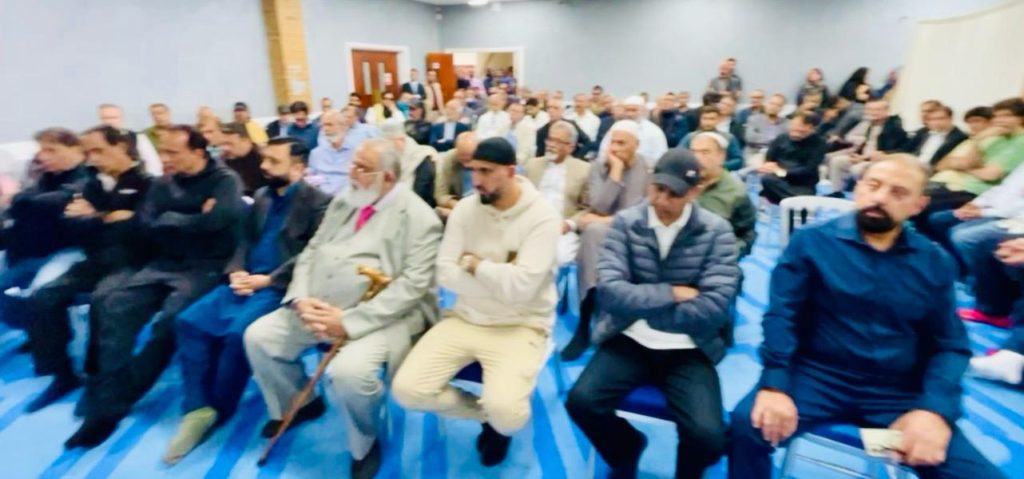

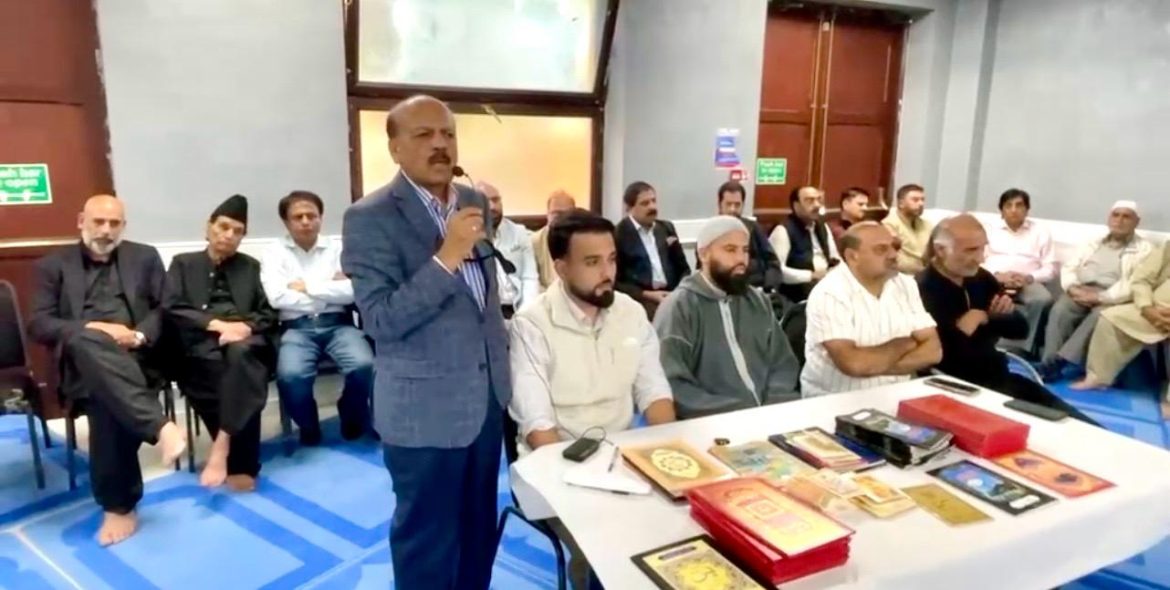
London: A large number of journalists and community members attended the ”Qul” ceremony of renowned journalist Shaukat Dar at Hounslow Jamia Masjid, here are a few photos from the event. Shaukat Dar passed away last week due to cardiac arrest.
By Sajjad Azhar
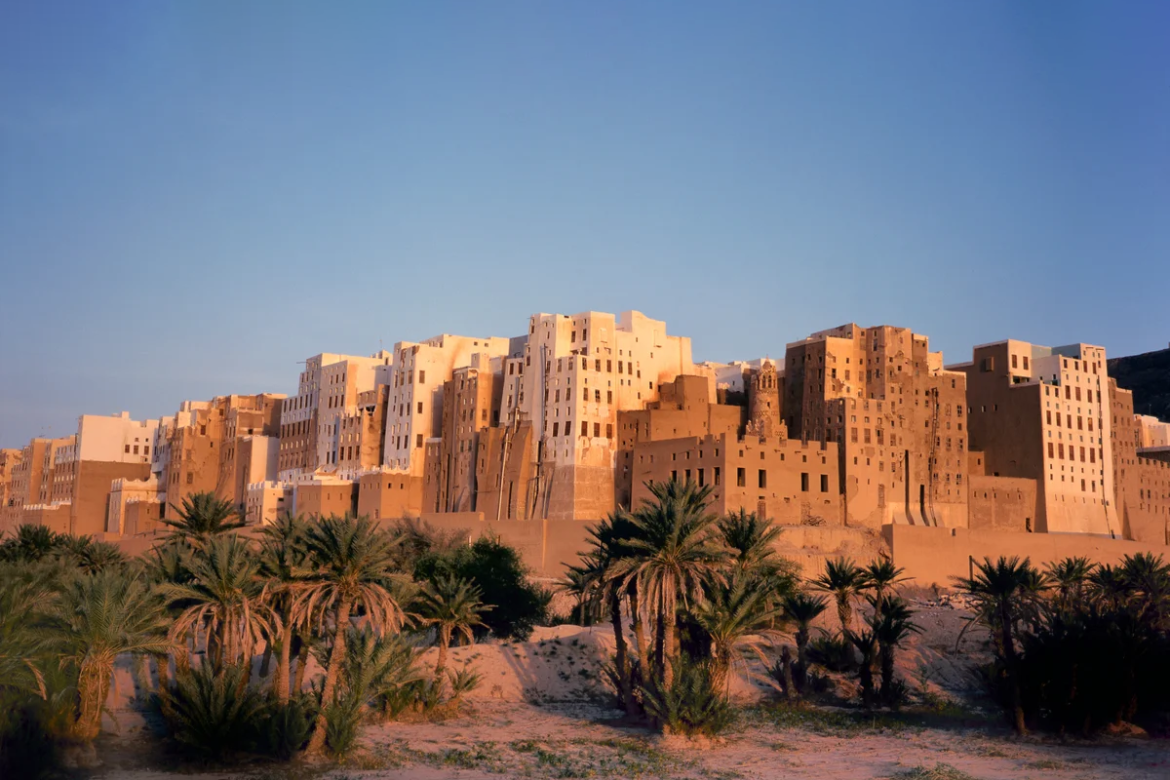
There are striking parallels between the challenges Pakistan has historically faced from neighbouring Afghanistan and some of the challenges Saudi Arabia faces from Yemen. Both countries have been shaped by tribal structures, competing political forces, sectarian identities and prolonged periods of conflict.
But Yemen possesses something that makes its historical story fundamentally different: one of the oldest and most remarkable civilisations of the Arabian Peninsula.
Long before the modern political divisions of Yemen, before the arrival of Islam and centuries before the rise of the modern Saudi state, the valleys of southern Arabia supported organised kingdoms, monumental temples, urban settlements, long-distance trade and sophisticated irrigation systems.
At the centre of this extraordinary story stands Saba — the biblical and Qur’anic Sheba — and the ancient city of Ma’rib.
Today, Yemen is widely associated with war, political fragmentation and humanitarian crisis. Yet its archaeological landscape tells the story of a society that once transformed an arid environment into one of the largest artificially created oasis landscapes of the ancient world.
UNESCO describes the archaeological landmarks of the ancient Kingdom of Saba around Ma’rib as evidence of a highly organised and centralised society, with monumental architecture, written inscriptions, temples and sophisticated hydraulic engineering. The site was placed on the World Heritage List in 2023 under an emergency procedure and also on the List of World Heritage in Danger because of the threats created by the continuing conflict.
A land of ancient kingdoms
Ancient Yemen was not a single political entity. Over different periods, several South Arabian kingdoms emerged, competed and disappeared.
Among the most important were Saba, Ma’in, Qataban, Hadramawt, Awsan and Himyar.
The Metropolitan Museum of Art places the Kingdom of Saba broadly from around the 10th century BCE into the early centuries CE, while Ma’in, Qataban, Hadramawt and Himyar emerged as important regional powers at different times. Their prosperity was closely connected to the production and distribution of highly prized aromatic resins, particularly frankincense and myrrh.
These fragrances were not merely luxury products.
In the ancient Mediterranean and Near Eastern worlds, frankincense and myrrh were highly valued for religious rituals, medicine, burial practices and personal use. South Arabian merchants became major participants in the long-distance trade that connected the southern Arabian Peninsula with the Mediterranean world and East Africa.
UNESCO describes the Sabaean kingdom as an important power along the ancient Incense Route, with its wealth closely connected to control of this trade.
This commercial network helped turn Ma’rib into much more than a desert settlement. It became a political, economic and cultural centre.

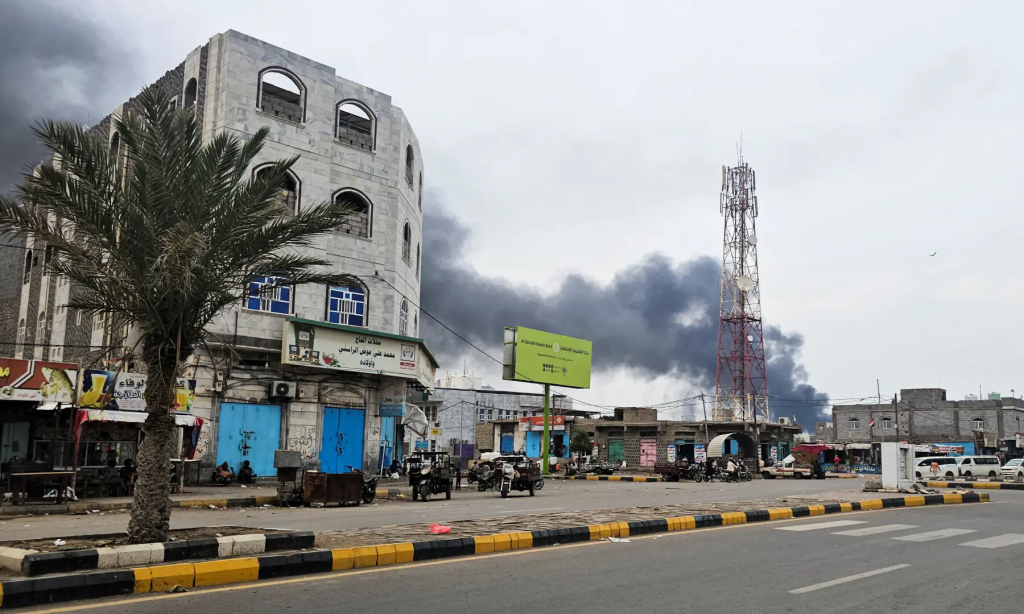


Houthi supporters rally to celebrate advances by Houthi forces along the Red Sea coastline, in Sanaa, Yemen, September 18, 2026. Picture taken with a mobile phone. REUTERS/Adel Al Khader

The Queen of Sheba: history, scripture and tradition
The most famous figure associated with ancient Yemen is undoubtedly the Queen of Sheba.
The story appears in different forms in Jewish, Christian, Ethiopian and Islamic traditions. The Qur’anic account in Surah Al-Naml is particularly distinctive because it presents the Queen as a powerful ruler who consults her advisers before taking a major political decision.
The Qur’an does not give her a personal name. She is simply described as the woman who rules over Sheba.
According to the Qur’anic narrative, Prophet Solomon discovers through the hoopoe bird that there is a kingdom in Sheba ruled by a woman who possesses a magnificent throne. The hoopoe also reports that the people of the kingdom worship the sun rather than God.
Solomon sends a letter inviting the Queen to submit to God and come before him.
What is particularly interesting from a political and historical perspective is what happens next.
The Queen does not immediately choose war.
Instead, she consults her advisers. The Qur’anic narrative records her discussion with them before she decides how to respond to Solomon.
She ultimately sends gifts to Solomon, apparently testing the situation diplomatically. When Solomon refuses the gifts, she travels to meet him.
The story then reaches its most extraordinary point. Before her arrival, her throne is brought into Solomon’s court. When she sees it, she recognises the extraordinary nature of what has happened and ultimately declares her submission to God.
The Qur’anic account is a religious narrative and should not be treated as an archaeological record. At the same time, the existence of the Sabaean kingdom itself is independently attested through archaeology and inscriptions.
What archaeology cannot currently establish is whether a specific historical woman can be identified with the Qur’anic or biblical Queen of Sheba.
That distinction is important.
Sheba was a historical kingdom. The identification of a particular archaeological queen as the Queen of Sheba remains unproven.
Ma’rib: the heart of ancient Saba
If one wants to understand ancient Yemen, there is perhaps no more important place than Ma’rib.
The ancient walled city served as the administrative, cultural and economic centre of the Sabaean kingdom. UNESCO’s archaeological property around Ma’rib includes seven sites, among them ancient urban settlements, temples and irrigation structures.
UNESCO describes Ma’rib as the capital of Saba and says that the city’s archaeological remains demonstrate the existence of a complex society with centralised administration.
This is significant because it challenges the simplistic image of ancient Arabia as nothing more than scattered nomadic tribes.
Ancient South Arabia possessed cities, rulers, religious institutions, engineers, craftsmen, merchants and written administrative traditions.
The evidence comes not only from monumental ruins but also from thousands of inscriptions.
The Sabaean script: a civilisation that wrote its own history
One of the most important features of ancient South Arabian civilisation is its written record.
The Sabaeans used a distinctive South Arabian script, often referred to as Musnad. Inscriptions have been found on stone, bronze and other materials.
They record religious dedications, royal decisions, construction projects, military events, agricultural matters and aspects of commercial and administrative life.
The British Museum, for example, holds Sabaean inscriptions from Yemen documenting temple construction, city fortifications, royal decrees and irrigation works. One inscription from Ma’rib records a royal decree dealing with commercial and financial transactions, demonstrating that the kingdom had formal rules governing economic activity.
Another British Museum inscription records irrigation works involving water channels and palm groves. Such evidence provides a remarkable window into the practical organisation of ancient South Arabian society.
In other words, these were not merely decorative inscriptions.
They were records of government, religion, construction, law, agriculture and economic life.
Through them, the ancient Yemenis left behind fragments of their own administrative history.
The Awām Temple — the mysterious monument of Ma’rib
Among the most impressive monuments of ancient Ma’rib is the Awām Temple, also known as Mahram Bilqis.
The name “Bilqis” connects the monument in later tradition with the Queen of Sheba. But archaeologically, the identification of the structure as the Queen’s palace has not been established.
UNESCO documentation identifies Awām as one of the principal monumental sanctuaries of the Sabaean kingdom and describes it as part of a larger religious landscape connected with pilgrimage.
The monument’s architecture is itself extraordinary.
Its massive stone construction, carefully worked limestone and monumental enclosure demonstrate a high level of engineering and craftsmanship.
An important inscription associated with the site refers to construction of the temple enclosure and is linked to the Sabaean ruler Yada’il Dharih, generally dated to the middle of the seventh century BCE.
The British Museum also holds a fragmentary South Arabian inscription that refers to a dedication to Almaqah, the principal Sabaean deity, and to the construction of a temple courtyard and city walls. Its catalogue notes a possible connection with the Awām temple at Ma’rib.
The archaeological evidence therefore presents Awām not simply as a legendary palace but as an important religious and architectural centre of the Sabaean state.
The Great Dam of Ma’rib
Perhaps the greatest symbol of ancient Yemen’s engineering achievement is the Ma’rib Dam.
Imagine an arid landscape receiving seasonal rainfall and a society thousands of years ago deciding not merely to survive the desert but to reorganise its entire agricultural environment.
That was the challenge the Sabaeans confronted.
Water from seasonal rains could be captured, controlled and distributed through an extensive network of channels. The result was an enormous irrigated agricultural landscape around Ma’rib.
UNESCO describes the ancient Ma’rib irrigation system as an achievement of hydrological engineering on a scale unparalleled in ancient South Arabia and says that it created what is considered the largest ancient artificial oasis in Arabia.
The importance of this system went far beyond agriculture.
It created the economic foundation of the Sabaean state.
A reliable agricultural base meant food production. Food production supported urban populations. Urban populations supported craftsmen, administrators, soldiers, merchants and religious institutions.
And prosperity supported long-distance trade.
Thus, the irrigation system was effectively part of the economic and political infrastructure of the kingdom.
How old was the Ma’rib irrigation system?
This is one area where historical precision is important.
The irrigation landscape around Ma’rib is extremely ancient, and UNESCO’s documentation traces complex settlement and agricultural development in the region back to the first millennium BCE and, in some discussions, earlier periods.
However, the Great Dam in its surviving historical form should not simply be assigned a single date of 3,000 or even 2,000 years ago.
The archaeological history of the dam is complex. The Metropolitan Museum notes evidence connecting the major stone-faced dam with the sixth century BCE, while British Museum documentation points out that inscriptions were reused during later reconstruction and that major rebuilding followed catastrophic breaches in the fifth century CE.
Therefore, the safest conclusion is that the Ma’rib irrigation landscape represents a long period of technological development and reconstruction rather than one single engineering project built at one precise moment.
That makes the achievement no less impressive.
Indeed, it arguably makes it more remarkable: generations of engineers and rulers maintained and modified a water-management system on which an entire civilisation depended.
The desert becomes an oasis
The result was extraordinary.
A landscape that might otherwise have supported only limited agriculture became a major agricultural zone.
UNESCO describes the irrigated Ma’rib landscape as the largest ancient artificial oasis in Arabia. It consisted of an extensive network of canals and cultivated territory extending to the north and south of Ma’rib.
This was ancient food security on a monumental scale.
The Sabaean achievement demonstrates that sophisticated civilisation does not depend solely on naturally fertile landscapes.
Human beings can reshape their environment — provided they possess the knowledge, organisation and political institutions required to manage water and labour over generations.
Frankincense, myrrh and the wealth of Arabia
The prosperity of Saba was also connected to another resource: aromatic resins.
Frankincense and myrrh were among the most valuable commodities of the ancient world.
The South Arabian kingdoms occupied a strategic position between the areas where these products were harvested and the markets of the Mediterranean and Near East.
The Metropolitan Museum notes that the South Arabians became major distributors of frankincense and myrrh along the ancient Incense Route.
This trade brought wealth to kingdoms that controlled production areas, caravan routes and commercial centres.
Ma’rib therefore sat at the intersection of two great economic systems:
agriculture made possible by irrigation, and international commerce made possible by the incense trade.
This combination helped create the prosperity that later generations remembered as the wealth of Sheba.
What happened to the civilisation?
Civilisations rarely disappear overnight.
The decline of ancient South Arabian kingdoms was the result of long-term political, economic, environmental and technological changes.
The irrigation system itself required continuous maintenance. When water infrastructure deteriorated, agricultural productivity could suffer. Changes in trade routes and the growing importance of maritime commerce also altered the economic environment.
Political power shifted between Saba and rival kingdoms, particularly Himyar.
Eventually, the political landscape of South Arabia changed dramatically.
The rise of Himyar and later the incorporation of Yemen into larger regional and imperial systems transformed the old political order.
By the arrival of Islam in the seventh century CE, the ancient Sabaean world had already undergone profound changes.
Yet its monuments remained.
Its inscriptions remained.
And the memory of Sheba remained.
From ancient civilisation to modern Yemen
The contrast between ancient and modern Yemen is extraordinary.
The land that once produced monumental temples, written laws, international trade and one of the ancient world’s most ambitious irrigation systems is now associated with political division and prolonged armed conflict.
Modern Yemen’s crisis has multiple causes and cannot be reduced to a single tribal or sectarian explanation.
The modern history of Yemen includes the division between North and South, unification in 1990, the presidency of Ali Abdullah Saleh, the rise of political and militant movements, the Houthi takeover of Sana’a in 2014 and the subsequent internationalised conflict.
But beneath the modern political crisis lies a much older landscape.
The archaeological sites around Ma’rib are physical reminders that Yemen was once a centre of technological innovation and international commerce.
UNESCO has warned that these archaeological remains are highly vulnerable because of the continuing conflict and other pressures. The ancient Kingdom of Saba’s archaeological landmarks were placed on the World Heritage List in Danger in 2023.
A lesson written in stone
Perhaps the most powerful lesson of ancient Yemen is not simply that the Sabaeans were wealthy.
It is that they understood something fundamental about civilisation:
water, food, trade and political organisation are interconnected.
They built infrastructure capable of turning seasonal rainfall into agricultural wealth.
They developed cities around that agricultural base.
They connected those cities to long-distance trade routes.
They recorded their decisions in writing.
They constructed temples and monumental buildings.
And they created an organised political system capable of maintaining all of it.
The inscriptions preserved in museums today are therefore more than archaeological curiosities. They are fragments of a civilisation speaking across thousands of years.
A Sabaean inscription about an irrigation channel tells us about agriculture.
A royal decree tells us about law and commerce.
A temple inscription tells us about religion and political authority.
The ruins of Ma’rib tell us about architecture.
And the story of the Queen of Sheba tells us about how the memory of this ancient kingdom survived in the religious traditions of later civilisations.
The Yemen that the world should remember
Modern headlines often present Yemen primarily as a country of war and instability.
But before Yemen became a modern geopolitical crisis, it was one of the great centres of ancient Arabian civilisation.
Its rulers controlled trade routes.
Its merchants travelled across regions.
Its engineers managed enormous quantities of water.
Its farmers cultivated irrigated land in an arid environment.
Its scribes recorded laws, religious practices and political decisions.
And its monumental architecture still stands as evidence of a society whose sophistication is difficult to reconcile with the simplistic image of ancient Arabia as merely a land of wandering tribes.
The story of Saba is ultimately a story of human ingenuity.
In one of the world’s harshest environments, ancient Yemenis built an agricultural landscape that UNESCO now describes as the largest ancient artificial oasis in Arabia.
That achievement, more than two thousand years later, still speaks to the world.
And perhaps the ruins of Ma’rib offer Yemen’s most profound historical message: civilizations can rise through knowledge, cooperation and the intelligent management of scarce resources — and they can decline when those systems are no longer maintained.
The stones of ancient Yemen remain.
The inscriptions remain.
The memory of Sheba remains.
What remains uncertain is what future history will write about Yemen’s present age.
Sohail Warraich
Waris Shah’s *Heer* holds the status of an authoritative reference regarding the history, identity, culture, customs, virtues, and flaws of the Punjab region. In the introduction of “Heer” a work completed in 1766, some 260 years ago Waris Shah writes.
ایہہ قصِّہ ملک پنجاب دا اے
ایس نوں نال محبت پھرول میاں
(This tale belongs to the land of Punjab, explore it with love)
In other words, the story of Heer and Ranjha is the story of the land of Punjab, and one is invited to delve into it with affection. Thus, love is highlighted as Punjab’s defining characteristic, and it is portrayed as a distinct sovereign entity a “country.” The history associated with this verse reveals that Afghan rule over Punjab ended in 1765, and two chieftains of the Sikh Bhangi Misl Sardar Lehna Singh and Sardar Gujjar Singh seized the throne of Lahore. Interestingly, this was not a conflict between Sikhs and Muslims; the governor serving the Afghan Abdali rulers was a Hindu named Dewan Kabuli Mal. The Bhangi Misl rose to power after defeating him and his son, Amir Mal, and held authority for the next thirty years. However, in 1799, Maharaja Ranjit Singh chieftain of the Sukerchakia Misl assumed control of Punjab’s largest city following an invitation from influential Muslim citizens: Mehar Mohkam Din, Mian Muhammad Ashiq, and Mufti Muhammad Mukarram. It remained a sovereign state until the arrival of the British in 1849, possessing its own army, foreign policy, and distinct worldview. The boundaries of the state of Punjab extended as far as Kabul, it encompassed Kashmir, Peshawar, and the greater part of Khyber Pakhtunkhwa. The British first separated the Frontier Province and Kashmir, and before leaving, they also divided Punjab into two parts.
The Muslim-majority provinces played a pivotal role in the creation of Pakistan; indeed, the truth is that the provinces existed prior to the formation of the country itself. The provincial assemblies and leaders of Punjab and Sindh collectively decided in favour of Pakistan, while the decision regarding the Frontier Province (Sarhad) was reached through a referendum; Balochistan, however, only came into existence as a province in 1970. Every province has its own history, and attachment to one’s homeland, province, or country is permissible even within the framework of religion. Love for one’s own identity and culture becomes prejudice only when it is rooted in opposition to or hatred of others; taking pride in one’s Pakistani identity while loving one’s native Punjab is not a crime. I can truly comprehend the identities and histories of Sindhis, Pashtuns, and Baloch people only if I first understand my own Punjabi identity. In present-day Pakistan, Punjab is the only province that was split into two major parts at the time of the country’s creation a division marked by massacres2 and widespread carnage. It is regrettable that no Punjabi whether Muslim, Sikh, or Hindu spoke out against this partition; Muslims took pride in the superiority of their Islamic identity, while Sardar Tara Singh was bent on aligning the Sikhs with the Hindus. At that critical juncture, when silence prevailed, Amrita Pritam born into a Sikh family in Gujranwala invoked the poet Waris Shah and raised her voice in protest. “Today I call upon Waris Shah: ‘Speak from within your grave! Turn the next page in the book of love. Once, a single daughter of Punjab wept, and you penned such heart-rending laments; today, millions of daughters are weeping and asking Waris Shah why he remains silent (I ask Waris Shah to speak from his grave and turn the next page of his epic “Heer”. When one daughter of Punjab wept, you poured out your grief in mournful verse; today, millions of daughters are weeping, asking why Waris Shah is silent.) Many smaller provinces accuse Punjab of exploitation, yet the other side of the coin reveals that while Punjab strengthened Pakistan by sacrificing lives through its military, it also sacrificed its own identity even its language and traditional attire. Urdu is spoken in homes instead of Punjabi, and for a long time, the “sari” was adopted as the elite attire for women. It is precisely because of Punjab’s tradition of self-sacrifice for the sake of Pakistan that when the discourse on new provinces began, a storm of protest erupted from Sindh, and the “Muhajirs” of Karachi raised their voices vehemently. Pashtun leaders like Maulana Fazlur Rehman spoke up, and the Chief Minister of Balochistan, Sarfraz Bugti, remained prominent in the debate; yet, neither Punjab’s rulers, politicians, nor intellectuals uttered a word. They did not speak up for Muslim interests in 1947, nor are they speaking for the national interest in 2026. Amrita Pritam is no longer alive; today’s poetess might be someone like Arifa Maryam, who remains silent. Nor is Waris Shah here today; this is the era of ‘Maslahat Shah’ (the Master of Expediency) whose lips are sealed by caution and the fear of public discord. Who, then, is left to speak? All of Punjab’s ‘Waris Shahs’ have long since passed away. Every nation in the world harbours some form of prejudice, and we, too, are afflicted by various biases. The malady of tribal fanaticism (asabiyyah) drove the Arabs from their zenith to decline and from peace to war, while the inhabitants of the Indus Valley were prevented from progressing by the ailments of prejudice, suspicion, and envy. Throughout history, kingship and governance have belonged to the wealthy, the brave, and the wise, yet envious detractors often mock Punjabis by calling them “dhagga” a derogatory term implying stupidity. In television dramas, Punjabi or Sindhi characters are frequently portrayed as the most naive or simple-minded, while films often depict Punjabi culture solely through the lens of brawls and the tyranny of feudal lords but is this truly the essence of Punjab? Two of Punjab’s divisions boast the highest per capita income in the country, and Punjabis have consistently constituted a disproportionately large share of the Islamic world’s most powerful army. Over the past three centuries, the region has produced the highest number of rulers from Punjab; clearly, had they lacked intellect, such extensive governance would not have been possible. Whether labelled traitors or agents, the undeniable truth remains that Punjabis made immense sacrifices of life during the capture of Delhi in 1857, as well as in the First and Second World Wars. According to Punjab’s Premier Sikandar Hayat, British Prime Minister Sir Winston Churchill had promised in recognition of the blood spilled by Punjabis the creation of a separate homeland, a promise that eventually materialized as Pakistan. Even today, should the need arise for Punjab to be partitioned or sacrificed as it was in 1947 it would neither scream nor protest; it would submit to the sacrifice like an innocent lamb, provided it truly served the greater interest of Pakistan. However, if the creation of new provinces were to pose a threat to the country’s defence, stability, and security, then it should not be undertaken. It must be remembered that these new provinces would effectively become isolated islands; while Lahore and Gujranwala might emerge as ‘Singapore’ due to their wealth and industries, places like Bahawalpur or Rajanpur could end up resembling nations in Africa. Tampering with history and geography is a far more delicate and sensitive undertaking than performing surgery on the human brain; the slightest tremor in one’s hands could disrupt the balance, and once that balance is lost, the very foundations of the edifice are shaken forever.
Prof Masood Akhtar Hazarvi
Life is not merely the beating of the heart or the taking of breath; it is a precious and sacred trust given to humanity by the Creator of the universe. When a society begins to lose respect for this trust, its civilisation gradually weakens. Today, Britain is passing through one such important and sensitive period, in which the definition of life and death is being debated in Parliament, and the issue has now moved beyond books and academic discussions into ordinary people’s homes.
The law currently under discussion in Britain is officially known as the Terminally Ill Adults (End of Life) Bill, and is commonly referred to as the Assisted Dying Bill. It was introduced in the House of Commons in October 2024 by Labour MP Kim Leadbeater. Its purpose is to allow an adult over the age of 18 in England and Wales, who has been diagnosed by two independent doctors as suffering from a terminal illness and is believed to have only six months left to live, to request legal assistance in ending their life. The Bill also proposes the establishment of a new body and a panel of experts to oversee the process.
The debate surrounding this legislation has been highly emotional and heated in the British Parliament. The Government has maintained a neutral position on the matter. The Bill received its initial debate in November 2024 and, after passing through several stages, was approved by the House of Commons in June 2025 by an extremely narrow majority of just 23 votes. Such a small majority demonstrated how deeply divided Parliament itself remains over the possible consequences. Later that same month, the Bill was introduced in the House of Lords, where detailed discussions took place in September 2025 and members expressed serious concerns. It remains to be seen what amendments the House of Lords will make and what final form the legislation will take.
Supporters of the Bill describe it as a matter of personal freedom and a dignified death. They argue that people should have the right to avoid a painful death. On the surface, this argument may appear deeply compassionate, but it conceals a serious social danger. When a state makes the path to death easier and cheaper for a person who is weak, elderly, disabled, lonely or experiencing financial hardship, instead of providing the best possible treatment, nursing care and financial support, that person may gradually begin to feel that they are a burden on their family and society.
Britain’s healthcare system, the NHS, is already under considerable pressure, and thousands of patients struggle to receive timely care. In such circumstances, when a patient sees a painful and lonely life on one side and an easier route towards death offered by the state on the other, their decision can never be regarded as entirely free from pressure. Mental health professionals often point out that when a patient says, “I do not want to live anymore,” the underlying message is not always a desire for suicide. It may instead be a quiet cry for help arising from depression, intense fear, loneliness or neglect by loved ones. If the law gives this painful cry the name of freedom and authorises death, it will not be compassion. It may become a silent form of social pressure that places the lives of the most vulnerable members of society at risk.
In contrast to this intellectual confusion and moral debate, Islam’s message is clear and illuminating. Allah Almighty says: “And do not throw yourselves with your own hands into destruction.” He also says: “And do not kill yourselves. Indeed, Allah is ever Merciful to you.” According to Islam, a human being is not the absolute owner of their life but a trustee entrusted with it. The Prophet Muhammad ﷺ said: “None of you should wish for death.”
No matter how severe the pain, how incurable the illness or how close a person may be to the end of life, Islam does not recognise the right of an individual to deliberately end their own life. In Islam, suicide and deliberately causing one’s life to be ended through another person are both forbidden and unlawful.
However, Islam does not leave a person suffering in isolation. The faith makes a clear distinction between relieving suffering and ending the life of the person who is suffering. Providing the best possible medical treatment, caring for the patient, administering permissible medication to reduce pain, offering comfort and praying for them are all acts of great virtue and worship. By contrast, saying that life has become a burden and should therefore be ended is not medicine; it is a misguided philosophy of death.
Islamic jurisprudence has made an important distinction in this delicate matter. Under the proposed law, deliberately administering a drug or poison with the intention of killing a patient would be unequivocally forbidden in Islam and equivalent to killing. A separate matter is the withdrawal of futile treatment. If qualified doctors determine that treatment has become entirely ineffective, and that a ventilator or other artificial equipment is merely prolonging the natural process of dying for a limited period, it may be permissible to withdraw such artificial support. This is not the same as killing someone; rather, it is refraining from unnecessarily prolonging the dying process through artificial means. Legislators in the House of Lords would do well to understand this subtle but fundamental distinction.
This Bill is not merely a matter concerning the wording of a law book; it is a test of the conscience of Britain as a whole. This is a multi-faith and multicultural country, where hospitals are sustained by the dedication of thousands of Muslim, Christian, Jewish, Hindu and other healthcare professionals, doctors, nurses and care workers. For many of these people, life is a sacred trust. If they are legally compelled to participate in such an act, it would represent a serious violation of their religious conscience. A genuine democracy is one that respects the majority while also providing strong protection for the conscience of minorities.
The true greatness of human civilisation does not lie in how many quick and easy routes to death it creates for its citizens. Its true dignity lies in how peacefully, safely, lovingly and respectfully it can make the final moments of its most vulnerable citizens. Britain’s Parliament now faces a historic decision: how does it wish to be remembered? As an institution that stood as a protector of life, or as one that opened the door to eliminating people suffering from pain instead of addressing the causes of that pain?
We need a society in which every sick person can have the firm assurance that the state will not help them to die, but will support them in living with dignity until their final breath. For life is a trust from Allah, and protecting it is a shared moral responsibility for us all.z
Atta Haq
Life rarely follows a straight and comfortable road. Every person, at some stage of their journey, encounters disappointment, rejection, uncertainty or unexpected obstacles. At such moments, it can be difficult to understand why the road has become so challenging. Yet experience often teaches us an important lesson: the hardest roads can sometimes take us towards the most extraordinary destinations.
“Difficult roads test you, but they can also take you towards extraordinary destinations.”
Challenges reveal qualities within us that comfort rarely demands. Patience, courage, discipline and determination are developed when circumstances force us to keep moving despite uncertainty. We may not choose the difficult road, but we can choose how we travel along it.
Success is often presented as a collection of achievements, the position someone holds, the business they have built, the recognition they receive or the influence they have gained. What we do not always see are the setbacks behind those achievements: the unanswered calls, failed plans, financial pressures, criticism, sleepless nights and moments when giving up appeared easier than continuing.
Those experiences matter because they shape character. A difficult period can teach us more about ourselves than years of comfort. It shows us who genuinely stands beside us. It teaches us to distinguish between temporary disappointment and permanent defeat. Most importantly, it reminds us that circumstances can change.
There is also an important difference between experiencing failure and becoming a failure. A project may fail. An opportunity may disappear. A relationship may change. A door we expected to open may remain firmly closed. None of these moments has to define the rest of our journey.
Sometimes a closed door simply forces us to search for another entrance. This principle applies equally to business, public service, community work and our personal lives. Anyone trying to create something meaningful will face criticism and resistance. Leadership is not demonstrated only when everything is going well. It becomes visible when circumstances become difficult and we must decide whether to abandon our purpose or continue with greater wisdom.
However, perseverance does not mean blindly following the same route forever. Difficult roads should also teach us when to adapt. Strength includes the ability to listen, learn, correct mistakes and change direction when necessary. Moving forward sometimes means finding a different road towards the same destination.
We should therefore never judge our entire future by one difficult chapter. When today feels uncertain, tomorrow remains unwritten. The obstacle standing in front of us may eventually become the experience that prepares us for a greater opportunity. The disappointment we struggle to understand today may, with time, prove to have redirected us towards something better.
Life will test all of us differently. We cannot control every obstacle placed in our path, but we can control whether we allow those obstacles to destroy our determination. Keep your values. Keep your dignity. Learn from your mistakes. Appreciate those who genuinely support you. And above all, keep moving.
Because sometimes the road that tests you the most is the very road that takes you somewhere extraordinary.

Iqbal Latif
You report that 25 winners of the Fields Medal have signed a declaration against the way AI companies are using mathematics, and you open with Socrates, who feared that writing would make people lazy about remembering.
Dear Economist, you report that 25 winners of the Fields Medal have signed a declaration against the way AI companies are using mathematics, and you open with Socrates, who feared that writing would make people lazy about remembering.
It is a good comparison, but it cuts the other way. We know what Socrates feared only because Plato wrote it down. Writing did not kill inquiry. Nor did the printing press, the slide rule, the calculator or the chess engine. More people play chess today than in 1997, when the machine beat Kasparov.
So let us keep this in proportion. On 8 September OpenAI said about 10,000 agents working for 88 hours had settled the Navier Stokes problem. By the company’s own count, the machines wrote 130 billion tokens to get there, which is roughly 100 billion words. The proof is still unverified. Suppose it holds. Engineers have designed aircraft, ships and pipelines with those equations for more than a century, and they work. A proof that an ideal fluid can run to infinity on paper changes no wing, no turbine and no weather forecast. The Poincare conjecture was settled by a man, Grigori Perelman, more than 20 years ago, and no bridge was built differently afterwards. Of the 7 Millennium problems only P versus NP reaches into daily life, because the codes that guard our money and our messages rest on it. The others are beautiful, they are hard, and they are exercise for the mind.
Then why bother? Because curiosity deserves to be settled. A question that has stood open for a century is an itch in the human mind, and there is nothing wrong with scratching it, by hand or by machine. Settling it also teaches us something plain and useful. It lets us say out loud which of these famous questions would change our lives and which would not. That sorting is knowledge too, and nobody offered it to the public before.
The medallists are right on one point. Understanding is the one thing a machine proof does not hand over. A proof nobody understands is a locked box. They are right to ask for credit, for care and for time to check. But that is a complaint about haste and manners in a few companies. It is not the death of mathematics, and their own declaration says AI could help mathematics move faster.
And let us be honest. Some professions will be hit hard, and the reading of scans may be among the first. Mathematics will not be among the dead. Mathematics is the language of the universe, and 0 and 1 are the ground the machine itself stands on. The best programming may soon be done by machines, but the algorithms were designed by human beings. The machine is a human product, and our trust in it is a human decision. A machine can write 100 billion words. It cannot want to know. Wanting to know is still ours.
So do not fear the machine. Fear what is left unasked and unresolved. Stop 100 people in the street and ask them to name the 7 problems of the Clay Institute. Not one will. Ask 10,000 and you may find one. The machines spent 130 billion tokens on Navier Stokes, and nearly every report told me a prize had been won. Hardly any told me what the question was. Most of us do not know, and worse, most of us do not want to know.
For a century these problems lived behind a wall of notation, and every guild likes its mysteries kept inside the guild. That wall is down. An ordinary person like me can now walk in, ask, argue and enjoy it. I did exactly that. Yesterday I spent 3 hours arguing with Claude Fable 5.1 about these very problems. I did not ask it to solve anything. I asked what the problems are, why they matter and where the limits of our knowing lie. What came out is a guide of 101 questions in plain words, for anyone who left school with a little maths and a lot of curiosity. Please read it:
The machine gives every person the chance to ask the right question, to reason on the answer and to argue with it. If they do not use it, that is the problem. If they use it for TikTok and fake memes, that is the problem. My biggest worry is the machine left unused. Used properly, the sky is the limit of your understanding. There will be haves of AI and have nots of AI. The tool is nearly free, so the line between them will be curiosity. I intend to be among the haves, and I want every reader of yours there with me.
The machine did not do the inquiry. The questions did, and the questions were mine.
Intellectual inquiry has never died. It dies only in the person who stops asking.
Shaifta Khan
Educational institutions are routinely lauded as bastions of equality and opportunity, places where young minds are nurtured irrespective of background. However, beneath this veneer of inclusivity, covert racism operates as a subtle, pervasive, and often unconscious force. Unlike overt prejudice, which is easily identified and condemned, covert racism functions through seemingly neutral policies, microaggressions, and systemic omissions. For groups less central to mainstream anti-racism dialogue, such as individuals of South Asian heritage, these subtle dynamics inflict profound and long-lasting psychological and academic harm.
Covert racism manifests daily through interactions, institutional curricula, and structural dynamics that continuously mark South Asian students as “other.” Language-based microaggressions particularly invalidate their sense of belonging. Teachers or peers may mock or exaggerate South Asian intonations and accents, singling out students negatively. Inquiries like “Where are you really from?” directed at individuals born and raised in the country imply they are perpetual foreigners who do not truly belong. Backhanded compliments such as “Your English is so good!” express underlying surprise at fluency, reinforcing the assumption that English is not their native language. Furthermore, when educators feign difficulty in understanding clear speech, or obsessively correct pronunciation over substance, it discourages classroom participation and signals that students’ ideas matter less than how they sound. Intrusive inquiries about home languages can similarly frame a student’s personal life as incompatible with the dominant culture.
Stereotyping and the “model minority” myth present another layer of covert discrimination. While some stereotypes appear superficially positive, they flatten individual identity and create harmful pressures. Generalizations framing South Asians as naturally gifted in technology and mathematics lead to students routinely being asked to resolve technical issues regardless of their actual skills. This framing can also be weaponized to pit minority groups against each other, suggesting that other marginalized populations fail due to a lack of effort rather than systemic barriers. Beyond academics, comments or jokes about food smells cause students to feel ashamed of their heritage, while stereotypes portraying South Asian students as submissive or passive lead educators to overlook their voices in class discussions and dismiss their concerns.
Exclusion is equally built directly into the educational content and cultural environment. Educational content overwhelmingly prioritizes Western perspectives while South Asian history, art, and literature are omitted, marginalized, or framed as “exotic.” Where cultural integration does exist, it is often reduced to superficial gestures, such as brief mentions of Diwali without depth, or treating traditional clothing as mere costumes. Sharing cultural traditions or stories is frequently met with polite indifference from peers and educators, whereas contributions from
the dominant culture receive strong engagement. When South Asian communities are discussed, textbooks and curricula disproportionately focus on societal challenges or negative stereotypes, ignoring their rich historic and contemporary contributions.
The accumulation of these subtle biases negatively affects students’ well-being and academic growth. The pressure to live up to the “model minority” myth creates acute anxiety and a fear of failure, leading students to experience imposter syndrome and feel they must constantly prove their worth. Because educators assume South Asian students automatically excel, their real academic, social, and emotional struggles are frequently ignored, leaving them feeling unseen and unsupported. Being forced to act as a spokesperson for their entire ethnic group reduces students to tokens, discouraging them from pursuing interests outside stereotypical fields like science and technology. Socially, subtle segregation occurs when peer groups form along racial lines and majority groups fail to engage with non-dominant cultural references, leaving South Asian students feeling like outsiders even when physically present. Lacking space for authentic cultural expression creates pressure to conform to majority norms, leading to cultural alienation, while a lack of South Asian educators and administrators deprives students of relatable role models in authority positions.
Empirical research corroborates the widespread nature of these experiences. Studies indicate that 60.6% of students have witnessed anti-South Asian racism, while 40.2% have directly experienced it. Reported incidents range from accent mockery and cultural jokes to being stereotyped as default technical support. These negative racializing experiences directly impede academic progression, undermine self-esteem, and diminish overall well-being among ethnic minority students.
Dismantling covert racism requires structural changes that go far beyond simply condemning overt acts of prejudice. Educators must undergo continuous professional development to identify unconscious biases, eliminate microaggressions, and avoid viewing cultural diversity as a burden. Learning materials must be thoroughly audited and expanded to authentically integrate South Asian histories, literatures, and achievements alongside mainstream narratives. Schools must also actively recruit and retain diverse teaching staff and administrative leaders to ensure representative mentorship. Finally, disciplinary and support frameworks should be routinely evaluated to ensure equitable treatment and guarantee that every student receives the necessary academic and emotional assistance to reach their full potential.

Prof. Fatima Zaman
Courage is not always loud. Sometimes it is simply a woman deciding to take one more step forward despite fear, uncertainty or the expectations placed upon her. And when one woman finds the courage to move forward, she rarely changes only her own life. Her example can become the confidence another girl needs to believe that she, too, can succeed.
“Her courage today becomes another girl’s confidence tomorrow.”
These words remind us that women’s empowerment is not only about individual achievement. It is about creating a chain of inspiration that passes from one generation to the next.
Across the world, women have broken barriers in education, medicine, business, science, technology, public service, sport and countless other fields. Behind every breakthrough is often a story of determination—of challenging assumptions, overcoming obstacles and refusing to accept that ambition should be limited by gender.
When a young girl sees a woman succeeding in a profession she once believed was beyond her reach, something powerful happens. Possibility becomes visible.
Representation matters because children build their understanding of the future partly through what they see around them. A girl who sees women as doctors, professors, entrepreneurs, scientists, lawyers and community leaders begins to understand that these paths are open to her as well.
But empowerment requires more than inspiring examples. Women who have established themselves should also help create practical opportunities for those following behind them. Mentoring, sharing knowledge, offering encouragement and opening professional networks can make an enormous difference. Sometimes a few words of encouragement at the right moment can change the direction of a young person’s life.
We must also recognise that courage takes many forms. It can be the courage to pursue higher education when nobody in the family has done so before. It can mean starting a business, returning to work after raising children, speaking confidently in a room where women are underrepresented, or refusing to abandon a dream after experiencing failure.
Not every courageous woman will appear in newspapers or receive an award. Many extraordinary examples exist quietly within our homes and communities: mothers making sacrifices for their children, teachers encouraging their students, healthcare professionals caring for others, entrepreneurs creating employment and volunteers serving people in need.
Their contribution matters. At the same time, society has a responsibility to ensure that women and girls are not expected to overcome unnecessary barriers simply to demonstrate their strength. Families, schools, employers and institutions all have roles to play in creating environments where talent is recognised, opportunity is accessible and women can progress on merit.
Empowerment should never be treated as a competition between women and men. Strong societies benefit when everyone has the opportunity to contribute their abilities fully. Supporting women and girls strengthens families, communities and future generations.
Perhaps one of the greatest achievements any successful woman can have is knowing that her journey made another girl’s journey easier. A woman may never meet the young girl inspired by her example. She may never know that someone watched her succeed and quietly thought, “If she can do it, perhaps I can too.”
That is how courage becomes confidence. And that is how one generation of strong women helps create the next.
Sana Kardar
History is often remembered through its great turning points, but behind almost every social advance are people who were once told that the world was not ready for them. The freedoms women enjoy today were not inevitable gifts of a more enlightened age. They exist because earlier generations found the courage to challenge the boundaries of their time, often without knowing whether they would live to see those barriers fall.
When Rosa Parks refused to surrender her seat on a segregated bus in Montgomery, Alabama, in 1955, she was already an experienced civil rights activist. Her act of resistance helped ignite the Montgomery Bus Boycott and became an enduring symbol of the struggle for equality. Her courage did not dismantle discrimination overnight, but it demonstrated a powerful truth: systems that appear immovable can begin to change when individuals refuse to accept injustice as permanent.
British women understood this principle long before equality at the ballot box was achieved. Suffragists and suffragettes endured ridicule, hostility, arrest and imprisonment while demanding political representation in a country governed overwhelmingly by men. Some women gained the parliamentary vote in 1918, before equal voting rights with men followed in 1928.
Their achievement was about far more than voting. They forced Britain to reconsider who had the right to participate in democracy and shape the nation’s future.
Britain’s political history also includes remarkable women who carried that inheritance forward. Labour’s Ellen Wilkinson entered Parliament at a time when female MPs remained rare and later became Minister of Education. Jennie Lee helped turn the ambitious idea of widening access to higher education into the Open University.
Barbara Castle became one of the most influential political figures of her generation, and her period as Employment Secretary saw the passage of the Equal Pay Act 1970. Decades later, Mo Mowlam played an important role in the Northern Ireland peace process that led to the 1998 Good Friday Agreement. Diane Abbott made history in 1987 when she became Britain’s first Black woman MP.
These women did not share identical backgrounds, experiences or political approaches. Nor should history be reduced to a collection of exceptional individuals. Progress happens because movements organise, communities campaign and institutions eventually change. Yet individuals can achieve something equally important: they can expand the boundaries of another person’s imagination.
Somewhere, there is always an unnamed girl watching. She may never know the women whose struggles made her ambitions possible, just as those women could never have known her. But when she sees a woman entering Parliament, negotiating peace, leading an institution, challenging discrimination or simply refusing to surrender the space she has earned, her understanding of what is possible quietly expands.
What was once extraordinary becomes conceivable. What becomes conceivable can eventually become ordinary. Perhaps this is the greatest inheritance one generation of women can leave to another: not a world where every barrier has disappeared, but one where fewer girls grow up believing those barriers are permanent.
They walked roads they were told were not theirs to take, allowing generations they would never meet to travel further.
They walked so we could run. Our responsibility is to keep running, so the generations that follow us can go further still.

Mahmood Khan
Identity is one of the most important questions facing the modern British Muslim, particularly those of Pakistani heritage. It is a question that becomes more complicated with every generation: Who am I? Where do I belong? What should I call myself?
My answer is simple: I am Muslim, I am British, and I am Pakistani by heritage. I do not have to sacrifice one identity to embrace another.
For too long, the debate around identity has been presented as a choice. Some ask Muslims to prove that they are British by distancing themselves from their religion or cultural heritage. Others sometimes suggest that embracing Britishness means abandoning one’s roots. Both approaches misunderstand the reality of modern Britain.
Britain is a diverse country. Its strength has never depended upon everyone having the same religion, ethnicity, language or cultural background. British society has evolved through centuries of migration, interaction and cultural exchange. Today, millions of people contribute to Britain while maintaining different religious and cultural traditions.
Being Muslim is, first and foremost, a matter of faith and values. Islam teaches the importance of justice, honesty, compassion, family, charity, dignity and responsibility towards one’s fellow human beings.
A Muslim living in Britain does not become less Muslim by being a good British citizen. On the contrary, contributing positively to society, respecting the law, helping neighbours and standing against injustice are entirely compatible with Islamic principles.
British Muslims should therefore have the confidence to practise their faith openly and responsibly without feeling that their religion makes them somehow less British.
Faith should not be viewed as a barrier to integration. The real test is not whether we are different, but whether we can live with our differences while sharing common civic values.
British by Belonging
Britishness is not simply about ancestry. It is also about citizenship, participation, responsibility and belonging.
If we live here, raise our families here, educate our children here, work here, pay taxes here and contribute to our communities, then Britain is not merely a place where we happen to reside. It is our home.
British Muslims have made enormous contributions to the country, in the NHS, education, business, science, politics, journalism, sport, public service and countless community organisations.
Yet sometimes British Muslims are still asked: “Where are you really from?”
For someone born in Britain, this question can be uncomfortable. It suggests that their Britishness remains conditional.
The answer should be understood in a broader way: I may have Pakistani roots, but Britain is also my country. My heritage explains where my family came from; it does not determine where I belong.
Pakistani by Heritage
There should be no shame in acknowledging one’s Pakistani heritage.
Our heritage includes language, food, family traditions, literature, history, music and memories passed from one generation to another. These are valuable parts of our identity.
But heritage should be a bridge, not a wall.
The responsibility of the Pakistani British community is to preserve the best aspects of its culture while embracing the opportunities and responsibilities of British society. Our children should be able to speak proudly about their grandparents’ homeland while equally confidently saying, “I am British.”
We should not force them to choose.
The Identity Crisis of the Second and Third Generations
The real challenge lies with younger generations.
Many British Pakistani children grow up between cultures. At home they may hear Urdu, Punjabi, Mirpuri or another heritage language. At school they speak English. They may celebrate Eid with their families while participating fully in British social life.
Sometimes they feel they are “not Pakistani enough” for their parents’ generation and “not British enough” for sections of wider society.
This identity conflict can create frustration and alienation.
Parents therefore have an important responsibility. We must teach our children that identity is not a competition. They can love their grandparents’ culture without living in the past. They can embrace Britain without abandoning their faith.
Likewise, wider British society must recognise that integration does not mean cultural erasure.
Integration, Not Assimilation
There is an important distinction between integration and assimilation.
Integration means participating fully in society while retaining legitimate aspects of one’s cultural and religious identity. Assimilation implies that minorities must gradually abandon their distinctiveness in order to belong.
A confident multicultural democracy should aim for integration.
British Muslims should learn about Britain’s history, institutions, laws and democratic traditions. They should participate in civic life, vote, volunteer, work and contribute to their communities.
At the same time, Britain should allow Muslims to practise their religion, maintain their traditions and pass their heritage to their children.
This is not separation. It belongs with dignity.
Islamophobia and the Question of Belonging
Unfortunately, Islamophobia has complicated this journey.
When Muslims are collectively blamed for the actions of individuals, it creates suspicion and resentment. When someone is judged primarily by their name, appearance, clothing or religion, their sense of belonging can be weakened.
British Muslims should challenge prejudice firmly but constructively.
At the same time, the community must be willing to confront its own problems. We should oppose extremism, discrimination, intolerance and antisocial behaviour regardless of who commits them.
The strongest answer to prejudice is not withdrawal. It is greater participation, greater confidence and greater contribution.
A Shared British Future
Britain’s future will increasingly be shaped by people with multiple identities.
A British Muslim may be British, Pakistani, Kashmiri, Indian, Bangladeshi, African, Arab or Turkish by heritage. They may speak English alongside another language. They may belong to a mosque, a football club, a professional association and a local community organisation.
There is nothing contradictory about this.
The modern British identity can accommodate complexity.
Indeed, perhaps our greatest strength is precisely that we do not have to be only one thing.
I am Muslim because my faith shapes my relationship with God and my moral values.
I am British because Britain is where I live, contribute, participate and belong.
I am Pakistani by heritage because my family history, culture and traditions are part of my story.
These identities do not cancel each other out. They enrich each other.
Who Am I?
So, who am I?
I am not required to choose between the mosque and Britain, between my heritage and my citizenship, or between my family’s past and my children’s future.
I can honour my ancestors while building Britain’s future.
I can speak my heritage language and speak English with confidence. I can celebrate Eid and respect Britain’s diverse traditions. I can be proud of Pakistan’s history while being committed to Britain’s future.
My identity is not a problem to be solved. It is a story to be understood, respected and lived with confidence.
The message to our children should therefore be clear:
“You do not have to choose between being Muslim and being British. You can be both. And if your family has Pakistani heritage, you can be proud of that too. Your identity is not divided, it is enriched by every part of who you are”.
That is not confusion.
That is modern Britain.
